
How-To Guides · 10 min read
How to Do a Noisy Garage Door Check Before Calling for Service
By Ted DeSimone
Updated
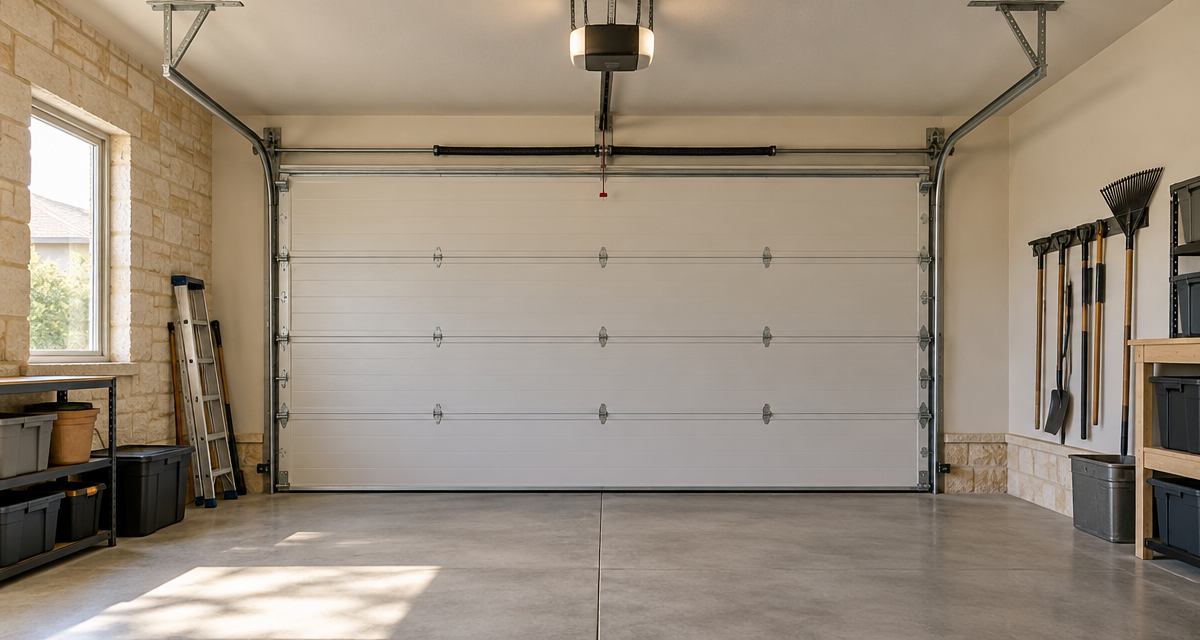
A noisy garage door check should help you describe a new sound, not turn into a repair experiment. Start with what you can safely see from the floor, and stop if the door struggles to move or you notice worn or frayed cables.
For homeowners in Austin, Travis County, and Hays County, the goal is simple: gather useful observations without touching tensioned parts. You don't need to identify the failed component before asking for service.
When should you stop checking and call a professional?
Start by deciding whether observation is appropriate at all. DASMA warns that a door that doesn't move smoothly may present an unsafe condition. If the new noise comes with struggling or awkward movement, don't keep operating the door to get a better description. Your service request can simply say that the door became noisy and stopped moving smoothly. That's enough reason to ask for a professional inspection without further testing.
Visible cable damage is another reason to stop. DASMA identifies frayed or worn cables as being in danger of breaking, which can cause injury. Look only from a clear, stationary position, without handling the cable or reaching beside the door. If you notice wear, leave it alone and keep others away. Cable replacement belongs with a trained technician because of the dangers associated with high spring tension.
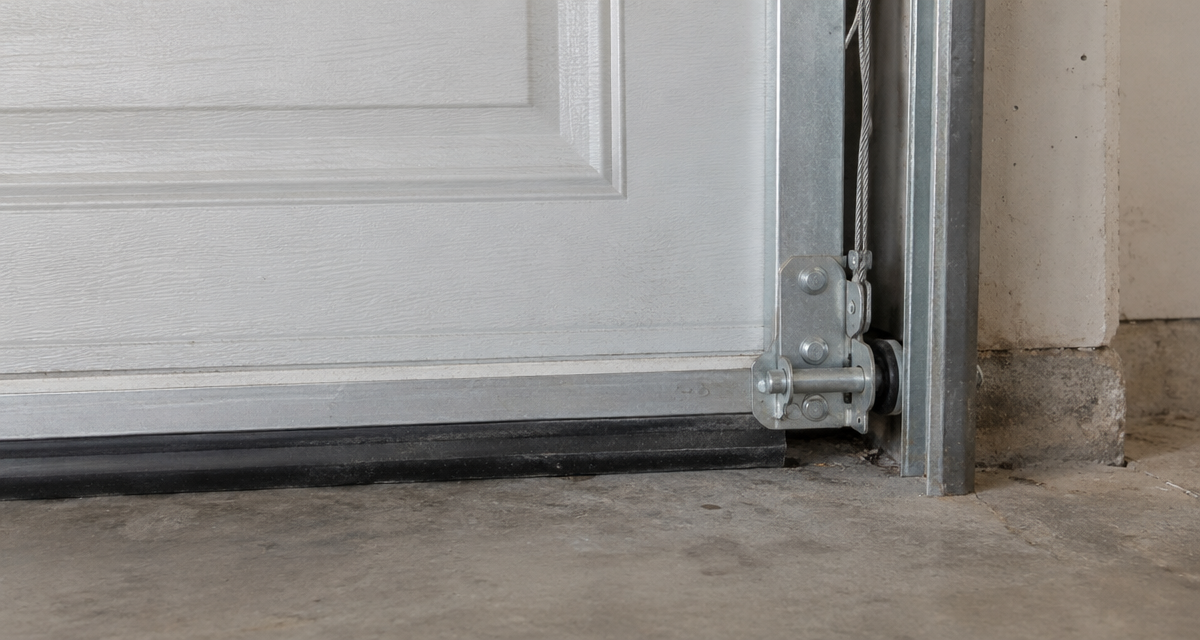
Keep your hands and tools away from the bottom brackets, even if a sound seems to come from a lower corner. DASMA explains that these brackets connect to the spring system and are under extreme tension. Don't try tightening, loosening, or repositioning them as a noise remedy. We recommend reaching out to a garage door professional for bracket or spring work; it can be very dangerous if done incorrectly.
You also don't need to prove that a door is unsafe before ending your check. If you can't observe it without standing beneath it, reaching into its path, or getting close to moving parts, stop there. Make a note of what you already heard and arrange service. A homeowner's useful contribution is a clear description, not a hands-on diagnosis or an attempt to reproduce a worrying sound.
How do you prepare for a hands-off noise check?
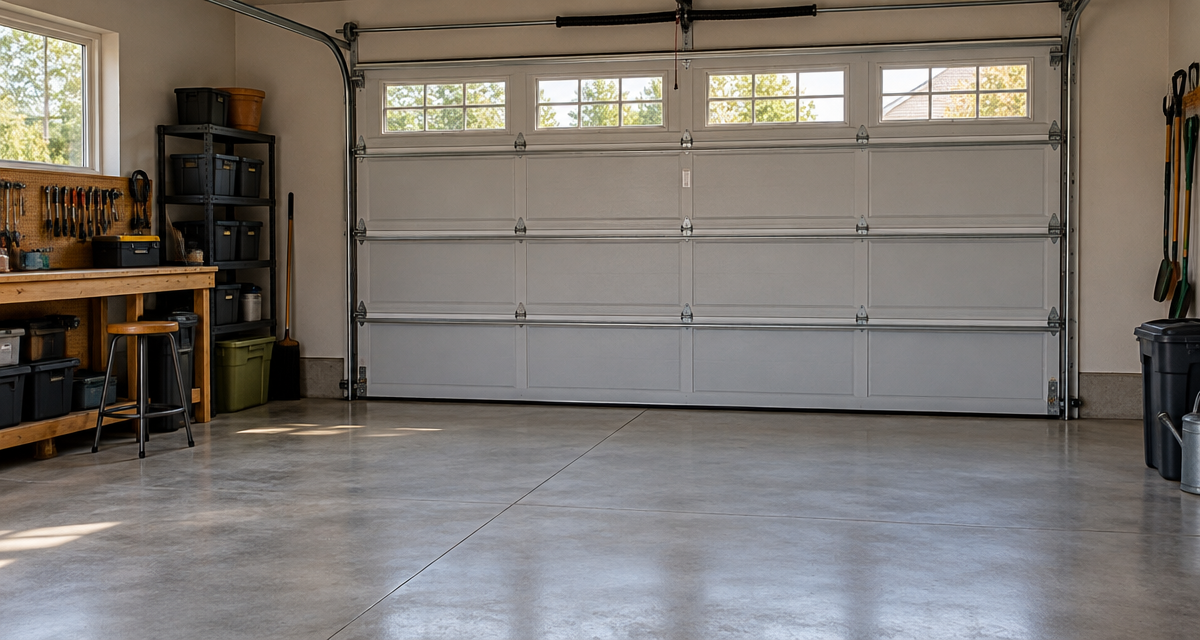
Find the owner's manuals for both the door and the opener before doing anything beyond observation. DASMA's garage door system guidance emphasizes that each model has its own safety instructions. Use those instructions to establish the limits of any homeowner maintenance, rather than assuming advice for another door applies to yours. If you don't have the manuals, keep this check visual and ask your service provider about the appropriate guidance.
Set up a clear observation area on the garage floor, away from the door's travel and moving hardware. Keep children, pets, and other household members away while you're looking. Don't move stored items from beneath an open door just to create a better viewing angle. If access is awkward, accept that some areas won't be visible. You can tell the technician which parts you couldn't safely see from your position.
Think back to the first time you noticed the sound. Was the door opening, closing, or already stopped? Did you hear it from inside the garage or outside? Write down what you remember before trying to gather anything else. These are observations rather than conclusions, so everyday descriptions are fine. A note such as “a brief squeak while closing” is more useful than guessing which part needs replacement.
Leave the ladder and repair tools out of this check. You aren't removing covers, checking fastener tightness, or reaching up to feel which component vibrates. Don't disconnect the opener or attempt a manual balance test to isolate the noise. We recommend reaching out to a garage door professional for that assessment when operation is questionable, because handling a potentially unsafe door incorrectly can be very dangerous.
- Review the door and opener manuals.
- Choose a clear viewing position away from moving parts.
- Keep people and pets out of the observation area.
- Write down what you've already noticed.
What can you inspect without touching the door?
With the door stationary, look at the areas you can see from your safe floor position. Don't operate it just to expose a hidden component. Note anything that appears damaged or out of place, but avoid turning an uncertain visual impression into a diagnosis. If one side looks different from the other, describe the difference in plain language and let a technician determine whether it matters.
Pay particular attention to visible cables without moving closer to handle them. DASMA recommends visually inspecting the cables that connect the spring system to the bottom brackets on both sides. You're looking for visible fraying or wear, not testing tension or tracing the cable with your fingers. If the view isn't clear, mark that part of your check as incomplete rather than reaching around the track or door edge.
If you already know your door uses extension springs, DASMA says those springs need safety cables running through them and secured at each end. The guidance also notes that extension springs are under high tension when the door is down. If you know a safety cable is missing, call for a safety inspection. Don't climb up, handle the spring, or try installing a cable as part of this noise check.
A photo can help preserve what you see, provided you can take it from the same safe position. Use the camera's zoom rather than stepping toward the hardware, and don't reach through or beneath the door for a better picture. Photograph the general area as well as the visible concern if practical. You don't need a close-up of every component, and a photo doesn't establish that the system is safe.
How can you narrow down where and when the noise happens?
Only consider listening during ordinary operation if your visual check revealed no warning signs and the door has been moving smoothly. This isn't a reason to cycle a questionable door. Stay at your clear observation position and watch the door as a whole rather than walking alongside it. If it begins struggling or moving awkwardly, end the check and avoid further operation while you arrange professional help.
Describe the apparent location broadly: near the opener, above the door, along one side, or near a lower corner. Treat that location as an impression, not proof of the source. Don't move under the door or put your ear near a component to become more certain. Saying “it seemed louder on the left from where I stood” keeps the observation useful without claiming a diagnosis you haven't established.
Next, note the timing. Does the sound happen when movement starts, somewhere during travel, or as movement finishes? Record whether it occurs while opening or closing, based only on what you've already observed. Use ordinary sound words such as squeak, rattle, scrape, or bang without assigning a cause. This guide doesn't pair particular noises with particular failed parts because the supplied safety guidance doesn't establish those diagnostic connections.
If you can safely record ordinary operation from your stationary position, a short video may help you share the sound and visible movement. Don't repeat cycles just to improve the recording or ask someone to stand near the hardware with a phone. Keep watching the door rather than concentrating only on the screen. If you miss the noise, send your written description instead of trying to provoke it again.
- Listen only during otherwise smooth, ordinary operation.
- Note the apparent area without approaching it.
- Describe the sound and when it happens.
- Stop if movement becomes awkward or concerning.
What should you share when you call for service?
Put your observations into a short service note: what the noise sounds like, where it seems loudest, when it occurs, and whether movement remains smooth. Include any visible cable wear or other concern, and say if you stopped using the door. You don't need technical vocabulary or a proposed repair. For a local service request, you can share these details with Springz Garage Doors along with your Austin, Travis County, or Hays County location.
Don't assume every squeak proves something is broken. DASMA says springs can become noisy through normal use and that squeaking doesn't necessarily indicate a problem. Its guidance mentions a spray-on lubricant recommended especially for garage doors and advises professional service if the noise persists. That isn't a complete, model-specific application procedure, so this guide doesn't direct you to reach toward or spray a spring during your check.
If lubrication seems relevant, consult the manufacturer's maintenance instructions and ask a professional what is appropriate for your system. Don't use lubricant as a substitute for investigating worn cables or awkward movement, and don't experiment with adjustments because a squeak remains. We recommend reaching out to a garage door professional for work involving springs, cables, or bottom brackets. It can be very dangerous if done incorrectly, even when the original complaint is only noise.
After the immediate concern is addressed, keep the manuals and your service notes somewhere easy to find. DASMA recommends monthly safety checks and maintenance, along with an annual visit from a trained door systems technician. Follow the model-specific instructions for what those homeowner checks involve. The purpose of this noise check is narrower: recognize reasons to stop, collect safe observations, and give the professional a clear starting point.
What else do homeowners ask about this topic?
Does a new squeak always mean a spring is broken?
No. DASMA says springs can squeak through normal use, and the sound doesn't necessarily indicate a problem. Noise alone doesn't establish the cause. Persistent noise or awkward movement warrants professional attention.
Should I disconnect the opener to isolate the noise?
Not as part of this check. Keep the process observational, especially if the door is struggling. We recommend a garage door professional assess questionable operation because handling an unsafe door incorrectly can be very dangerous.
Can I tighten a noisy bottom bracket?
No. DASMA says bottom brackets connect to the springs and are under extreme tension. We recommend reaching out to a garage door professional; adjusting or loosening them incorrectly can be very dangerous.
What if I can't reproduce the sound?
Don't repeatedly operate the door just to capture it. Share what you remember about the sound, its apparent location, its timing, and how the door moved. It's fine to say the noise wasn't captured.
What should you remember before taking the next step?
- Stop using the door if it struggles to move or you see worn or frayed cables.
- Keep the check hands-off, and leave springs, cables, and bottom brackets alone.
- Describe the noise's apparent location and timing without guessing which part failed.
- Share your observations with a professional rather than repeatedly operating or adjusting the door.

Sources and manufacturer instructions
“Springs are under high tension.”
Get help with roller & noisy door repair
Call Springz to describe the problem, request a diagnosis and confirm current service availability in Travis and Hays Counties.