How-To Guides · 10 min read
How to Work Safely in a Hot Garage During Central Texas Summers
By Ted DeSimone
Updated
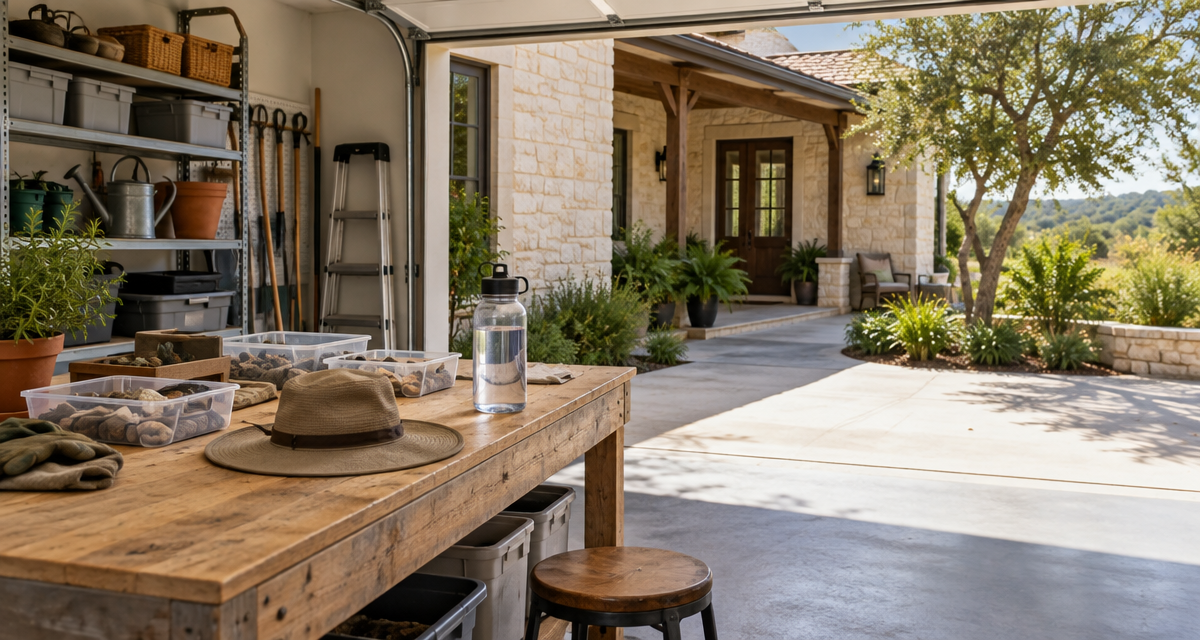
Start your hot garage safety steps before you pick up a tool: choose a cooler work period, have drinking water ready, and identify an air-conditioned place to take breaks. For homeowners around Austin and across Travis and Hays Counties, the goal is to finish safely, not push through summer heat.
Stop working if you develop heat-illness symptoms. Confusion or unconsciousness can signal heat stroke and requires immediate emergency help. A fan, an open garage door, or a nearly finished project isn't a reason to ignore how you're feeling.
How should you plan garage work before the heat builds?
Start by deciding whether the job needs to happen today. Sorting storage bins, reorganizing shelves, or cleaning the driveway can usually wait if the conditions or your health make working uncomfortable. Ready.gov recommends avoiding high-energy activities and outdoor work during midday heat when possible. Apply that advice to your garage project by choosing a cooler period and leaving yourself permission to postpone rather than treating the original schedule as a commitment.
Check the local forecast before setting out tools, then make a small, specific work plan. Instead of planning to clean the entire garage, choose one shelf or one manageable area. This isn't a formula for a safe exposure time; it's a practical way to keep a task from expanding while you're already working. Decide what can remain unfinished so stopping doesn't require another round of lifting, sorting, or cleanup.
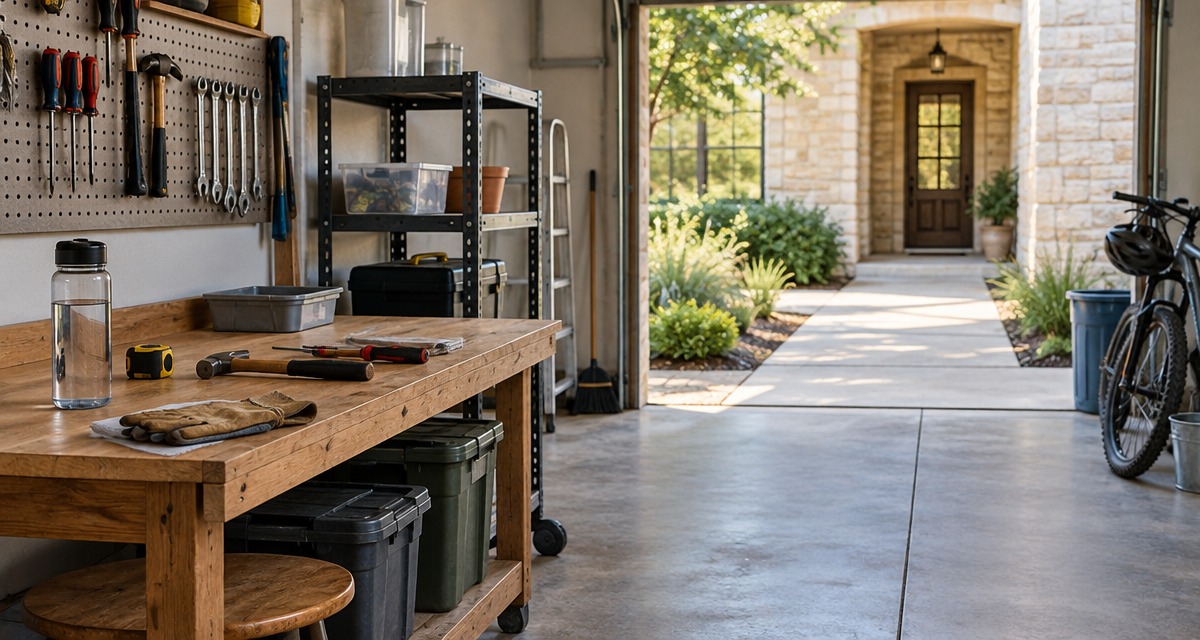
Set up your cooling destination before you begin. An air-conditioned room gives you somewhere to leave the work behind instead of resting beside it. If your home doesn't have air conditioning, Ready.gov recommends finding a cooling center. It also suggests identifying community places where you can get cool, such as libraries or shopping malls, or contacting your local health department about cooling options. Know where you'll go before you need relief.
Keep your phone accessible and tell someone your plan if you'll be working alone. Those are simple planning precautions, not substitutes for cooling or medical help. Put drinking water where it's easy to reach, clear your walking route back indoors, and keep the project small enough to leave safely. If you already feel unwell before starting, postpone the work rather than using the first few minutes to test your limits.
- Check the forecast and avoid midday work when possible.
- Choose one manageable task rather than an open-ended project.
- Identify an air-conditioned break location.
- Set out drinking water and keep your phone accessible.
What cooling setup should you have before starting?
Don't build your safety plan around a fan. [Ready.gov's extreme-heat guidance](https://www.ready.gov/heat) says fans create airflow and a false sense of comfort but don't reduce body temperature or prevent heat-related illness. That's an important distinction when you're standing at a workbench: moving air isn't proof that continuing is safe. If you use a fan, don't let its breeze replace cooling breaks or persuade you to dismiss symptoms.
Treat an open garage door as an opening, not as confirmation that the workspace is cool enough for strenuous activity. You don't need to solve the garage's ventilation or comfort problems before deciding to stop. For this checklist, the practical question is whether you have somewhere cooler to go when you leave the task. If the answer is no, arrange that option first or move the project to another day.
For work outside the garage, identify shade before carrying everything onto the driveway. Ready.gov advises finding shade outdoors and wearing a hat wide enough to protect your face. Set supplies where you won't need to keep returning to an exposed work area during a break. Shade is useful, but don't make it your only response if you're feeling sick. Heat-cramp and heat-exhaustion guidance calls for moving to a cooler location.
Think beyond the work session if the house itself is difficult to keep cool. Ready.gov lists measures such as covering windows with drapes or shades, weather-stripping doors and windows, and adding insulation to keep heat out. Those are home heat-preparation measures, not evidence that a particular garage door or product makes working safe. Keep improvement projects separate from today's decision about whether to work, pause, or leave the garage.
How can you manage clothing, fluids, and the work itself?
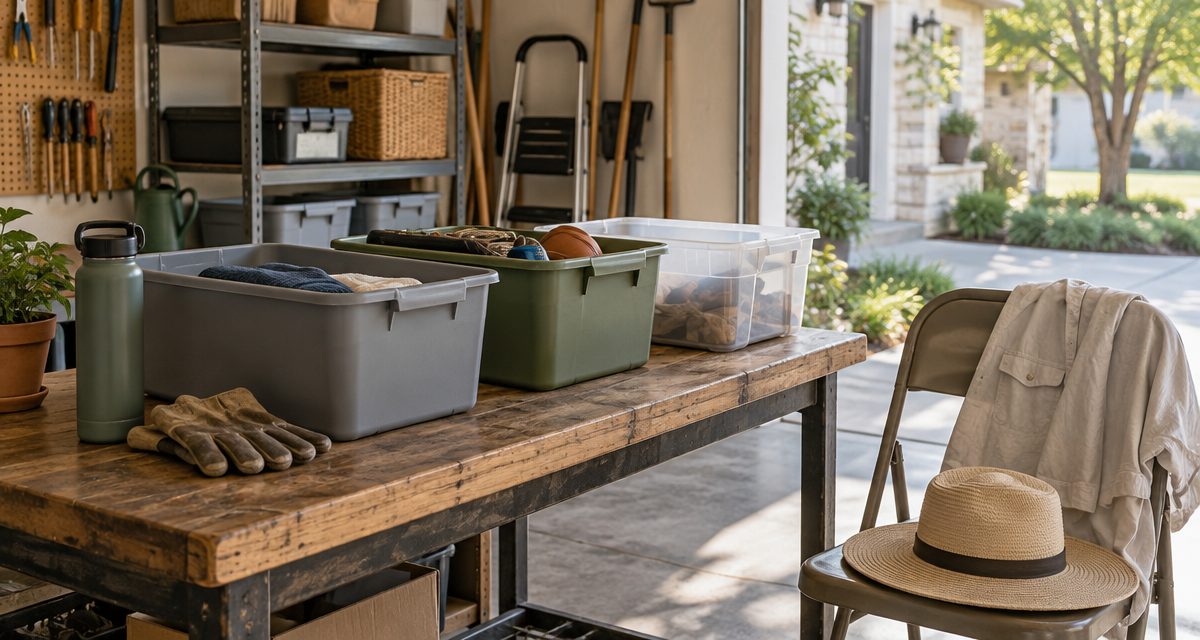
Wear loose, lightweight, light-colored clothing, following Ready.gov's heat guidance. If you're stepping outside, include the recommended wide-brimmed hat. Choose a task that you can do without rushing, and set aside anything that becomes too demanding in the conditions. Summer clothing and careful planning aren't permission to keep going indefinitely. They're parts of a broader approach that also includes drinking fluids, leaving the heat, and recognizing when you need help.
Drink plenty of fluids to stay hydrated, and make drinking water convenient rather than leaving it buried behind supplies. This guide doesn't prescribe a fixed amount or a universal drinking schedule because the supplied heat guidance doesn't provide one. If you have a health condition or questions about your fluid needs, ask your healthcare provider for advice. Don't turn a general hydration recommendation into a reason to disregard your individual medical guidance.
Break the project into separate jobs with deliberate pauses between them. For example, sort a small group of items, put away the tools you've finished using, and then leave the work area for a cooling break. That's a practical workflow suggestion, not a medically established safe work interval. Don't wait for a timer, a completed shelf, or another person's stopping point if you notice cramps, dizziness, weakness, or other symptoms.
Reassess before starting another round instead of assuming that finishing the first part means you can finish everything. Ask yourself whether you feel well, whether the next task is necessary, and whether you can comfortably postpone it. Ready.gov advises watching for heat cramps, heat exhaustion, and heat stroke. Keep those warning signs more important than the state of the garage. A partly organized space is a better outcome than pushing through illness.
- Wear loose, lightweight, light-colored clothing.
- Keep drinking water within easy reach.
- Work on one manageable part of the project.
- Leave the work area for cooling breaks.
- Stop immediately if symptoms develop.
How should you protect family members and pets nearby?
A garage project can involve more than the person doing the work. Children may want to help, a neighbor may stop to talk, or a pet may follow you outside. The [National Weather Service's heat-safety guidance](https://www.weather.gov/safety/heat) says everyone can be vulnerable to heat, with some groups at greater risk. Don't use your own comfort as the standard for everyone nearby. Make a separate plan for anyone sharing the space.
The National Weather Service identifies young children and infants, older adults, people with chronic medical conditions, and pregnant women as particularly vulnerable to heat. Ready.gov also recommends checking on family members, older adults, and neighbors. Keep that in mind when assigning summer chores or accepting help with a project. Someone's willingness to carry boxes or stay outside with you doesn't remove the need for a cooler alternative and regular check-ins.
Never leave people or pets in a closed car on a warm day, as Ready.gov warns. The National Weather Service also advises households with toddlers to lock their cars, even in their own driveway, because children may wander into them. Before settling into a garage task, know where children are and make supervision someone's clear responsibility. A parked vehicle should never become a waiting area while you finish a job.
If pets are outside, Ready.gov says they need plenty of cool water and access to comfortable shade. It also warns that asphalt and dark pavement can be very hot to their feet. Don't assume a pet wants to remain beside you for the whole project just because it followed you out. Arrange a comfortable place away from the work, and check its water and shade rather than treating those preparations as a one-time task.
What should you do if someone shows signs of heat illness?
Learn the warning signs before you need them. Ready.gov lists heat cramps as muscle pains or spasms in the stomach, arms, or legs. Its heat-exhaustion signs include heavy sweating, paleness, cramps, tiredness, weakness, a fast or weak pulse, dizziness, headache, fainting, nausea, and vomiting. Don't dismiss those symptoms as an ordinary part of cleaning or lifting. Stop the activity and respond to how the person feels rather than how much work remains.
For signs of heat cramps or heat exhaustion, Ready.gov advises going to a cooler location, removing excess clothing, and taking sips of sports drinks or water. Call a healthcare provider if symptoms get worse or last more than an hour. That advice isn't a reason to wait through an obvious emergency. If you suspect heat stroke or the situation is a medical emergency, call 911 rather than continuing to monitor without help.
Ready.gov lists heat-stroke signs including an extremely high body temperature above 103 degrees Fahrenheit, red, hot, dry skin without sweat, a rapid, strong pulse, dizziness, confusion, or unconsciousness. If you suspect heat stroke, call 911 immediately. Don't spend time finishing cleanup or searching for proof before getting emergency assistance. The job is over at that point; the priority is getting the person help and moving them away from the heat if possible.
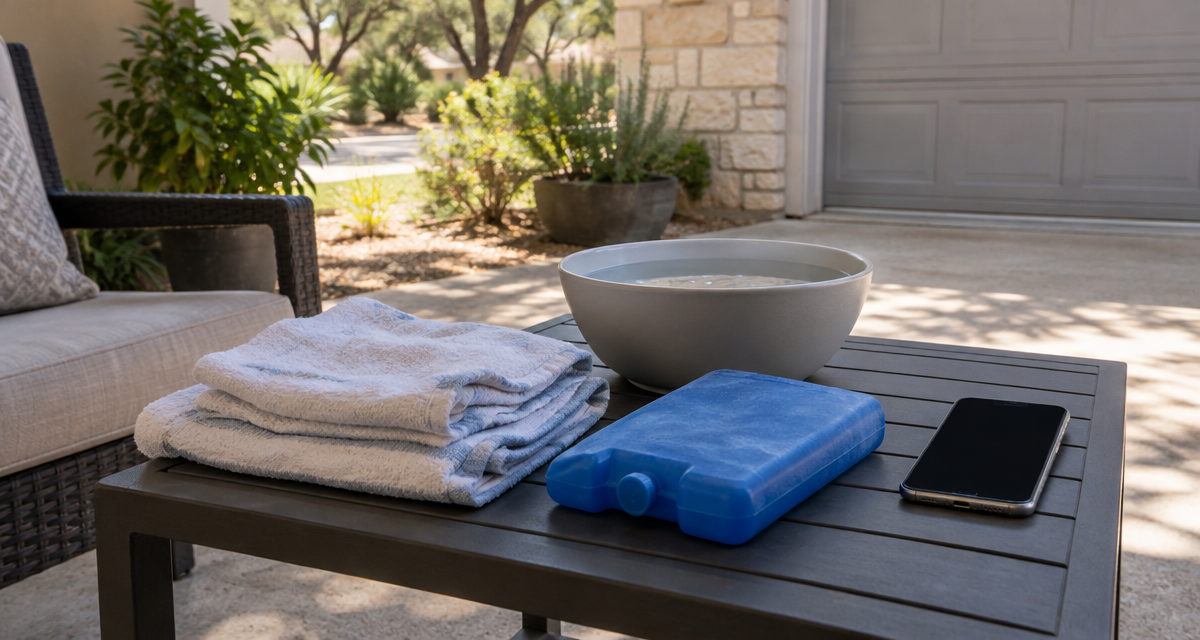
While help is coming, Ready.gov advises moving the person to a cool, shaded area if possible and removing outer clothing. Its cooling measures include placing a cold, wet cloth or ice pack on the head, neck, armpits, and groin, or soaking clothing with cool water. Keep your phone with you and follow the emergency dispatcher's instructions. Don't leave someone alone to secure the project or put away equipment while they're waiting for emergency care.
What else do homeowners ask about this topic?
Is a fan enough to make garage work safe in extreme heat?
No. Ready.gov says fans don't reduce body temperature or prevent heat-related illness. Don't use airflow as a substitute for cooling breaks, hydration, or stopping when symptoms appear.
What's the best time to do summer garage chores?
Choose a cooler work period and avoid high-energy activities or outdoor work during midday heat when possible. No particular hour guarantees safe conditions, so keep the plan flexible.
What if my home doesn't have air conditioning?
Ready.gov recommends finding a cooling center. Identify other cooling options, such as libraries or shopping malls, or contact your local health department before starting a hot-weather project.
When should I call 911 for heat illness?
Call 911 immediately if you suspect heat stroke, including when someone becomes confused or unconscious in the heat. Move them to a cool, shaded area if possible and begin cooling while help is coming.
What should you remember before taking the next step?
- Plan a manageable task during a cooler period, with permission to postpone.
- Have drinking water and a cooling destination ready; don't rely on a fan.
- Make separate heat-safety plans for vulnerable family members and pets.
- Stop for heat-illness symptoms and call 911 immediately for suspected heat stroke.

Sources and manufacturer instructions
“Springs are under high tension.”
Get help with garage door tune-up
Call Springz to describe the problem, request a diagnosis and confirm current service availability in Travis and Hays Counties.