
How-To Guides · 10 min read
How to Keep Garage Remotes and Wall Buttons Away From Kids
By Ted DeSimone
Updated
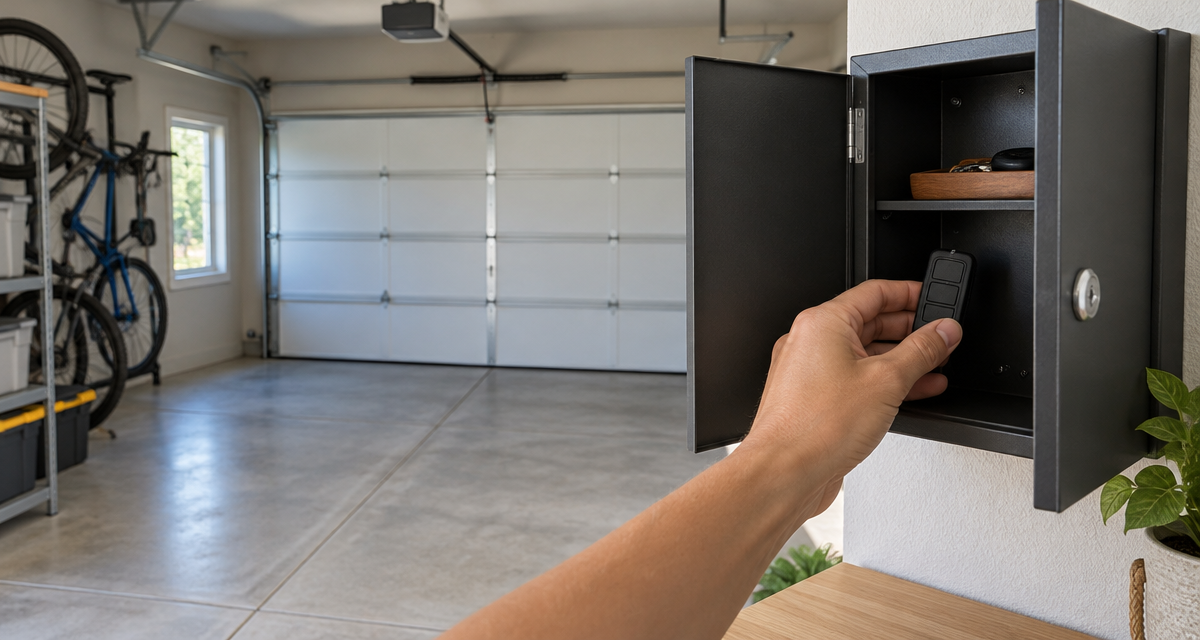
These garage remote safety tips start with one household rule: adults control the door, and kids stay clear while it moves. Store remotes where children can't get them, keep access to the wall button clear of climbing opportunities, and watch the door whenever you operate it.
For families in Austin, Travis County, and Hays County, a practical routine should cover both everyday use and what happens when something looks wrong. Start with the steps below, then check your door and opener manuals for instructions specific to your equipment.
Where should you store garage remotes so kids can't get them?
Start by gathering every garage remote your household uses, including spare remotes and ones kept in vehicles. Choose a consistent storage place that children can't access, such as a locked cabinet controlled by an adult. Treat the remote as a control for moving equipment, not a convenient button to leave nearby. A high shelf alone isn't a good choice if a child can reach it by climbing furniture.
Look beyond the garage when you choose that spot. A remote left on a kitchen counter, entry table, or low hook may still be within a child's reach. Consider where bags and key rings land after school pickup or a grocery run. If a remote travels with your keys, put the whole set away rather than separating the remote and leaving it loose somewhere else.
For a remote kept in a vehicle, make keeping children away from the control part of your parking routine. Don't allow the parked vehicle to become a play space, and don't hand over a remote to keep a child occupied while you unload. Before walking away, check that the remote isn't loose on a seat or in another place a child could easily reach.
Give spare remotes the same attention as the one you use every day. Put them in the designated secure location instead of a miscellaneous drawer. Tell other adults where the controls belong and ask them to return each remote after use. The goal is a storage habit everyone follows, including during busy arrivals, visits from relatives, or handoffs between adults caring for the children.
- Gather daily-use and spare remotes.
- Choose storage children can't access.
- Check key rings, bags, and vehicle storage.
- Return each remote immediately after use.
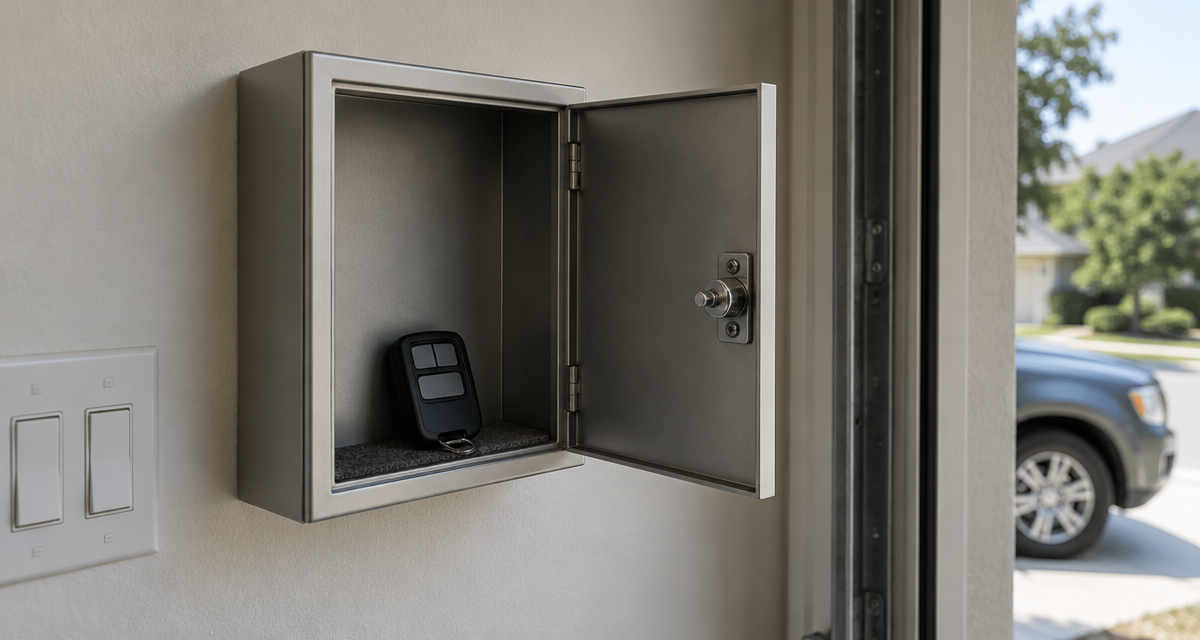
How can you keep children away from the wall button?
Look at the wall button from the perspective of a curious child. Is there a stool below it, a movable chair nearby, or a storage bin that could become a step? Move those items away and keep the surrounding area uncluttered. This is a practical access check, not a substitute for supervision. Children shouldn't be invited to press the button as a game or a reward.
Check the opener's instruction manual for guidance about the wall control's installation and location. DASMA emphasizes that each door and opener model has its own safety instructions, so don't assume advice for another household's equipment applies to yours. If the existing location makes it difficult to keep children away, ask a trained door systems technician to review it rather than improvising a relocation yourself.
Set up an adult operating position that lets you use the button while watching the doorway. Don't stack boxes or hang bulky items where they block that view. Before pressing the control, make sure children are with a supervising adult and safely away from the moving door. If you can't both supervise the children and watch the opening, pause and reorganize before operating the door.
Make the wall-button rule apply to every child who visits, not just those who live in the house. Explain it to caregivers and visiting adults before children enter the garage. A simple instruction works: only the adult handling the door uses this control. Avoid making access to the button a competition between siblings, and don't rely on a verbal rule alone when a younger child can still reach it.
- Remove nearby climbing aids.
- Keep the doorway visible from the control.
- Review the manufacturer's wall-control instructions.
- Explain the adult-only rule to caregivers.
What should you do each time you operate the garage door?
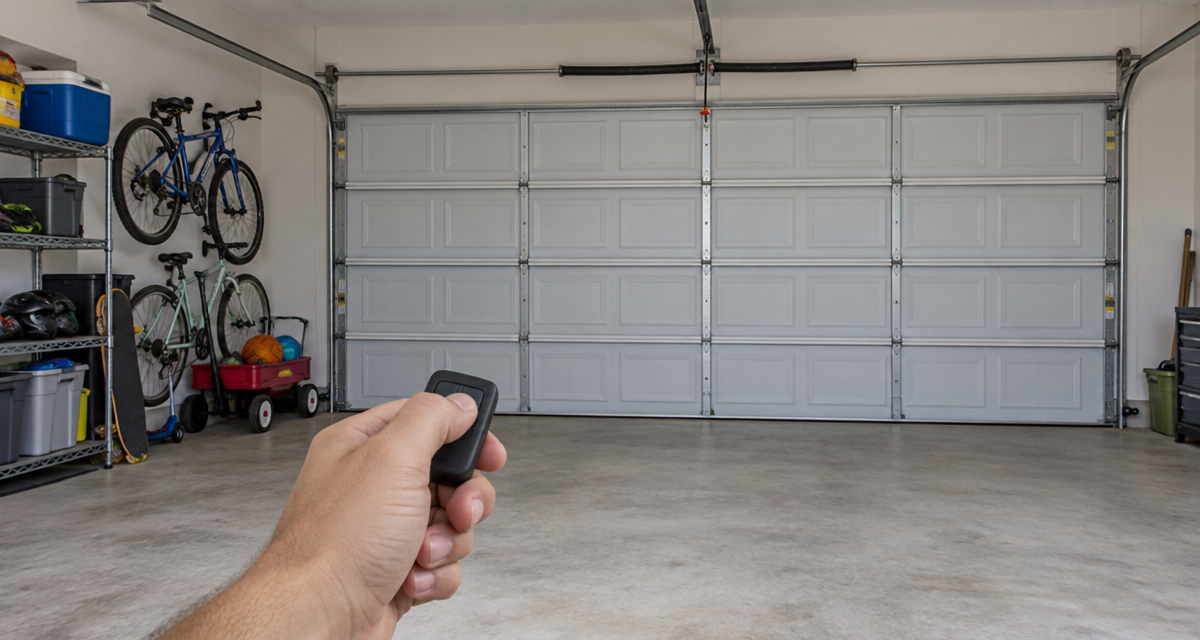
Before touching either control, stop and check the doorway. Move bicycles, toys, yard equipment, and other loose items out of the door's path while the door is stationary. Gather children and pets safely away from the opening, with an adult responsible for keeping them there. Don't begin moving the door while someone is still collecting belongings underneath it or deciding which side they want to be on.
Use the control only when you can see the door and its travel area. Keep watching throughout the movement rather than pressing the remote and turning back to your phone, shopping bags, or another task. If your view is blocked, wait until you can operate it with a clear view. Don't assume that hearing the opener gives you enough information about what's happening around the doorway.
Wait until the door is fully open and stationary before passing through the opening. Keep children from racing underneath a moving door, even if they think there's plenty of room. For closing, make sure everyone has finished passing through before you press the button. Plan departures and arrivals so there's no need to squeeze through, rush back for a forgotten item, or chase a rolling toy.
If something looks wrong, don't keep pressing buttons to see whether the problem clears. Keep people away from the door and follow the manufacturer's instructions for responding to abnormal operation. DASMA notes that a door that doesn't move smoothly may be unsafe. Once normal travel has finished, put the remote back in its secure place instead of leaving it out while you handle the next task.
- Clear the opening while the door is stationary.
- Gather children and pets away from the door.
- Operate the control with a clear view.
- Watch until movement stops, then secure the remote.
How do you teach children and caregivers the same safety routine?
Keep the explanation short and concrete: the garage door is moving equipment, the controls aren't toys, and an adult handles opening and closing. Teach this while the door is stopped and everyone is away from it. There's no need to demonstrate danger by moving the door near a child. Ask children to explain the rule back in their own words so you can clear up misunderstandings.
Choose a waiting place well away from the door's travel area and vehicle path, where a supervising adult can stay with the children. Show them where to go before an adult reaches for the remote. Don't treat that location as somewhere young children can wait unattended. The useful habit is moving together to a safe position, then having the responsible adult decide when the door can operate.
Practice what to do when a ball, toy, or other item ends up near the doorway: leave it alone and tell an adult. Children shouldn't retrieve belongings around a moving door or try to stop it with their hands. Also teach them to keep fingers away from the joints between door sections. DASMA specifically warns against placing fingers between those sections, including when someone operates a door manually.
Give babysitters, relatives, and other caregivers the same brief walkthrough. Show them where remotes are secured, explain that the wall button is adult-controlled, and point out the waiting place. Make clear who is watching the children and who is operating the door when several adults are present. Consistent expectations are more useful than a long list of warnings that changes depending on who's supervising that day.
- Explain that controls aren't toys.
- Show children where to wait with an adult.
- Practice asking an adult to retrieve dropped items.
- Walk caregivers through the same routine.
What checks help keep your garage control routine safe?
Pair your household routine with the equipment guidance in your manuals. DASMA recommends monthly safety checks and maintenance, along with an annual visit from a trained door systems technician. Use your manufacturer's instructions to determine the checks appropriate for your door and opener. Don't invent a test by placing a person, a hand, or a household pet in the opening to see how the door responds.
During your household access check, look for remotes that have drifted into drawers, bags, or play areas. Check whether garage storage has created a new climbing route to the wall button. Ask caregivers whether the routine is practical or whether something keeps getting in the way. These are simple observations you can make without removing covers, changing wiring, or touching any of the door's tensioned components.
Keep equipment observations visual and hands-off where dangerous parts are involved. DASMA advises visually inspecting cables for fraying or wear and says cable replacement should be done only by a trained technician. It also warns that bottom brackets are connected to the springs and are under extreme tension. If you notice visible cable damage or uneven movement, keep children away and arrange professional attention instead of investigating with tools.
Keep the door and opener manuals near the garage for easy reference, as DASMA recommends. Make sure adults know where to find them before a problem arises. If you're unsure about a control location or a change in the door's movement, describe the concern to a trained technician. Secure remote storage and careful supervision remain important, but they don't replace the model-specific checks and service your equipment needs.
- Review the manufacturer's safety instructions.
- Recheck remote storage and wall-button access.
- Observe equipment without touching tensioned parts.
- Arrange professional service for concerning conditions.
What else do homeowners ask about this topic?
Is a high shelf enough to keep a garage remote away from kids?
Not if a child can reach it by climbing. Choose storage children can't access, such as an adult-controlled locked cabinet, and remove nearby climbing opportunities.
How high should the garage wall button be installed?
Check your opener's installation instructions for its specific requirements. If the current location lets children reach the control, keep them away and ask a trained technician to review the installation.
Can children press the remote while an adult watches?
For the routine in this guide, keep operation adult-only. Let children practice waiting safely and asking an adult to open the door rather than practicing with the controls.
What if the garage door starts moving unevenly?
Keep children away and don't repeatedly operate it to investigate. DASMA says a door that doesn't move smoothly may be unsafe. Consult the manual and arrange attention from a trained door systems technician.
What should you remember before taking the next step?
- Store every remote, including spares, where children can't access it.
- Keep climbing aids away from wall buttons and follow the opener's installation guidance.
- Clear the opening, supervise children, and watch the entire door movement.
- Follow model-specific safety checks and leave springs, cables, and bottom brackets to trained technicians.
Sources and manufacturer instructions
“Springs are under high tension.”
Get help with garage door opener repair
Call Springz to describe the problem, request a diagnosis and confirm current service availability in Travis and Hays Counties.