
How-To Guides · 11 min read
Garage Door Storm Prep: What to Do Before Severe Winds
By Ted DeSimone
Updated
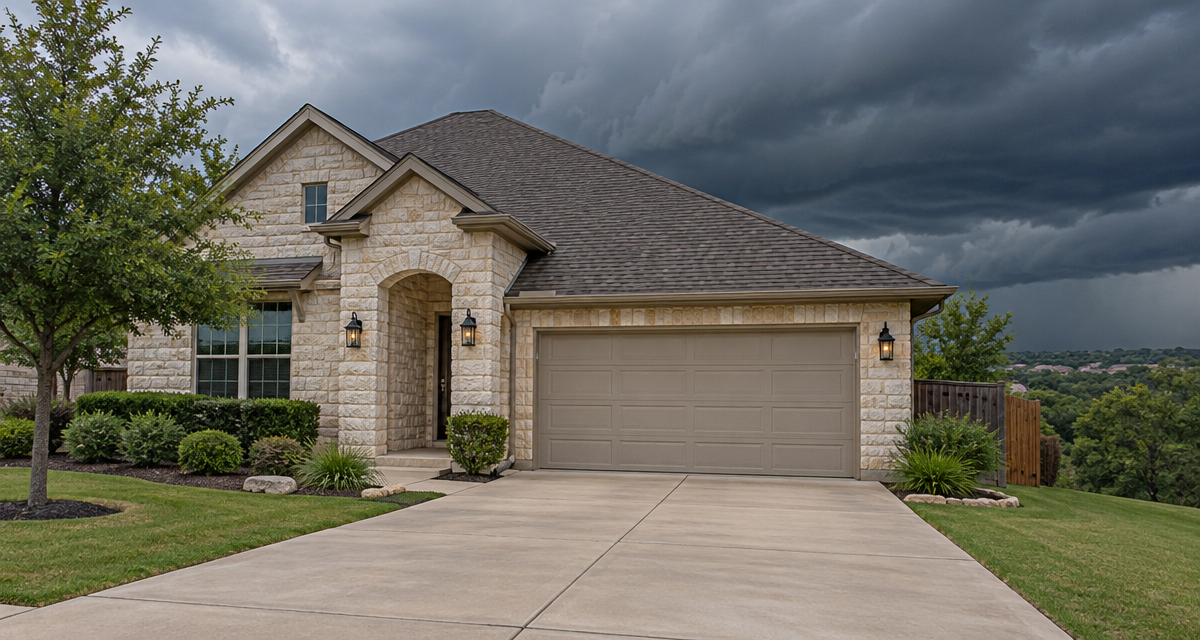
Start garage door storm prep before the weather turns: bring loose outdoor items inside, clear the door’s path, and look for visible damage without touching its hardware. If something looks wrong, don’t turn storm preparation into a last-minute repair.
For homeowners in Austin, Travis County, and Hays County, the priority is simple: finish safe tasks early, understand what needs professional attention, and leave the garage when it’s time to shelter.
What should you do first when severe winds are forecast?
Start with the weather and your household plan, not the toolbox. The National Weather Service explains that high winds can occur during severe thunderstorms and with strong weather systems, and that windblown objects pose a significant safety threat. Check current alerts before beginning outdoor tasks. Give yourself permission to leave a task unfinished if conditions become unsafe; securing possessions should never take priority over getting yourself and your household to safety.
Set up more than one way to receive emergency information. Ready.gov recommends multiple alert sources, including community alerts and Wireless Emergency Alerts, and advises keeping your phone charged when a hurricane is forecast. Those are sensible preparations for a severe-wind forecast, too. Keep your phone accessible while organizing the garage, rather than leaving it somewhere you won’t hear it. Follow instructions from local emergency managers as the situation changes around your home.
Decide where everyone will go before anyone starts moving furniture or organizing storage. Ready.gov advises taking refuge in a designated storm shelter or an interior room for high winds. Don’t make standing in the garage to watch the door part of your plan. Talk through who will help children, pets, or anyone needing assistance, and keep the route to your planned shelter free of boxes, tools, and other obstacles.
Separate today’s safe preparation from work that needs an appointment. Moving lightweight belongings and looking for visible damage are different from repairing the door or adding reinforcement. If your available time is short, focus on alerts, household readiness, and loose items you can safely bring inside. For a questionable door, contact a garage door professional early, but don’t delay sheltering while waiting for an assessment or trying to finish a repair.
- Check current weather alerts and local instructions.
- Charge your phone and enable another alert source.
- Confirm your household’s shelter plan.
- Complete only the preparation tasks conditions safely allow.
How should you clear the garage and driveway before the storm?
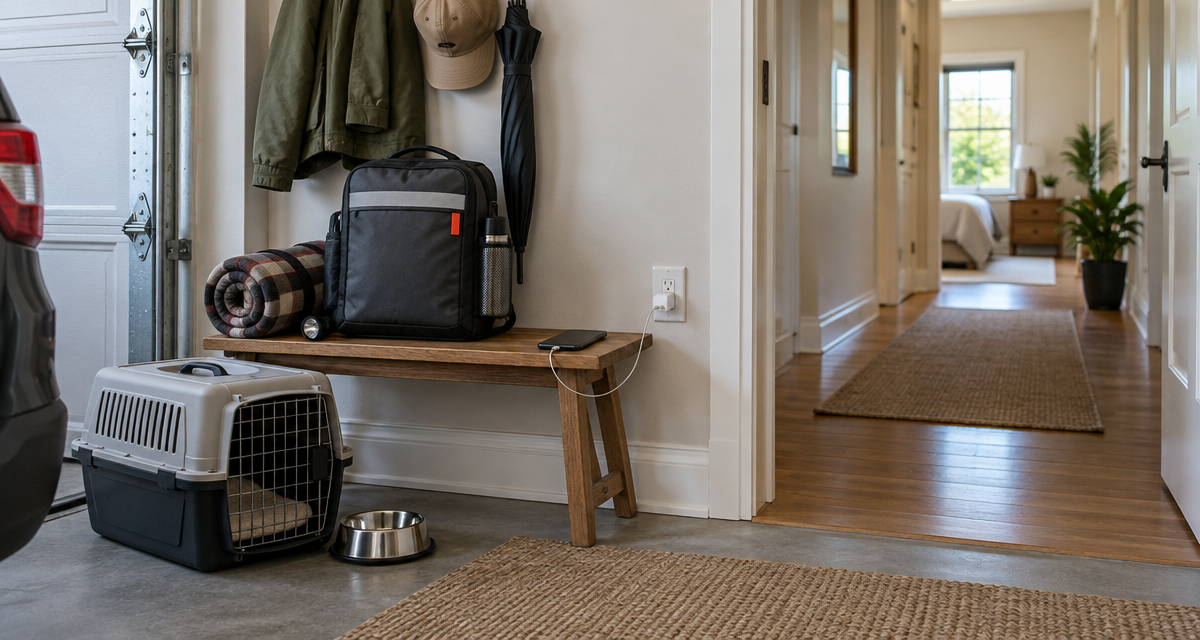
Look first for loose belongings outside the garage that you can move safely. Ready.gov recommends bringing outside furniture indoors as part of hurricane preparation, and the National Weather Service warns that high winds can blow objects around. Apply that advice to your immediate work area: bring in manageable patio chairs, small planters, toys, and similar loose items before winds arrive. Don’t attempt to move something too heavy or awkward for you to handle safely.
Choose storage locations before carrying everything through the garage doorway. Keep belongings out of the door’s travel path and away from its hardware, and leave enough room to walk through without climbing over anything. Don’t lean furniture against the door or pile boxes where they could fall into the opening. The goal is straightforward housekeeping, not packing every available inch. If the garage is already crowded, use another suitable indoor storage area when possible.
Keep household access and emergency supplies in mind while rearranging the space. Avoid blocking the door into the house, and put supplies somewhere you can reach without moving a vehicle or shifting a stack of furniture. Ready.gov recommends gathering household supplies, including medication and pet supplies. As a practical planning step, don’t bury those essentials behind the outdoor items you’ve just brought inside or leave them in a place you won’t safely reach later.
Finish outdoor work while conditions are still safe, and resist adding bigger jobs to the list. Ready.gov includes clearing drains and gutters in its home-strengthening guidance, but that doesn’t make last-minute ladder work a sensible garage preparation task. Keep this effort limited to accessible, manageable cleanup. If something requires climbing, heavy lifting, or working near a damaged door, leave it for appropriate help rather than rushing because a storm is approaching.
- Bring manageable loose outdoor belongings inside.
- Store them away from the garage door and its hardware.
- Clear walking routes and access to household supplies.
- Stop outdoor cleanup when conditions become unsafe.
How can you check the garage door without attempting repairs?
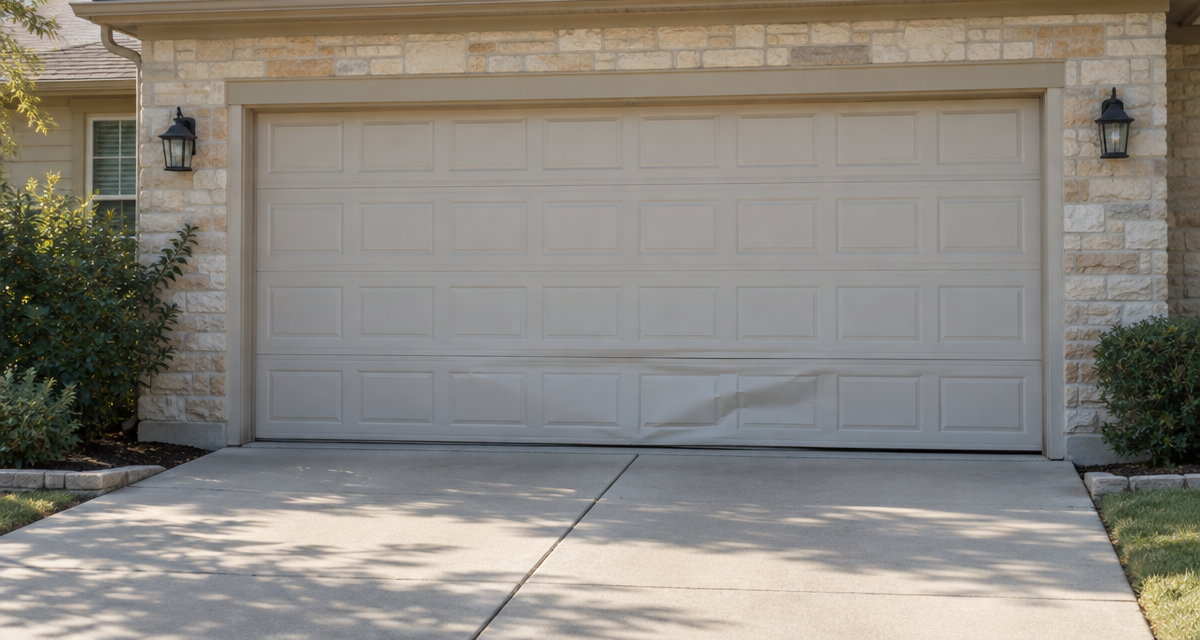
Make this a visual check, not a hands-on inspection of the door’s working parts. From a safe position, look for obvious panel damage, a door that appears crooked, or hardware that looks displaced. You’re gathering information to share with a professional, not deciding whether the assembly is structurally sound. Don’t stand beneath a questionable door, climb to inspect it, or touch a component just to find out whether it feels loose.
Treat anything visibly damaged or out of place as a reason to stop using the door and ask for help. Don’t repeatedly run it to see whether the problem clears itself, and don’t push or pull a stuck door into position. We recommend reaching out to a garage door professional for diagnosis and repair because this work can be very dangerous if done incorrectly. Describe what you can see without attempting to demonstrate the problem.
Keep people, pets, and belongings clear whenever the door moves during ordinary use. Don’t operate it just to test its ability to withstand wind, even if it’s functioning normally and there’s no visible reason for concern. A door closing successfully doesn’t answer questions about its wind-load suitability, and it shouldn’t be treated as proof that no further assessment or maintenance is needed. Ask a garage door professional about those questions before severe weather arrives.
Photographs can help you communicate a concern without handling the hardware. Take them only from a safe location, and note anything you already observed during ordinary use rather than operating the door again for a better description. If the door won’t close, don’t improvise a repair because the forecast feels urgent. Keep people away from the questionable assembly, contact a professional, and follow your household’s shelter plan when local instructions or conditions call for it.
- Look for obvious damage from a safe position.
- Leave springs, cables, and bottom brackets untouched.
- Photograph concerns only if you can do so safely.
- Contact a professional instead of forcing or testing a damaged door.
How do you find out whether your door suits the wind exposure?
Don’t judge wind-load suitability by how heavy the door looks or whether a neighbor has a similar one. DASMA explains that site conditions affect the wind load on a garage door. Its guidance distinguishes typical suburban surroundings with shielding from trees and structures from more open settings and certain locations near large bodies of water. That means a useful assessment considers the property’s surroundings, not simply the door’s appearance or its ability to open and close.
DASMA calls a typical suburban setting Exposure B and describes Exposure C as including sufficiently open areas, along with certain coastal sites. Exposure D applies to specified settings near large inland bodies of water. These are technical categories, not labels to assign casually while standing in your driveway. For a homeowner preparing for a storm, the practical takeaway is to explain the site accurately and ask qualified help to determine which conditions apply.
Local requirements and terrain also matter. DASMA says to determine whether the local code requires a particular exposure for an installation, and notes that nearby hills and valleys may affect wind load. When technical help is needed, its guidance points to a local professional engineer or a door manufacturer’s technical staff member who understands wind provisions. Don’t assume this guide establishes a requirement for your address in Austin, Travis County, or Hays County.
Gather any existing door paperwork and photographs that are safely available, then ask a garage door professional what information is needed for an assessment. Useful questions include whether the door’s documentation can be identified and whether manufacturer or engineering input is necessary. Keep this separate from last-minute housekeeping. If reinforcement or replacement is proposed, ask for a recommendation specific to the door and site rather than treating a generic storm-preparation checklist as installation guidance.
What should you never do as the wind arrives?
Don’t improvise a storm brace from spare lumber, straps, or whatever happens to be in the garage. Don’t park a vehicle against the door or lean heavy belongings against it as a substitute for an assessed reinforcement system. The supplied guidance doesn’t provide a safe reinforcement procedure for your particular door. We recommend reaching out to a garage door professional before modifying or reinforcing it because this work can be very dangerous if done incorrectly.
Leave springs, cables, and bottom brackets alone, even if an adjustment seems small. A storm deadline isn’t a reason to tighten unfamiliar hardware, remove a component, or attempt to straighten an assembly. Likewise, don’t pull the emergency release to experiment with a damaged or questionable door. We recommend reaching out to a garage door professional for these situations because handling the door or its components incorrectly can be very dangerous. Keep others away while you seek help.
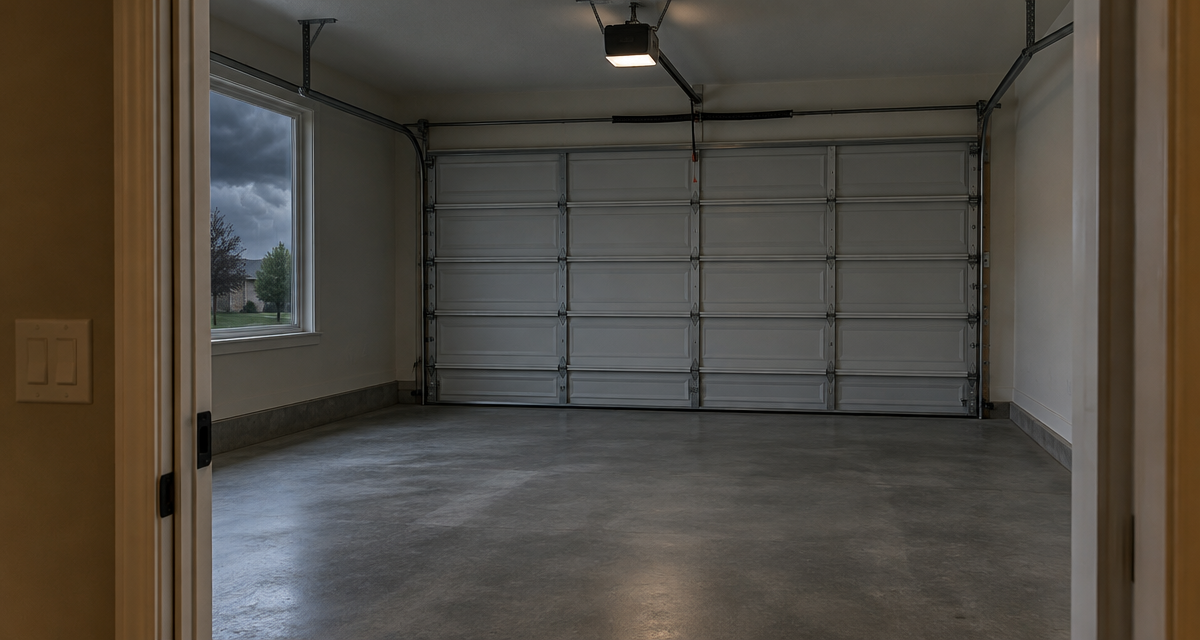
Once conditions become unsafe, stop working and move to your planned shelter. Don’t open the door to investigate wind noise, stand beside it to watch its movement, or go outside to retrieve one last item. Ready.gov advises following emergency information and taking refuge in a designated storm shelter or interior room for high winds. Your preparation checklist is secondary to those instructions, even if the garage isn’t as organized or secure as you wanted.
After the storm, follow local officials’ instructions before beginning cleanup. If the garage door looks damaged or displaced, keep people away and don’t test its operation. Ready.gov advises documenting property damage with photographs and warns against touching electrical equipment when it’s wet or when you’re standing in water. Take photos only when you can do so safely. Contact a garage door professional about door damage rather than attempting repairs during the initial cleanup.
What else do homeowners ask about this topic?
Should I leave the garage door partly open during severe winds?
The supplied sources don’t address whether to leave a garage door partly open during severe winds. Ask a garage door professional about your door before the storm. If it’s damaged or stuck, don’t force it; prioritize shelter and follow local emergency instructions.
Can I add a homemade brace before a storm?
We recommend reaching out to a garage door professional rather than improvising reinforcement. Modifying or reinforcing a door can be very dangerous if done incorrectly, and the supplied sources don’t provide a safe installation method.
Does a suburban location tell me my garage door is suitable?
No. DASMA identifies typical suburban surroundings as one exposure category, but local requirements and terrain can also matter. The neighborhood setting alone doesn’t establish whether your particular door is suitable.
What if I find damage just before severe winds arrive?
Keep people away, don’t operate or repair the damaged door, and contact a garage door professional. If conditions are worsening or officials direct you to shelter, stop preparation and follow those instructions.
What should you remember before taking the next step?
- Prepare early by bringing loose belongings inside and clearing the garage door’s path and household walking routes.
- Keep checks visual, and leave damaged doors, springs, cables, and bottom brackets to a garage door professional.
- Ask qualified help about wind-load suitability because site exposure, terrain, and local requirements matter.
- Skip homemade reinforcement, stop work when conditions worsen, and prioritize your household’s shelter plan.
Sources and manufacturer instructions
“Springs are under high tension.”
Get help with garage door repair
Call Springz to describe the problem, request a diagnosis and confirm current service availability in Travis and Hays Counties.