How-To Guides · 11 min read
How to Find, Read, and Protect Garage Door Safety Labels
By Ted DeSimone
Updated
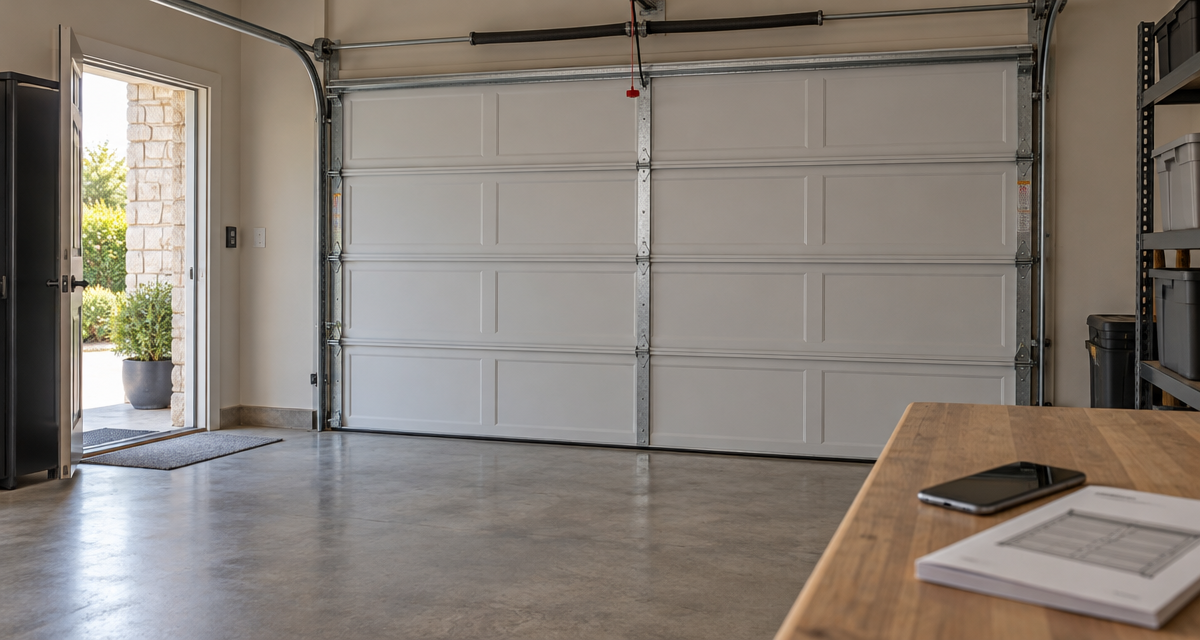
Checking garage door safety labels should be a look-only task, not a repair project. For homeowners in Austin, Travis County, and Hays County, the practical approach is to read what’s accessible from the floor, leave warning labels uncovered during painting, and ask for help when information is missing or unreadable.
You don’t need to climb, remove hardware, or adjust anything to begin. Use the door and opener manuals as your reference, document any concerns, and leave labels near hazardous components to a garage door professional.
How do you locate warning labels without touching hardware?
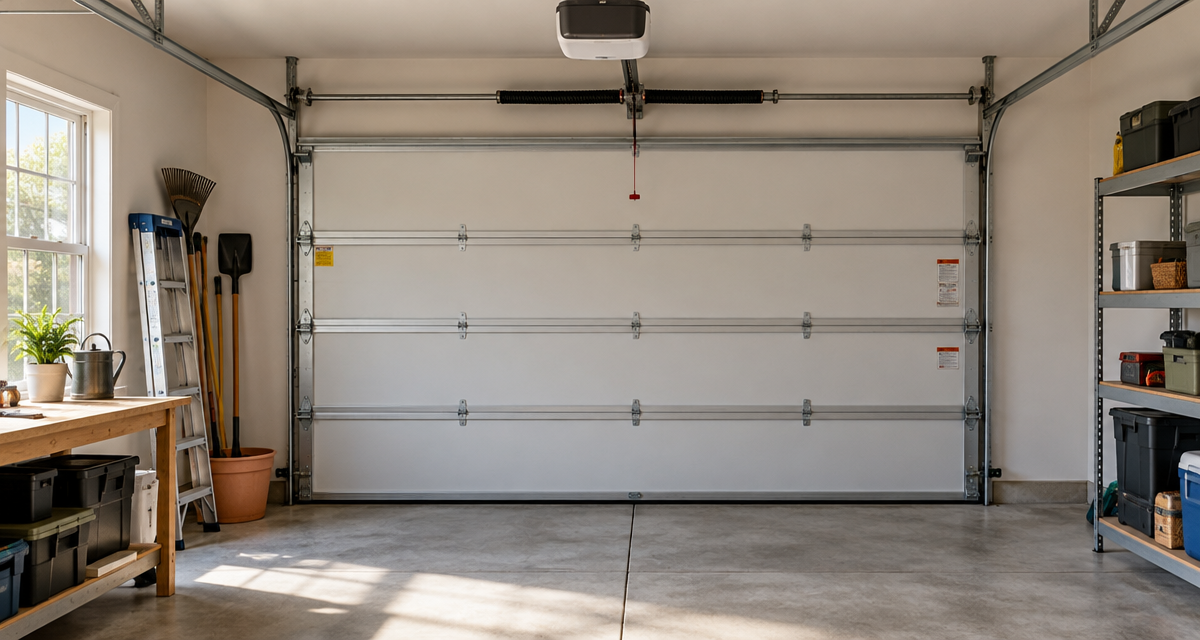
Start with a simple boundary: this is a floor-level visual review of a stationary door. Choose a time when nobody needs to operate it, and let everyone nearby know you’re looking it over. Keep your feet on the floor and stay out of the door’s travel path. If the door’s position prevents a safe view, leave that area unchecked rather than moving the door just to expose a label.
Look across the door surfaces you can see safely, then visually scan the accessible areas along both sides. Treat these as places to look, not a promise that your particular door has labels in those locations. Don’t reach behind tracks, pull on hanging tags, or shift components to inspect their backs. A flashlight or your phone’s camera zoom can help you see from a comfortable distance without reaching into hardware.
Use your door’s installation or instruction manual to guide the search. DASMA’s garage door system guidance says to consult the manufacturer’s manual for safety information specific to your model. If the manual includes label illustrations or placement information, compare those with what you can see. If it doesn’t, don’t assume an empty patch means a warning is missing. Record the uncertainty so you can ask the manufacturer or a professional.
Make a short visual record of the labels you find and the areas you can’t assess. Take an overview photo and, when possible from the floor, a closer photo with readable wording. Don’t climb onto a chair or ladder for a better image. A note such as “warning visible but wording unreadable from floor” is useful information. It’s a reason to request help, not a reason to get closer to hazardous parts.
- Choose a quiet time and keep the door stationary.
- Visually scan surfaces accessible from floor level.
- Compare visible information with the model’s manual.
- Photograph readable labels and note uncertain areas.
How should you read and interpret the warnings?
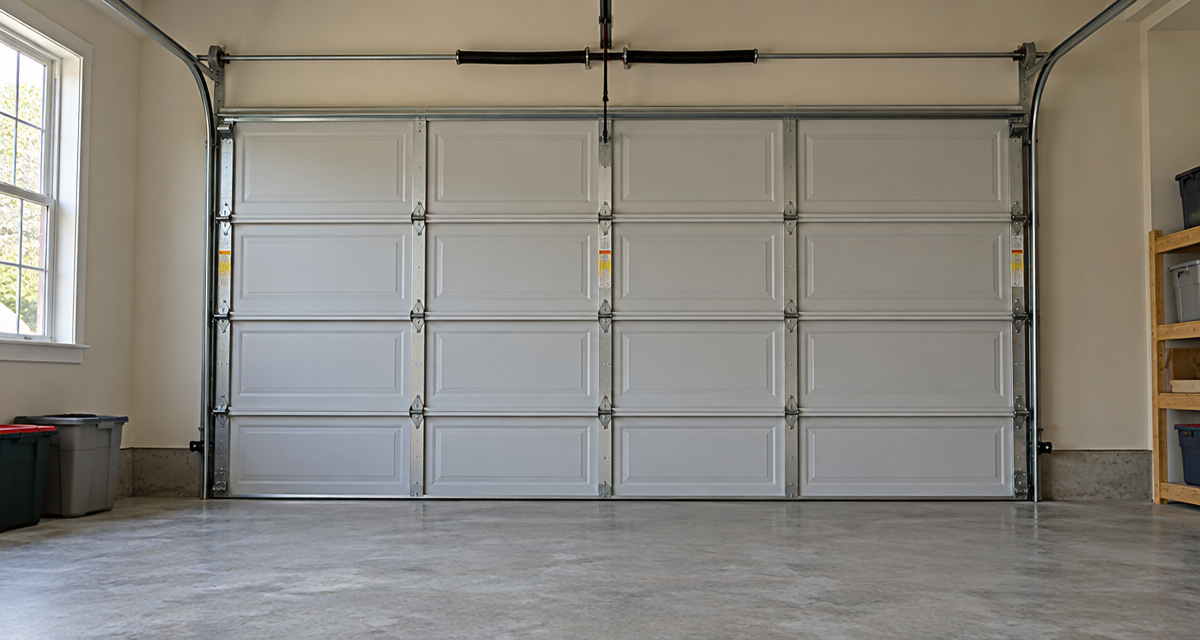
Read the whole visible label rather than stopping at a large heading or a familiar symbol. As a practical reading method, identify the hazard being described, the action you’re told to avoid, and any direction to seek professional service. Don’t guess at words hidden by paint, dirt, or damage. If part of the message is unreadable, record it as unreadable and use the manual while you seek the correct replacement information.
Keep the warning in context with the part it concerns, but don’t touch that part to confirm your interpretation. DASMA explains that bottom brackets are connected to the door’s springs and are under extreme tension. They should be adjusted or loosened only by a trained door systems technician. If a warning refers to a bracket or spring connection, your next step is understanding the restriction, not testing whether the hardware moves.
Cable warnings deserve the same hands-off approach. DASMA says cables connecting the spring system to the bottom brackets should be inspected visually, and frayed or worn cables should be replaced only by a trained technician because of high spring tension. If you happen to notice visible cable damage during your label review, don’t handle it for a closer look. We recommend reaching out to a garage door professional; cable work can be very dangerous if done incorrectly.
Use both manuals when a warning raises a question about the door and its opener. DASMA notes that each model has its own specific safety instructions and recommends keeping the manuals near the door for reference. Don’t substitute a warning photographed on a neighbor’s garage door for your own model’s instructions. If wording seems unclear or conflicts with your understanding, pause the related task and ask the manufacturer or a garage door professional to explain.
How can you keep labels visible when painting?
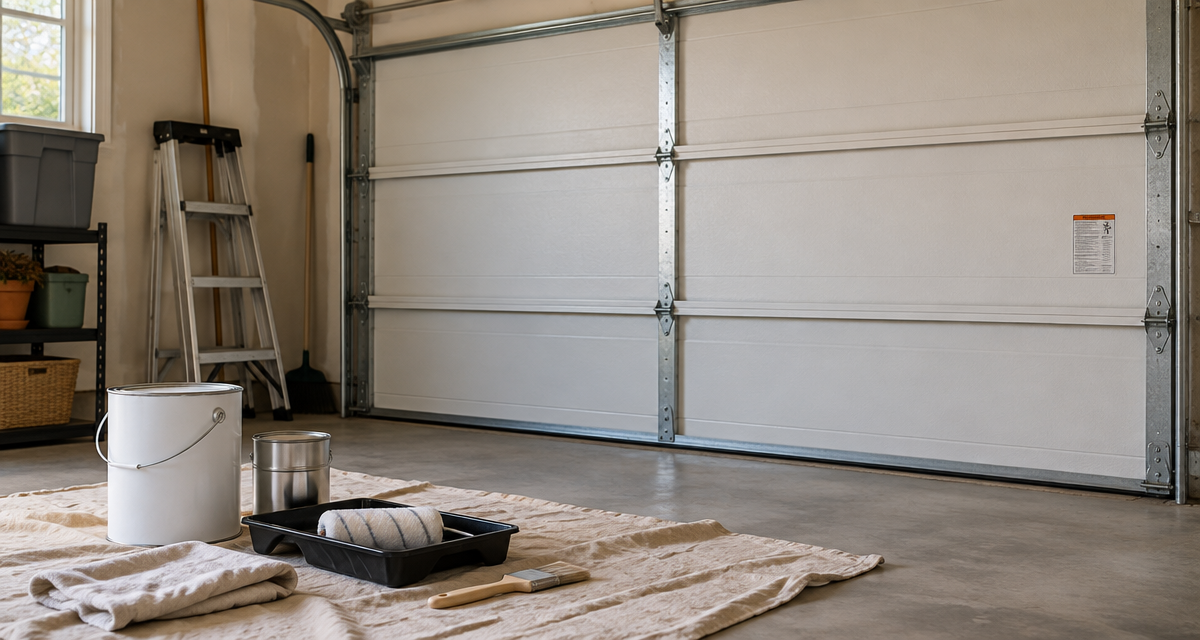
Before a painting project begins, include the labels in your walkthrough with whoever will do the work. Point out each warning you’ve located and explain that it needs to remain visible and readable. Take reference photos from floor level before any preparation starts. This isn’t a reason to peel a label off for safekeeping. Leave it in place, and make its protection part of the plan rather than an afterthought.
For a label on a plain panel surface safely accessible from the floor, plan a no-paint area around it. If masking is appropriate under the manufacturer’s painting guidance, keep adhesive off the label itself and avoid covering any wording with paint. Don’t sand, scrape, or apply paint remover over a warning. If you can’t protect the label without working near moving joints or hazardous hardware, leave that area alone and ask for professional guidance.
Warnings attached to or located near cables, springs, or bottom brackets need a different decision: don’t manipulate those parts to prepare for painting. Don’t loosen a bracket to tuck masking behind it, and don’t move a cable to reach a surface. We recommend reaching out to a garage door professional whenever label protection would require disturbing that hardware. It can be very dangerous if done incorrectly, and a paint project isn’t a reason to make an exception.
Once painting is complete and the area is ready for a safe visual review, compare the labels with your earlier photos. Check from floor level that the warnings remain visible and that no paint or leftover covering blocks the message. If paint has already obscured a label, don’t try scraping it clean or experimenting with solvents. Photograph its condition and ask about replacement instead. Let the manufacturer’s instructions guide any further work on the painted surface.
- Photograph accessible labels before preparation begins.
- Identify no-paint areas with the person doing the painting.
- Keep paint, abrasives, and adhesive off warning labels.
- Visually check label readability after the project.
How do you request a missing or unreadable label?
Start a replacement request with what you know, not a guess about what used to be there. Explain whether you found a damaged label, a painted-over warning, an empty area shown in the manual, or wording you simply can’t read from the floor. Include the photos you took and describe the location in plain language. This gives the manufacturer or garage door professional a clearer starting point without requiring you to investigate behind hardware.
Gather the door and opener identification information already available in your paperwork or visible from a safe floor-level position. If you can’t find a model number, say so rather than climbing to search for one. Keep the distinction between the door and opener clear when you make the request. Ask the contact to help identify which equipment the warning concerns and what additional information they need to determine the appropriate replacement.
Ask whether a replacement warning is available for your equipment, where it belongs, and who should install it. Also ask what to do about any damaged label that remains in place. Don’t assume a generic online sticker provides the complete message for your model, and don’t rewrite a warning yourself. The useful goal is to obtain the appropriate information and placement guidance, not merely to cover an empty space with something that looks similar.
If replacing the label would involve reaching above safe floor-level access or working around springs, cables, or bottom brackets, leave installation to a professional. We recommend reaching out to a garage door professional because disturbing these components can be very dangerous if done incorrectly. Homeowners in Austin, Travis County, and Hays County can contact Springz Garage Doors to discuss the concern. Ask about the next step without assuming that a particular replacement label is available.
- Describe whether the label is missing, damaged, or unreadable.
- Share floor-level photos and available equipment information.
- Ask about the correct replacement and its intended placement.
- Confirm whether professional installation is needed.
What should you check again after the labels are addressed?
Finish with the same limited visual review you started with. From floor level, confirm that the warnings you can safely see are uncovered and readable. If a professional replaced a label, ask them to explain the warning and confirm its placement against the applicable manufacturer guidance. Don’t tug on it to test adhesion or move nearby hardware to inspect its edges. Your role in this check is observation and asking questions.
Keep your notes, photos, and any replacement instructions with the door and opener manuals. DASMA recommends keeping those manuals near the door for easy reference. A simple record can also help you explain unresolved questions during a service visit or point out protected areas before another painting project. There’s no need to create a complicated maintenance file. The useful information is what you saw, what you couldn’t read, and what still needs professional attention.
Remember that readable labels aren’t a mechanical safety inspection. DASMA’s garage door safety tips recommend monthly safety checks and maintenance, along with an annual visit from a trained door systems technician. This guide covers only a visual label review, not every check described in a manual. Ask a professional about the broader maintenance needs of your system, and don’t treat a complete set of visible warnings as proof that every component is in good condition.
Make sure the people who use the garage understand the basic boundaries, especially after painting or other work. DASMA warns against placing fingers between door sections and explains that bottom brackets should only be adjusted or loosened by a trained technician. Share those cautions without demonstrating them by handling parts. The practical finish is straightforward: keep warnings visible, keep the manuals accessible, and hand off anything that requires reaching into or altering the door system.
What else do homeowners ask about this topic?
Where should garage door safety labels be located?
Don’t assume one layout applies to every door. Visually scan accessible surfaces from floor level and check your model’s manual for any placement information. Ask the manufacturer or a professional about areas you can’t safely assess.
Can I paint over a warning label and replace it later?
Plan to keep the existing warning visible instead. Leave a no-paint area around it and keep adhesive and abrasives off the label. If it’s already covered, ask about the correct replacement rather than scraping it.
Should I remove a damaged label before requesting another?
Leave it in place and photograph what remains. Ask for removal and replacement guidance. Don’t handle a label if doing so would involve springs, cables, or bottom brackets.
Does a missing label mean the garage door is unsafe?
A label check alone can’t determine the door’s mechanical condition. Request the appropriate warning information and ask a professional about any safety concerns. Don’t test or adjust hardware to investigate.
What should you remember before taking the next step?
- Keep label checks visual, with your feet on the floor and all hardware untouched.
- Read complete warnings alongside the safety instructions for your specific door and opener.
- Protect labels before painting rather than covering them and trying to restore them afterward.
- Document missing or unreadable warnings and ask about the correct replacement and safe placement.
Sources and manufacturer instructions
“Springs are under high tension.”
Get help with garage door tune-up
Call Springz to describe the problem, request a diagnosis and confirm current service availability in Travis and Hays Counties.