Hop Topics · 10 min read
Garage Door Off Track Response: Stop, Stay Clear, Call a Pro
By Ted DeSimone
Updated
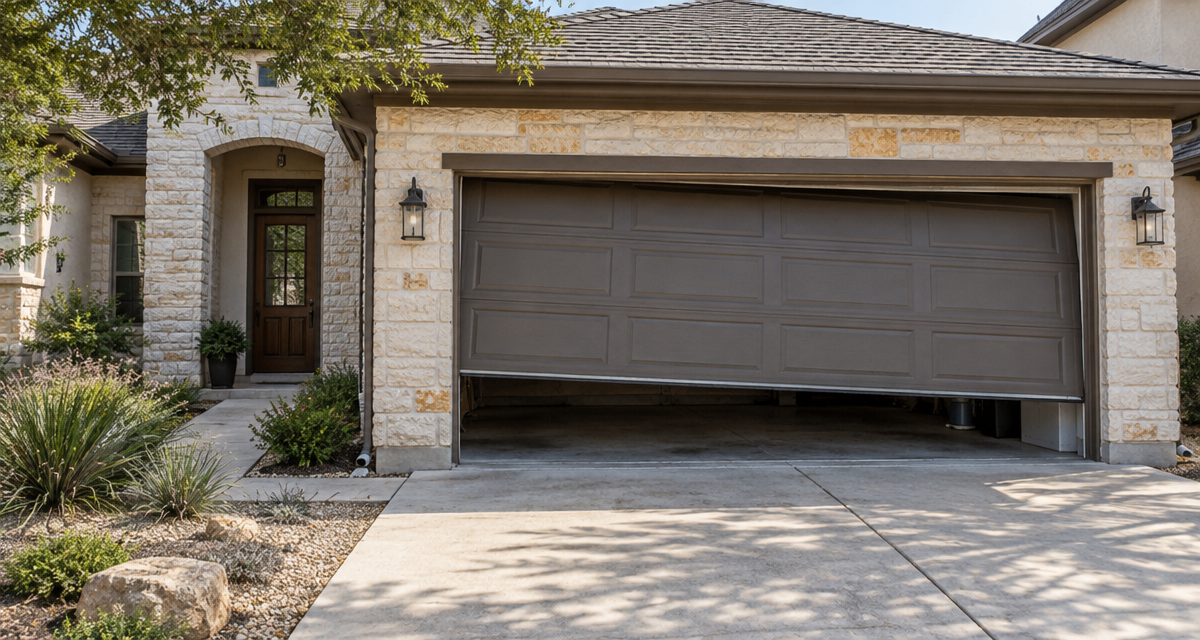
The safest garage door off track response starts with stopping, not troubleshooting. If your door looks crooked or appears to have left its tracks, stop operating it, keep people and pets clear, and arrange professional service.
For homeowners in Austin, Travis County, and Hays County, the priority is keeping everyone away from the door while help is arranged. Don't force it closed, try another opening cycle, or attempt to push it back into position.
What should you do first when the door looks crooked?
Stop trying to operate the door as soon as you notice that something looks wrong. Don't press the opener button again to see whether the door straightens itself, and don't ask someone else to try it while you watch. DASMA's garage door system guidance says a door that doesn't move smoothly may present an unsafe condition. You don't need to identify the failed part before deciding to stop using it.
Keep children, pets, visitors, and other household members away from the opening. Let everyone who uses the garage know that the door shouldn't be operated until it has been assessed. Put handheld remotes somewhere children can't access them, without approaching the door to retrieve one. The practical goal is simple: prevent someone from unknowingly trying the opener while another person is nearby or arranging service for the problem.
If the door is partly open, don't duck under it to retrieve belongings or reach your vehicle. Use a separate entrance if one is safely available, and leave items where they are when getting them would mean entering the door's path. Don't stand beneath the door to study it. You can explain that it looks crooked without getting close enough to inspect each roller, bracket, or section.
An open garage can create understandable concerns about belongings and access, but forcing the door shut isn't the answer. Keep people clear and tell the service provider whether the opening is exposed or the garage is your usual entrance. If you can't safely reach something, leave it alone. A useful first response protects people and communicates the situation rather than trying to restore normal access before the door has been checked.
- Stop trying to operate the door.
- Tell everyone in the household not to use it.
- Keep people and pets away from the opening.
- Arrange service with a garage door professional.
Why shouldn't you force the door or put it back on track?
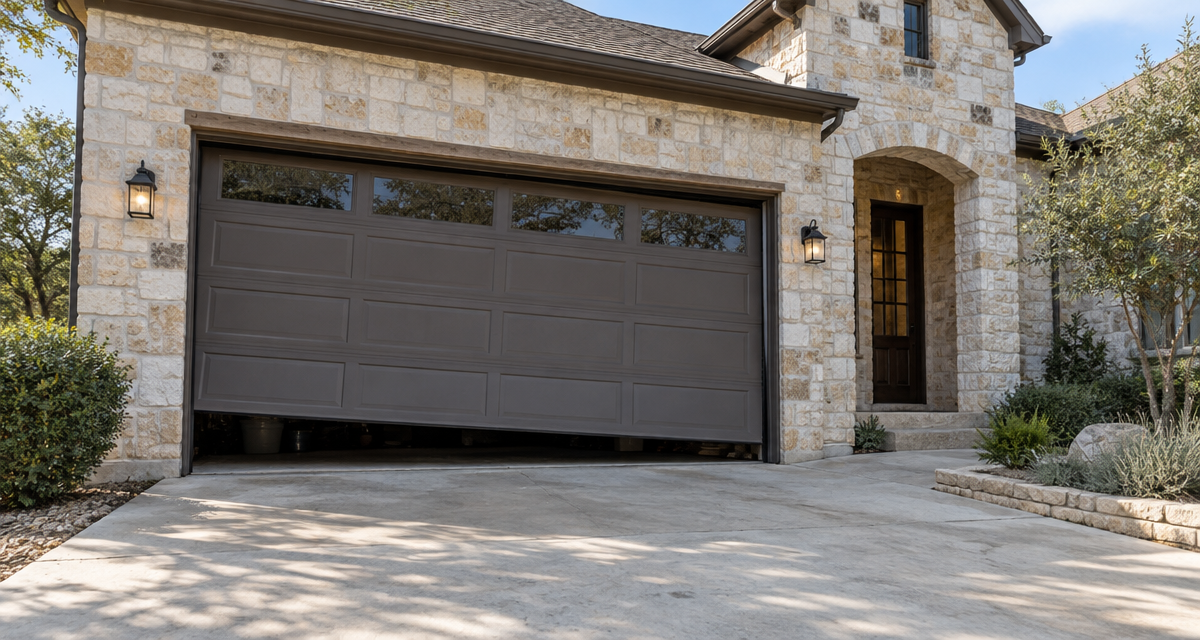
A garage door and its track work together as a system, according to DASMA. That means the visible problem shouldn't be treated as an isolated piece that simply needs pushing back into place. A crooked appearance doesn't give you enough information to decide what adjustment is appropriate. We recommend reaching out to a garage door professional for repositioning or track-related repairs, because this work can be very dangerous if done incorrectly.
Resist the temptation to pull down on the raised side, lift the lower side, or use tools to bend or loosen the track. Don't ask a neighbor to hold the door while you try an adjustment. The provided DASMA guidance doesn't describe a safe homeowner procedure for recovering an off-track door. Without that procedure and a professional assessment, the sensible response is to leave the door alone rather than improvise a repair.
Springs, cables, and bottom brackets deserve particular caution. DASMA explains that cables connect the spring system to the bottom brackets and that those brackets are under extreme tension. It also says cable replacement and bottom-bracket adjustments belong with trained technicians. Don't assume a bracket is ordinary hardware that can safely be loosened. We recommend professional help for these components because adjusting them incorrectly can be very dangerous.
Don't pull the emergency-release cord as a way to test a visibly crooked door, and don't switch to manual operation to see whether you can straighten it. Keep your fingers out of the joints between door sections, something DASMA specifically warns about. For this situation, our recommendation is to avoid moving the door at all. Ask the professional to assess it before anyone attempts a release, manual movement, or repositioning.
What can you observe without touching the door?
Describe what you can already see from a safe location rather than conducting a hands-on inspection. Useful observations include whether the door is open, closed, or partly open, and whether one side appears higher than the other. If a roller appears outside the track, report that as an observation rather than a confirmed diagnosis. You don't need to approach the hardware to make your description more technical or precise.
Think back to what happened before you stopped using the door. Did it move unevenly, stop unexpectedly, or make an unfamiliar sound? Share only what you actually noticed, and don't operate it again to recreate the event. DASMA says even older door systems should operate smoothly. That supports taking awkward movement seriously, but it doesn't establish which component caused the problem or what repair your particular door will need.
DASMA's garage door safety tips recommend visually inspecting cables for fraying or wear because damaged cables can break and cause injury. With a door that's already crooked, don't turn that general guidance into a close-up inspection project. If cable damage is clearly visible from where you're safely standing, mention it. Otherwise, leave the inspection to the technician, and don't touch a cable or move anything to get a better look.
A photo may help communicate the door's position if you can take it without approaching the opening or standing beneath the door. Use an existing safe viewpoint, and skip the photo if getting it would require entering the door's path. Don't climb a ladder for a better angle or reach around a track. A plain description is enough to begin a service conversation when photographs aren't practical to obtain safely.
What should you tell a garage door professional?
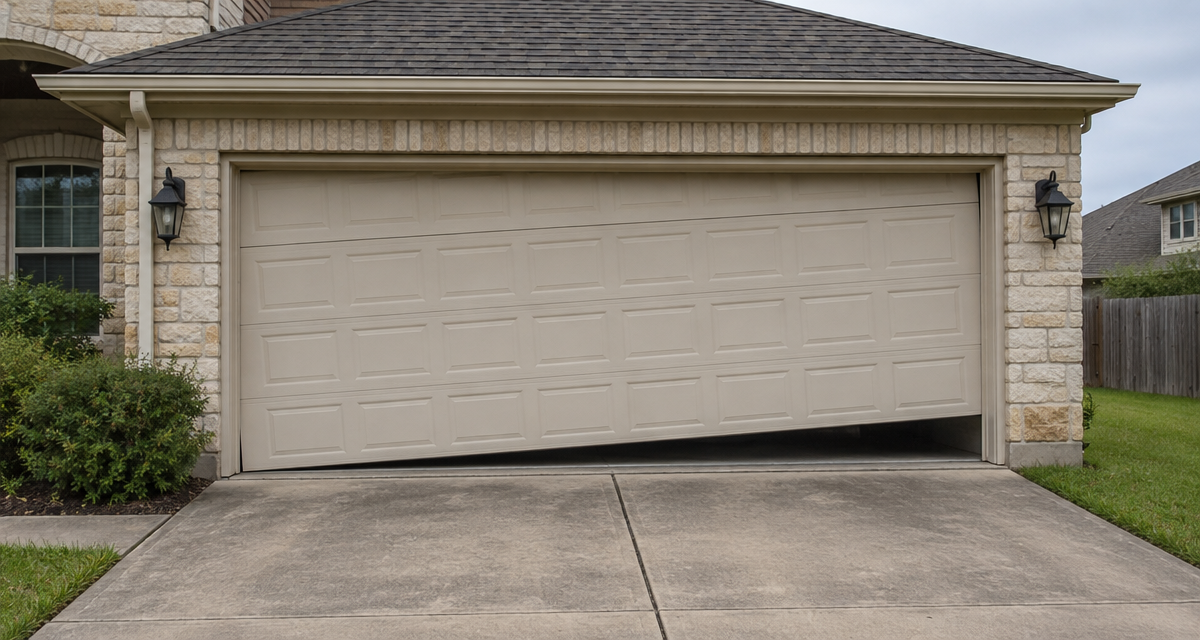
Start with the immediate concern: the door looks crooked or appears to be off track, and you've stopped using it. Tell the service provider whether it is fully closed or partly open and whether people have another safe way into the home. For a home in Austin, Travis County, or Hays County, provide your location and practical access details so the conversation can focus on arranging an assessment.
Mention any observations you've already made, including uneven movement, visible cable wear, or a roller that appears out of place. Also say whether anyone has tried to move or adjust the door since the problem appeared. There's no need to minimize an attempted fix or guess at a cause. A straightforward account helps communicate the situation without requiring you to perform tests or handle any part of the door.
Have the door and opener manuals available if you can retrieve them without going near the affected door. DASMA notes that individual models have specific safety instructions, so those documents are useful references. Don't climb up to inspect the opener or approach the track just to find identifying information. If the manuals aren't accessible, tell the service provider that and ask what information can safely wait until the visit.
Ask for an assessment of the door system rather than requesting only that a visible roller be put back. DASMA identifies tracks and door sections as parts of a coordinated system and reserves spring-system repairs for trained professionals. You can contact Springz Garage Doors to discuss service for your Central Texas home. Explain any access concerns when you call, and don't resume operation simply because the door's appearance seems to have improved.
- Describe the door's current position.
- Share observations without guessing at a diagnosis.
- Mention any attempted movement or adjustment.
- Explain safe access to the property and garage.
How should you care for the door after the problem is resolved?
Once the door has been professionally assessed and any necessary work has been completed, ask what routine care is appropriate for your specific system. Keep the instructions for both the door and opener somewhere accessible. DASMA recommends keeping these manuals near the door for reference because safety instructions vary by model. Make sure you understand which checks are intended for homeowners and which components should remain entirely in a technician's hands.
DASMA recommends monthly safety checks and maintenance, along with an annual visit from a trained door systems technician. Use that guidance as a maintenance framework, not as permission to test a door that has developed a new visible problem. Follow your manufacturer's instructions for routine checks. If the door looks crooked again or no longer moves smoothly, stop operating it and arrange professional assessment instead of continuing a scheduled check.
Remember the difference between looking and adjusting. DASMA recommends visual cable checks, but says worn or frayed cables should be replaced only by a trained technician because of spring tension. Bottom brackets likewise should only be adjusted or loosened by a trained professional. If you notice a concern during ordinary use or a permitted visual check, report it rather than tightening nearby hardware or attempting to compensate for the problem.
Keep the household response simple enough that everyone remembers it: unusual position means stop, stay clear, and call for help. Don't treat a door's age as a reason to accept awkward movement, since DASMA says even older systems should operate smoothly. Routine care doesn't replace responding to a new warning sign. The practical goal is to notice a concern, avoid unnecessary handling, and let a professional determine what the door needs.
What else do homeowners ask about this topic?
Can I use the opener one more time to straighten the door?
Don't try another cycle to see whether it straightens. Stop operating the door, keep everyone clear, and arrange professional assessment rather than testing a visibly crooked door.
Should I pull the emergency-release cord?
Not as a troubleshooting step for a crooked or off-track door. Leave it alone and ask a garage door professional to assess the situation before attempting manual movement.
Can I push a roller back into the track myself?
We recommend reaching out to a garage door professional instead. Repositioning the door or adjusting its track can be very dangerous if done incorrectly.
Does a crooked door mean a spring has broken?
The appearance alone doesn't establish the cause. Report what you can see without touching the system, and let a trained professional assess the door, tracks, and connected components.
What should you remember before taking the next step?
- Stop operating a crooked or apparently off-track garage door, including by hand.
- Keep people and pets clear, and use another safe entrance when available.
- Don't reposition the door or touch springs, cables, or bottom brackets.
- Arrange professional service and share observations without recreating the problem.
Sources and manufacturer instructions
“Springs are under high tension.”
Get help with off-track door repair
Call Springz to describe the problem, request a diagnosis and confirm current service availability in Travis and Hays Counties.