
Hop Topics · 10 min read
Why Garage Door Bottom Brackets Aren’t DIY Hardware
By Ted DeSimone
Updated
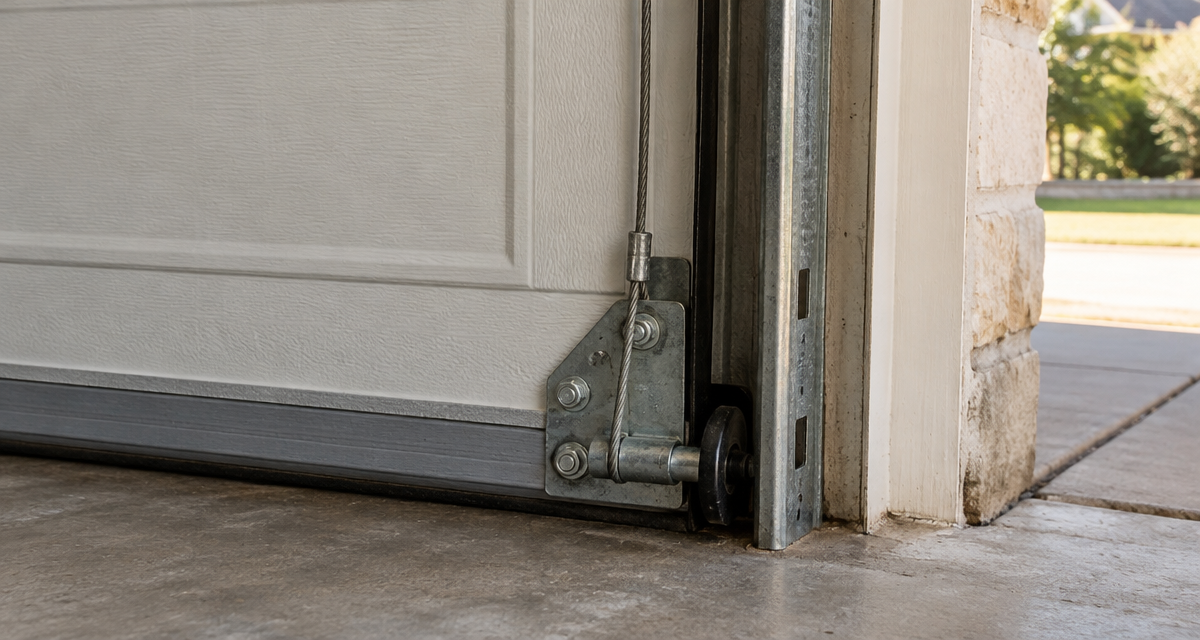
Your garage door bottom brackets aren’t ordinary mounting hardware. The cables attached to them connect to the spring system, putting these brackets under extreme tension. Don’t loosen or remove them for painting, repairs, or a quick hardware swap.
For homeowners in Austin and across Travis and Hays Counties, the practical rule is simple: leave the bottom corners alone and bring in a trained garage door technician whenever work would involve those brackets or their cables.
Why are garage door bottom brackets different from ordinary hardware?
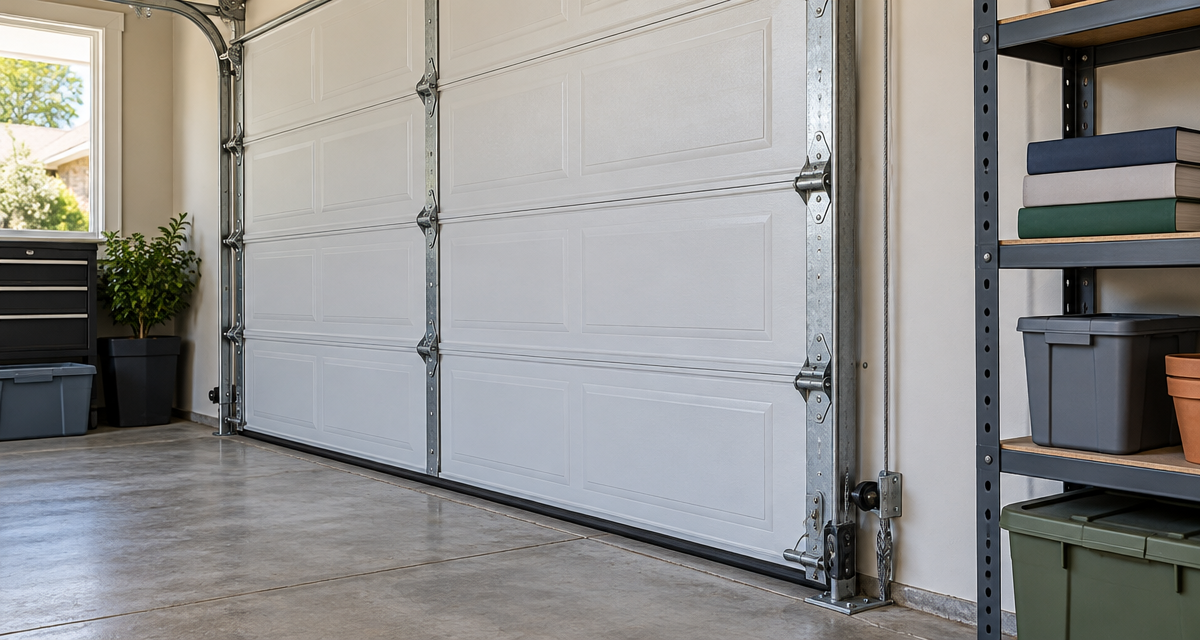
A bracket at the bottom corner of a garage door can look like something you’d remove before painting any other surface. The important difference is what it connects to. DASMA’s garage door system safety guidance explains that cables attach the spring system to the bottom brackets on both sides of the door. That connection makes these brackets part of a tensioned system, not just hardware holding a decorative piece in place.
DASMA specifically warns that bottom brackets are under extreme tension because of their connection to the springs. Its guidance is direct: only a trained door systems technician should adjust or loosen them. Having a tool that fits a fastener doesn’t change that warning. Neither does planning to remove just one screw, make a small adjustment, or put everything back exactly where you found it after the project is finished.
Some manufacturers use tamper-resistant hardware to prevent a novice from loosening bottom brackets, according to DASMA. That’s a safety feature, not an obstacle to work around. If hardware doesn’t turn with an ordinary tool, don’t search for a way to defeat it. And if your bracket has accessible fasteners, don’t take that as permission to loosen them. The spring connection is what matters, not how easy the hardware looks to remove.
You don’t need to identify every spring component to follow the safest homeowner boundary. Treat the bottom brackets and attached cables as parts to leave undisturbed. Consult your door’s manufacturer instructions for model-specific safety information, and don’t assume advice for another door applies to yours. If a project requires changing anything at that connection, we recommend reaching out to a garage door professional; it can be very dangerous if done incorrectly.
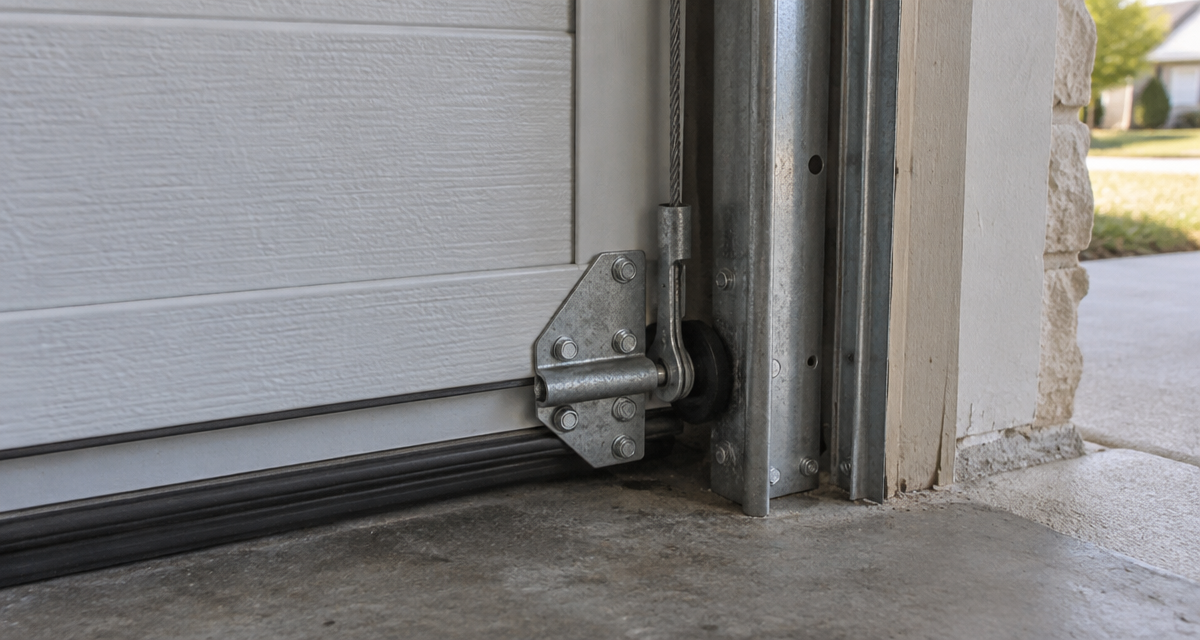
Should you remove bottom brackets before painting or other projects?
No. A painting project doesn’t make bottom bracket removal a homeowner task. It’s understandable to want a clean finish behind every piece of hardware, but the safety boundary stays the same whether you’re repainting, cleaning, or planning another improvement. Leave the brackets and their fasteners in place. If your intended finish requires access behind a bracket, pause that portion of the project rather than treating removal as routine paint preparation.
Plan the job around what can safely remain untouched. Before starting, review the door manufacturer’s instructions and decide whether your work would bring tools into contact with the bottom brackets or cables. Don’t loosen hardware to create clearance for a brush, scraper, or other tool. If you can’t complete that area without disturbing the assembly, leave it unfinished until you’ve discussed the work with a trained garage door technician.
Closing the door isn’t a substitute for professional handling of spring-connected hardware. DASMA notes that extension springs are under high tension when the door is down. That’s a useful reminder not to judge the safety of a bracket by the door’s position. Don’t experiment with raising or lowering the door to find a position where you think removal will be safe. Leave decisions about tensioned components to a trained professional.
If someone else is helping with the project, make the boundary clear before work begins: bottom brackets and attached cables stay untouched. Don’t let cosmetic work turn into an unplanned hardware repair. We recommend reaching out to a garage door professional if removal or adjustment seems necessary, because it can be very dangerous if done incorrectly. A missed patch of paint is a better outcome than improvising around a spring-connected part.
What can you check without touching the brackets or cables?
DASMA recommends visually inspecting the cables that connect the spring system to the bottom brackets on both sides of the door. The key word for homeowners is visually. Look without pulling on a cable, moving a bracket, or putting a tool on a fastener. You’re checking for something that deserves professional attention, not trying to prove that the assembly is safe by testing its strength or changing its position.
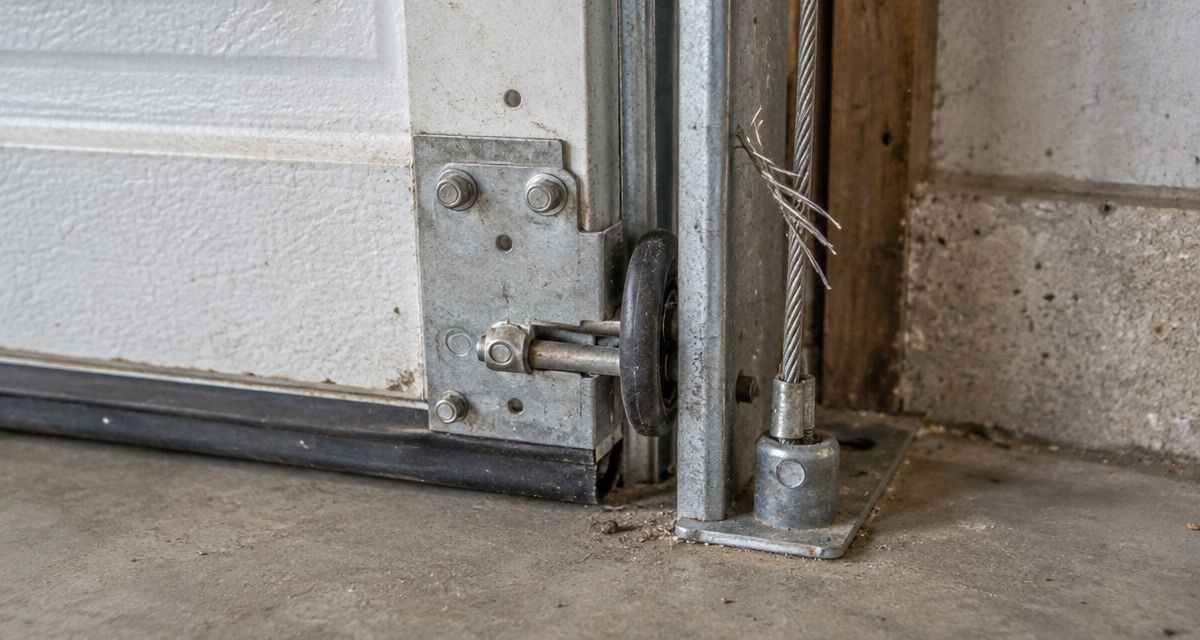
Frayed or worn cables are a specific warning sign identified in both DASMA safety sources. Those cables are in danger of breaking, which can cause injury. Because of the high spring tension involved, DASMA says only a trained technician should replace them. If you notice visible wear, don’t try to trim damaged strands, patch the cable, or make a temporary adjustment. We recommend reaching out to a garage door professional instead.
You can also pay attention to how the door has been operating during normal use. DASMA warns that a door that doesn’t move up and down smoothly may present an unsafe condition. That observation doesn’t establish that a bottom bracket is the cause, and you shouldn’t start adjusting hardware to find out. Describe the rough movement to a technician and let the professional evaluate the door as a complete system.
If a bracket or fastener looks questionable, don’t reach for a wrench to confirm whether it’s loose. An observation is enough reason to ask for help; you don’t need a complete diagnosis before calling. Make a note of which side concerns you and what you noticed. If you can take a photograph without touching the assembly or entering the door’s path, it may help you explain the concern when arranging service.
When should you call a trained garage door technician?
Call before any work that would require loosening, adjusting, or removing a bottom bracket. You don’t have to wait until something looks broken. The task itself crosses the boundary DASMA sets for trained technicians. Explain whether you’re planning painting, addressing a hardware concern, or arranging another project near the door. We recommend professional help for this work because handling spring-connected brackets can be very dangerous if done incorrectly.
Visible cable fraying or wear is another clear reason to arrange professional service. Don’t make cable replacement part of a weekend project, even if replacement parts appear easy to obtain. DASMA reserves that work for trained technicians because of high spring tension. As a common-sense precaution, avoid using a door with a suspected cable problem while you seek guidance, and keep other household members away from the affected area.
A door that struggles or no longer operates smoothly also deserves attention. DASMA explains that awkward operation that continues during manual use may indicate an out-of-balance spring system, which can cause premature wear on other components. You don’t need to reproduce that condition yourself to justify a call. Report what you’ve already observed, and don’t attempt spring adjustments. DASMA says spring systems are dangerous and should be repaired only by trained professionals.
If you’ve already started loosening a bottom bracket, stop the project rather than trying to complete the removal or improvise a correction. Keep people clear and contact a trained garage door technician, explaining exactly what you touched. Don’t operate the door to see whether everything still works. We recommend reaching out to a garage door professional because further work on that assembly can be very dangerous if done incorrectly.
How can routine care keep these parts off your DIY list?
Routine care starts with knowing which jobs belong to a homeowner and which belong to a trained technician. DASMA recommends monthly safety checks and maintenance, along with an annual visit from a trained door systems technician. That recommendation doesn’t mean every component is appropriate for hands-on homeowner work. Bottom bracket adjustments and cable replacement remain professional tasks, even when they come up during a scheduled check rather than an unexpected problem.
Keep the owner’s manuals for both the door and opener handy. DASMA emphasizes that each model has its own safety instructions and recommends keeping the manuals near the door for reference. Before following a maintenance suggestion, check that it matches your equipment and stays within those instructions. A general checklist shouldn’t become permission to tighten every visible fastener, especially when it reaches the brackets connected to the spring system.
Use a professional visit to discuss concerns you’ve noticed and any upcoming work around the door. For an older garage door, DASMA recommends having a professional inspect the springs and replace them if needed. You can also mention visible cable wear or changes in operation without trying to identify the failed component yourself. Keeping the conversation focused on observations helps you avoid turning a maintenance check into an unnecessary DIY experiment.
For an Austin, Travis County, or Hays County home, the takeaway is straightforward: plan cosmetic projects around leaving spring-connected hardware alone. If your next project involves garage door bottom brackets, contact Springz Garage Doors to discuss professional service before you start. You don’t need to remove a part to decide whether it needs attention. A clear description of the concern is a safer starting point than a loosened fastener.
What else do homeowners ask about this topic?
Can I loosen just one bottom bracket screw for painting?
No. DASMA says bottom brackets should be adjusted or loosened only by a trained door systems technician. Leave the fasteners untouched, even for a small painting task.
Is a bottom bracket safe to remove when the door is closed?
Don’t treat a closed door as permission to remove it. DASMA notes that extension springs are under high tension when the door is down, and bottom bracket work belongs to trained technicians.
What should I do if the cable near a bottom bracket is frayed?
Leave it untouched and contact a trained garage door technician. DASMA warns that frayed or worn cables can break and cause injury; replacing them can be very dangerous if done incorrectly.
Does ordinary-looking hardware mean my bottom brackets are DIY-safe?
No. Some manufacturers use tamper-resistant hardware, but accessible fasteners don’t remove the hazard. The brackets’ connection to the spring system is why they require professional handling.
What should you remember before taking the next step?
- Bottom brackets connect to the spring system through cables and are under extreme tension.
- Never loosen or remove bottom brackets for painting, cleaning, or other homeowner projects.
- Visually check cables without touching them, and call a trained technician about fraying, wear, or rough door operation.
- Follow your model’s safety instructions and leave bracket, cable, and spring work to trained professionals.

Sources and manufacturer instructions
“Springs are under high tension.”
Get help with garage door repair
Call Springz to describe the problem, request a diagnosis and confirm current service availability in Travis and Hays Counties.