How-To Guides · 11 min read
How to Find the Right Manuals for Your Garage Door and Opener
By Ted DeSimone
Updated
A garage door manual lookup should start with information you can gather safely, not a ladder or a screwdriver. For homeowners in Austin, Travis County, and Hays County, the goal is to identify the door and opener separately, then ask the appropriate manufacturer for matching instructions.
The right manuals help you understand both everyday operation and where homeowner care should stop. This guide keeps the search at ground level, with no cover removal, spring adjustments, or hands-on investigation of tensioned hardware.
How do you begin a garage door manual lookup safely?
Start by treating the door and the opener as separate items in your search. DASMA advises keeping owner’s manuals for both because each model has its own safety instructions. Create two notes, one labeled door and the other opener, so you don’t accidentally apply instructions to the wrong equipment. Your first objective is simply to collect reliable identifying information, not to diagnose a noise, correct movement, or start a repair.
Before approaching the equipment, check any paperwork you already have. Look through your home maintenance folder, saved purchase documents, or information left with the house for references to either item. Treat whatever you find as a starting point rather than proof that it matches the equipment currently installed. If a record is unclear, copy its wording into your notes and plan to ask the manufacturer to help verify it.
Keep the physical inspection limited to what you can see comfortably from the floor, with the door stationary. Don’t move the door just to expose a possible label, stand on a chair, climb a ladder, or remove a cover. If getting a better view would require any of those actions, leave that information blank. An incomplete note is a better starting point than a risky attempt to fill every field.
Keep children and pets away while you’re gathering information, and avoid handling controls as part of the search. DASMA warns against children playing with garage doors and says remote controls should be kept where children can’t play with them. There’s no need to run the opener to begin identifying it. If ordinary door operation is necessary at another time, DASMA says to watch the door until it closes completely.
- Create separate notes for the door and opener.
- Review any existing equipment paperwork.
- Record only information visible safely from the floor.
- Mark missing details as unknown rather than guessing.
Which manufacturer and model details should you record?
For each item, record the manufacturer name and model wording exactly as you can safely read them. Preserve letters, numbers, and any suffixes instead of shortening the information to a familiar product name. If a label includes other identifying details, you can note those too, without assuming what they mean. The useful distinction is between information you actually observed and information you’re inferring from appearance, memory, or an old document.
A photograph can help you avoid transcription mistakes, but take it only from a safe position on the floor. Use your phone’s zoom if it produces a readable image without requiring you to lean into the equipment or reach toward moving parts. Don’t scrape, peel, or remove anything to expose more information. If the picture is blurry, tell the manufacturer that the identification is uncertain rather than supplying your best guess.
Keep every detail attached to the item it came from. For example, don’t copy information from a handheld control into the door’s model field or assume it identifies the overhead opener. Describe the object you photographed and let the manufacturer decide whether that information helps. A simple note such as “marking visible on the opener from the floor” is more useful than presenting an uncertain number as a confirmed model.
If you can’t find a safely readable identifier, stop the inspection there. You can still contact the manufacturer named in your records and explain what you do and don’t know. Ask whether your available photographs or documents are enough to identify the equipment. If identification would require access near springs, cables, or bottom brackets, we recommend reaching out to a garage door professional; disturbing these parts can be very dangerous if done incorrectly.
- Copy visible manufacturer and model wording exactly.
- Take a photo only if you can do so safely from the floor.
- Identify which piece of equipment each detail came from.
- Flag unreadable characters and conflicting records.
How do you request and verify the matching manuals?
Once you’ve collected the available details, use the manufacturer’s own website or contact information to request help. Ask specifically for the owner’s or operating manual that matches your door or opener, along with applicable safety instructions. This is a request for confirmation, not an assumption that the first downloadable document is correct. DASMA directs homeowners to the manufacturer’s installation or instruction manual for safety information about their particular model.
Keep your message straightforward: “I’m trying to find the correct manual for this equipment. Here is the manufacturer and model information I can read safely, plus the photographs or records I have. Can you confirm the matching manual?” Add any uncertainty, such as an unreadable character or a disagreement between paperwork and the visible marking. You don’t need to hide missing information or climb up for another photograph before asking.
When you receive a document or link, compare its stated model coverage with your notes. If the wording doesn’t line up, ask the manufacturer to clarify before using the instructions. Don’t decide that a manual is close enough because the illustration resembles your equipment. The reason for this extra check is practical: DASMA says door and opener models have specific safety instructions, so an unresolved match shouldn’t become the basis for hands-on work.
Repeat the confirmation process separately for the other part of the system. Save the manufacturer’s response with each manual so you can remember how the match was established. If no match can be confirmed, don’t substitute instructions for a similar-looking model. Keep the uncertain material separate from confirmed documents, and ask a garage door professional for help with identification rather than expanding your search into disassembly or risky access around the equipment.
- Contact the manufacturer with your recorded details.
- Request the matching owner’s manual and safety guidance.
- Compare the document’s model coverage with your notes.
- Resolve discrepancies before following any procedure.
How do the manuals separate homeowner tasks from professional work?
Read the safety information before jumping to a maintenance or troubleshooting page. Look for who the instructions are intended for, any warnings, and the conditions that must be met before a task begins. For this guide, keep your own work limited to reading, organizing information, and safe observations from the floor. Finding a procedure in a manual doesn’t automatically mean it’s appropriate for a homeowner or suitable for your situation.
DASMA draws clear boundaries around several door components. It says spring systems should be repaired only by trained professionals, worn or frayed cables should be replaced only by a trained technician, and bottom brackets should be adjusted or loosened only by a trained door systems technician. We recommend reaching out to a garage door professional for these jobs because they can be very dangerous if done incorrectly. Don’t use the manual as permission to experiment.
Apply the same caution to opener troubleshooting. DASMA recommends that a trained door systems technician perform sensitivity adjustments and install the opener. It also explains that a door that feels heavy or requires two hands to open may be out of balance; a more powerful opener isn’t the answer. If you’ve already noticed these symptoms, report them rather than recreating them. We recommend professional help because attempting corrections can be very dangerous if done incorrectly.
For any proposed homeowner task, ask whether the confirmed manual clearly addresses it and whether you can follow it without prohibited access or adjustments. In this guide, anything requiring cover removal, ladder work, or spring adjustment is outside scope. If the instructions are unclear, stop and ask the manufacturer or a garage door professional. Don’t fill in missing safety details with an unrelated video, a different model’s procedure, or trial and error.
- Read safety warnings before troubleshooting instructions.
- Identify any tasks assigned to trained technicians.
- Exclude tasks requiring ladders, cover removal, or tensioned-part work.
- Ask for clarification whenever safe handling is unclear.
How should you store the manuals and use them going forward?
Once the matches are confirmed, create a simple reference set for the household. Keep the door manual, opener manual, identifying photographs, and manufacturer correspondence together, with the two equipment records clearly separated. Save digital copies somewhere you can find again without repeating the whole search. If you also keep paper copies, choose a dry, accessible location that doesn’t put anyone in the door’s path or require reaching near its hardware.
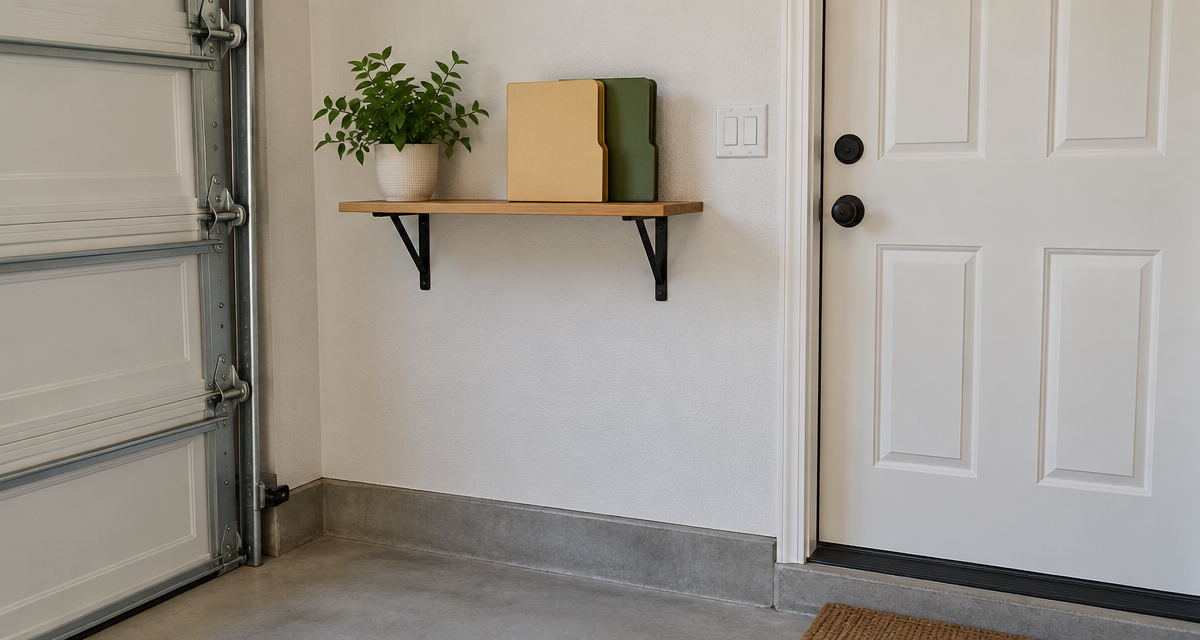
DASMA recommends keeping the owner’s manuals near the door for easy reference. Make that practical for your garage by choosing a nearby storage spot that stays safely accessible. Tell other household members where the documents are and which one covers each item. The purpose isn’t to encourage everyone to troubleshoot. It’s to make the correct operating and safety information available without guessing, especially when someone is unfamiliar with the door or opener.
Use the confirmed documents when planning ongoing care rather than inventing a maintenance routine. DASMA recommends monthly safety checks and maintenance, along with an annual visit from a trained door systems technician. Let the model-specific guidance and the professional’s advice establish what’s appropriate for your equipment. That recommendation doesn’t mean every check is a do-it-yourself task, and it doesn’t override this guide’s limits on climbing, cover removal, or handling dangerous components.
Finally, keep a short list of unresolved questions with the manuals. Include identification uncertainties, instructions you don’t understand, or operating concerns you’ve already observed without trying to reproduce them. If the door or opener is replaced later, repeat the matching process instead of carrying the old instructions forward automatically. For Central Texas homeowners, a successful lookup ends with confirmed references and clear limits, not with taking the system apart to learn more.
- Save the confirmed manuals with their matching equipment notes.
- Keep an accessible reference copy near the garage.
- Record questions for the manufacturer or a professional.
- Recheck the manual match whenever equipment changes.
What else do homeowners ask about this topic?
Do I need a manual for both the garage door and the opener?
Yes. DASMA recommends keeping both owner’s manuals because each door and opener model has specific safety instructions. Identify and confirm the matching document for each item separately.
What if I can’t read the model information from the floor?
Don’t climb, remove a cover, or reach into the equipment. Share your available paperwork and safe photographs with the manufacturer, and ask a garage door professional for help if identification remains uncertain.
Can I use a manual for a model that looks similar?
Don’t rely on appearance alone. Ask the manufacturer to confirm that the document covers your equipment before following its procedures, since safety instructions are model-specific.
Does having the manual make spring or cable work a DIY task?
No. DASMA assigns spring-system repairs, cable replacement, and bottom-bracket adjustments to trained professionals. We recommend reaching out to a garage door professional because this work can be very dangerous if done incorrectly.
What should you remember before taking the next step?
- Identify the door and opener separately using paperwork and details safely visible from the floor.
- Ask the manufacturer to confirm the matching manual instead of choosing one by appearance.
- Read safety guidance first, and leave dangerous repairs and adjustments to a garage door professional.
- Store confirmed manuals nearby with equipment details and any unresolved questions.

Sources and manufacturer instructions
“Springs are under high tension.”
Get help with garage door tune-up
Call Springz to describe the problem, request a diagnosis and confirm current service availability in Travis and Hays Counties.