
How-To Guides · 8 min read
How Do You Handle a Garage Door Power Outage?
By Ted DeSimone
Updated
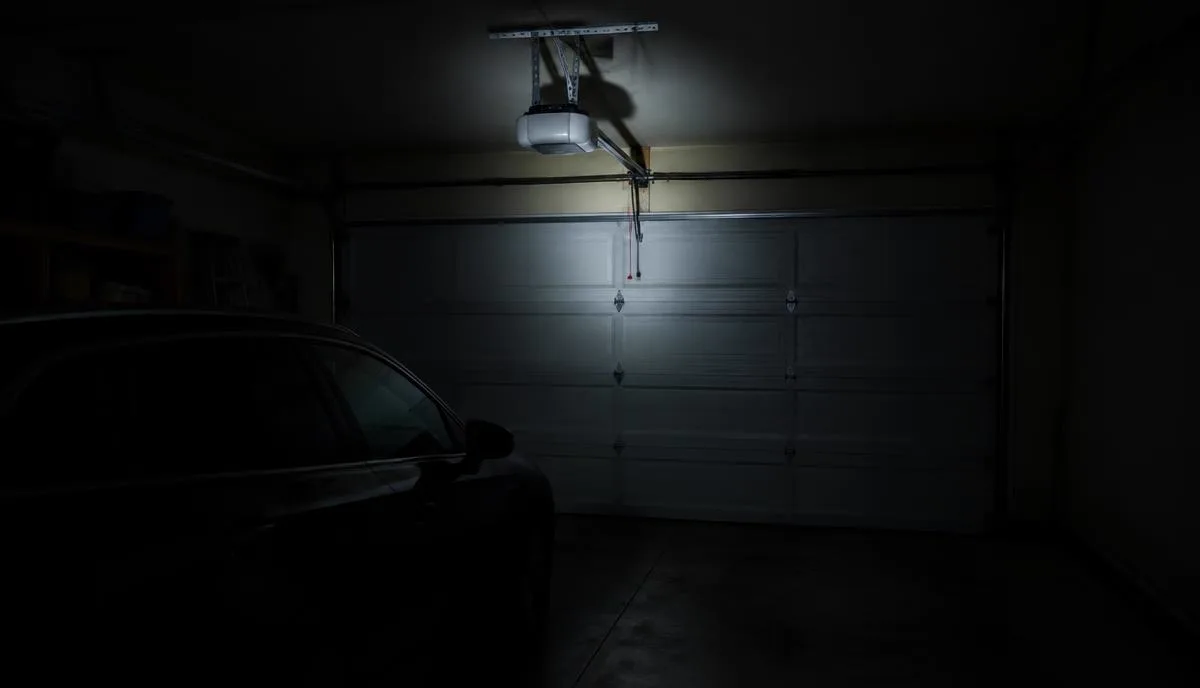
When the power goes out, pulling the red cord isn't always the safe first move. A garage door power outage requires checking whether the door is fully closed, mechanically sound and equipped for safe manual operation.
This guide explains what to check before releasing the opener, why trolley and wall-mounted systems differ, and how to prepare for the next outage. If the door is damaged or unstable, stop and arrange help.
What should you check before pulling the emergency release?
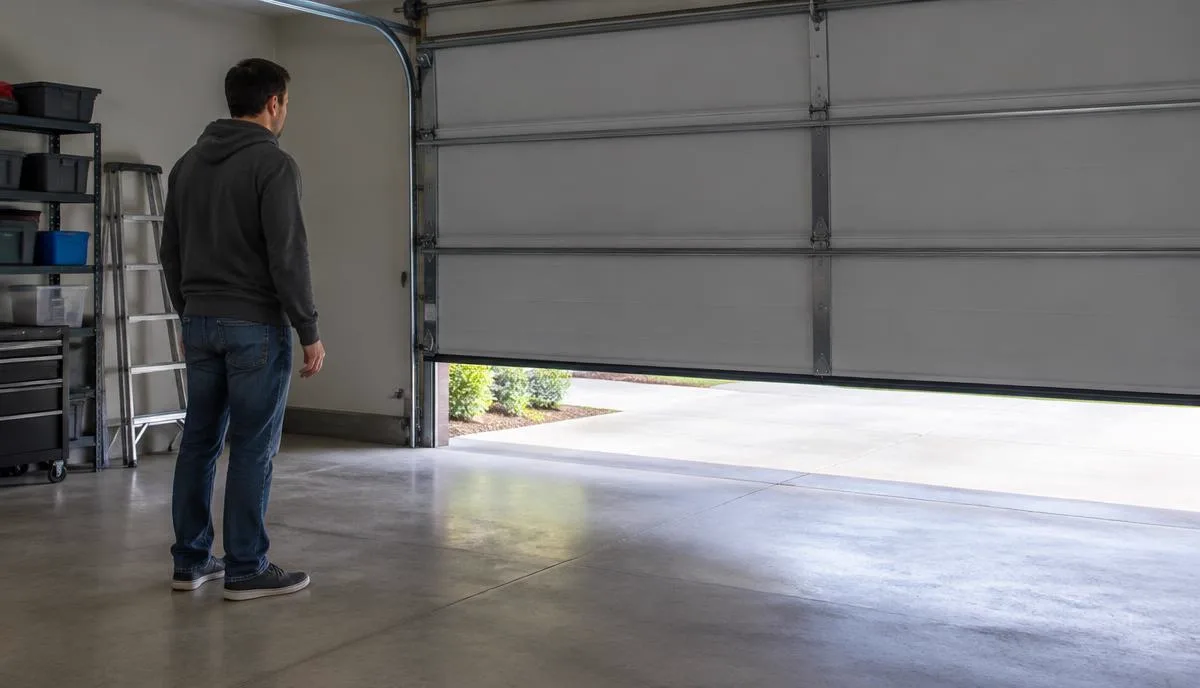
Check the door's position first. A fully closed door with no visible damage is different from one that's partly open or hanging unevenly. Disconnecting an open door can remove support, especially when the counterbalance isn't working correctly, so don't treat the release cord as a universal rescue handle.
Look from the floor for danger signs such as loose cable, a visible spring break or crooked panels. Don't climb near the overhead system or test whether a suspect door is heavy. A power outage doesn't establish that the mechanism is sound, and a previous lifting problem still matters.
Find the model instructions in your paperwork or the manufacturer's support material. If you can't identify the release procedure, don't experiment with cord directions or unlabeled handles. Operators differ, and a procedure for a trolley opener may not apply to a wall-mounted system.
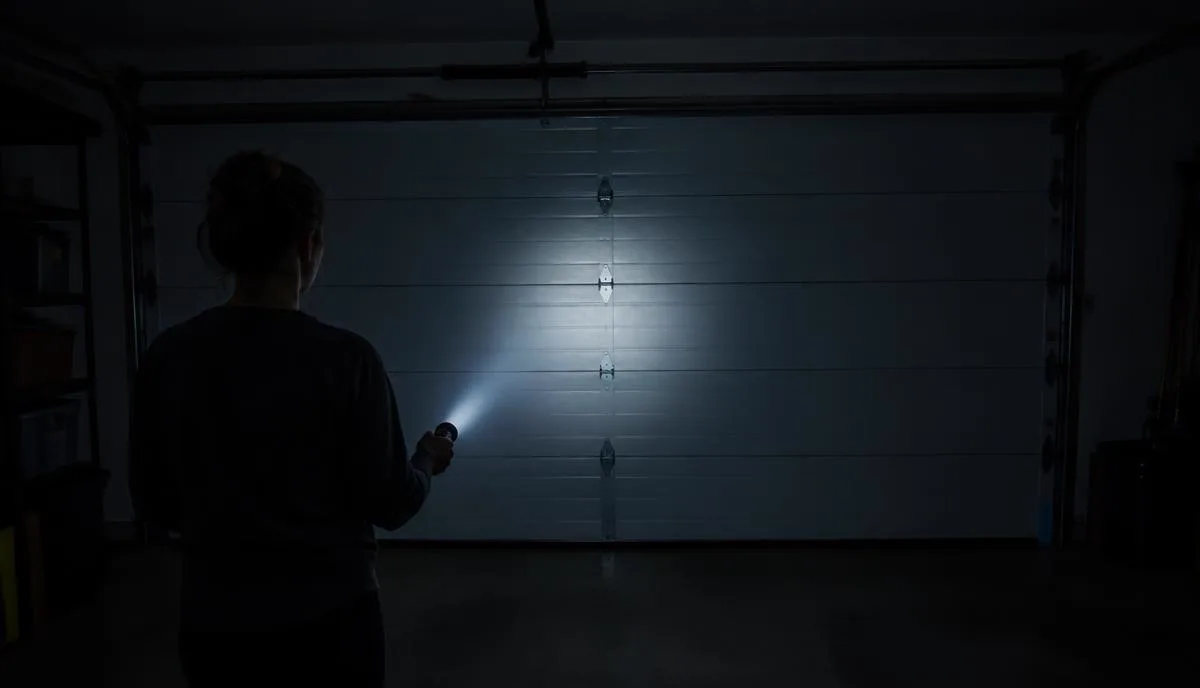
Also consider safe access and lighting. Use a battery-powered light and keep people out of the opening. If the garage has no separate entrance and the door can't be accessed safely from inside, request assistance rather than attempting to force an exterior release or pry the door open.
Can battery backup operate the door during an outage?
Some openers have battery backup, but many don't. Check the specific model and installed equipment rather than assuming a smart opener or Wi-Fi connection includes outage operation. Wireless features and a battery-powered motor function are different capabilities.
If backup is installed, follow the manual for its indicators, maintenance and operating limits. A battery can require replacement or charging attention, so its presence doesn't promise indefinite operation. Record any warning indication and don't keep cycling the door to see how much energy remains.
Some features may operate differently while the system uses backup power. Consult the exact model guidance about controls and safety functions instead of relying on normal powered behavior. If the door has mechanical damage, backup power doesn't make continued operation safe.
When discussing an upgrade, ask what equipment is included and how the battery is serviced. For example, verify whether the quoted model has integrated backup or needs an approved accessory. Request the replacement instructions and model-specific battery information with the installation paperwork.
How do you release a closed door for manual operation?
Only proceed when the door is closed, mechanically sound and the manufacturer permits the procedure. Disable power or controls as instructed so the opener can't start unexpectedly. Keep the operating area clear and don't begin if you would need to stand under an unstable door.
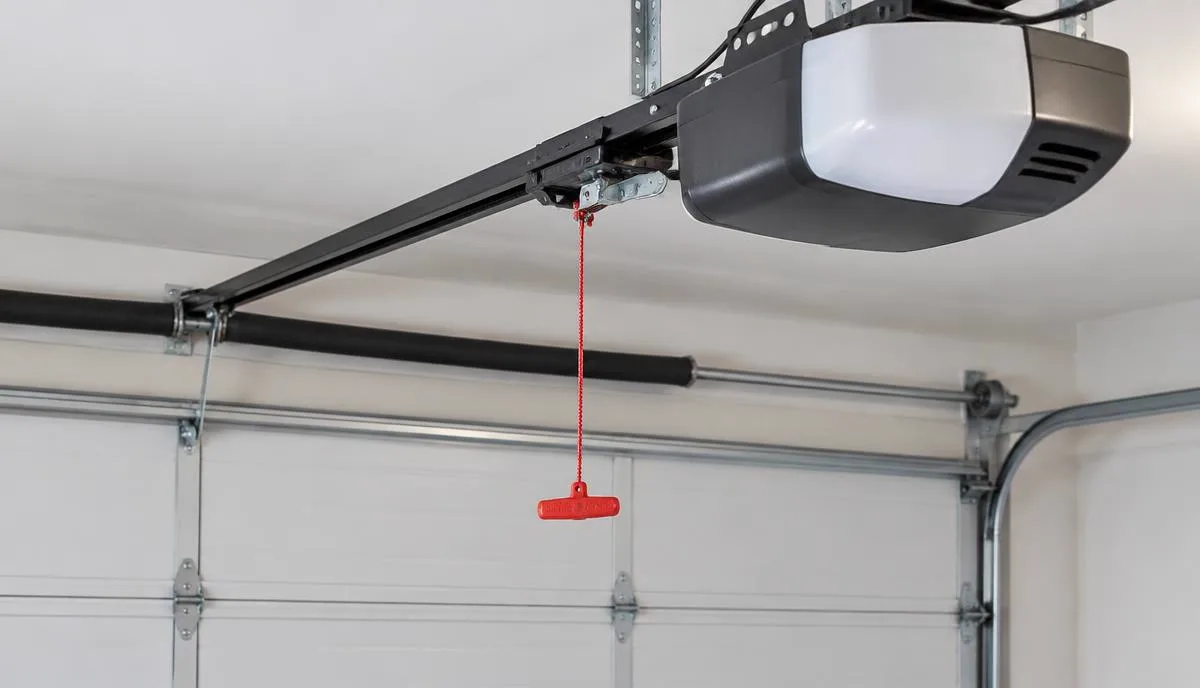
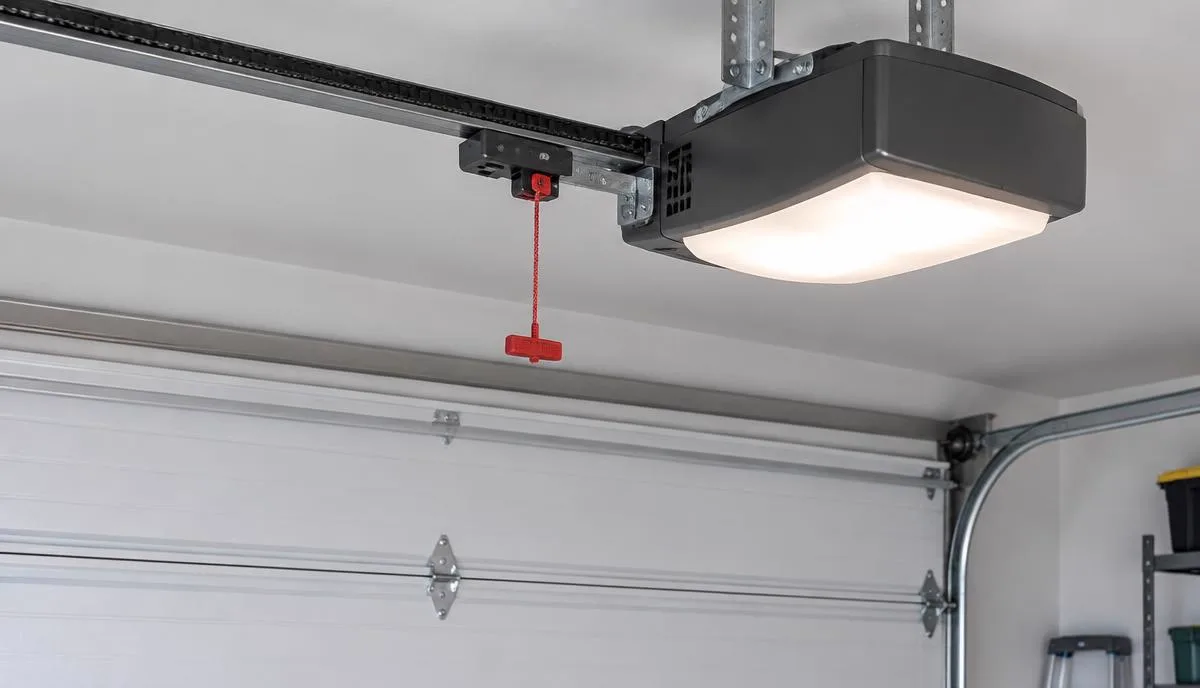
For a trolley-style opener, the release may use a cord attached to the trolley on the rail. The required pull direction and how it stays disengaged depend on the model. Don't use a generic instruction to pull toward or away from the motor when your manual says something different.
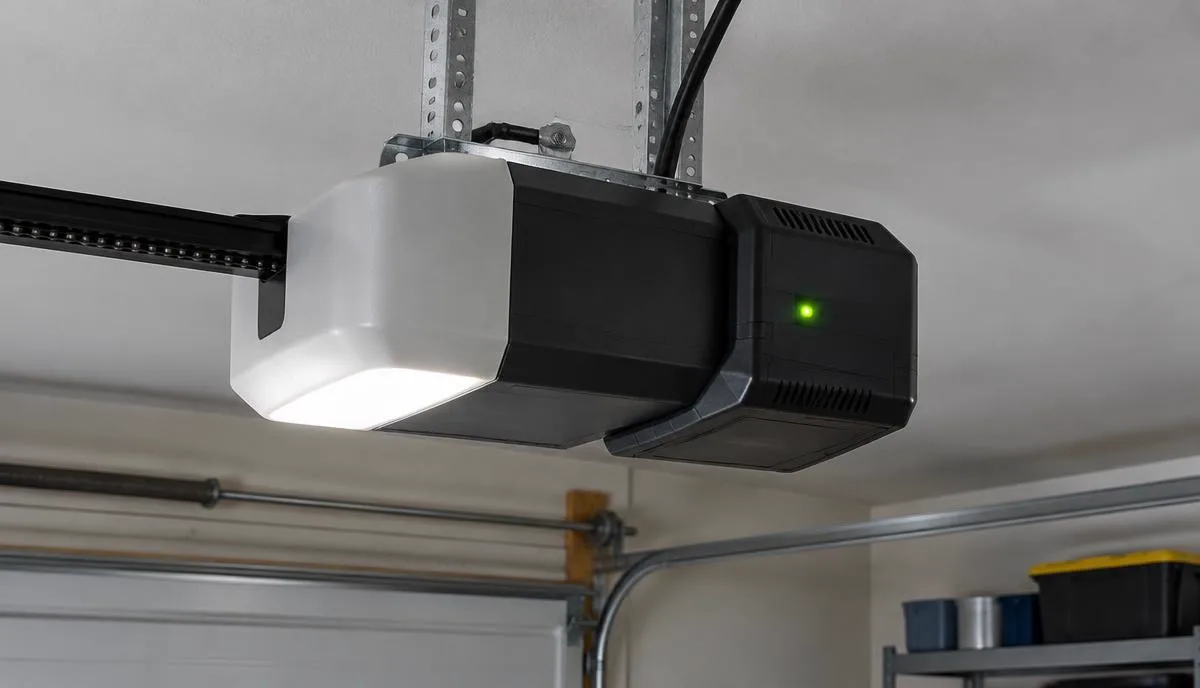
Wall-mounted systems can use a different release and re-engagement arrangement. The pictured LiftMaster housing is a product example, not a demonstration of which cord to pull. Locate the actual instructions for your installed operator before touching its release mechanism.
After disengagement, use the door's designated handle or gripping location, never fingers between sections. Lift only as instructed and stop immediately if it binds, feels unusually heavy or moves unevenly. Don't ask another person to add muscle to overcome a fault the counterbalance should have prevented.
- Confirm the door is closed and safe for manual use.
- Prevent unexpected operation as the manual directs.
- Follow the exact release procedure.
- Use the designated handle and stop at resistance.
What should you do if the door is too heavy or will not stay open?
Stop. A difficult or unstable manual lift can indicate a mechanical fault, and you shouldn't diagnose it by forcing the door higher. Don't stand below it, hold it over a vehicle or assume the opener will safely support it after reconnection.
Never prop the door with a chair, ladder or loose object. A prop can slip, and an unsupported door can fall unexpectedly. If you've begun a lift and can't safely control the door, keep everyone clear and request professional assistance rather than improvising a support system.
A trapped car doesn't change those limits. Arrange alternate transportation if needed and tell the service provider the door position, access constraints and any visible damage. A closed door with a suspected spring failure calls for a counterbalance assessment, not a stronger pull on the release cord.
If the door is partly open and can't be moved safely, keep the area isolated. Don't attempt to remove hardware, disconnect cables or loosen brackets to free it. Explain that it's unstable when requesting help so the provider understands the safety situation before arrival.
How do you reconnect the opener when power returns?
Check that the opening is clear and the door is in the position required by your operator instructions. Remove any manual lock from the operating state only as instructed, and don't reconnect a door that developed damage or uneven movement during the outage.
Some trolley systems re-engage through a specified trolley position or an operating cycle; others require a release mechanism to be reset first. Wall-mounted systems can differ again. Don't repeatedly run the motor to force engagement if the manual's procedure doesn't work.
Once reconnected, observe the first normal operation from a safe location and perform the manufacturer-required safety checks. A moving motor isn't proof that the trolley is engaged correctly or the protection works. Stop if the door binds, moves crooked or fails a required test.
If normal operation doesn't return, provide the model, release steps used and what happens now. For example, 'the motor runs but the trolley doesn't move the door' is useful evidence. Don't increase travel or force settings simply because the reconnection wasn't successful.
- Follow the exact re-engagement instructions.
- Confirm locks and controls are in the correct state.
- Observe normal movement and complete prescribed safety checks.
How can you prepare your garage for the next power outage?
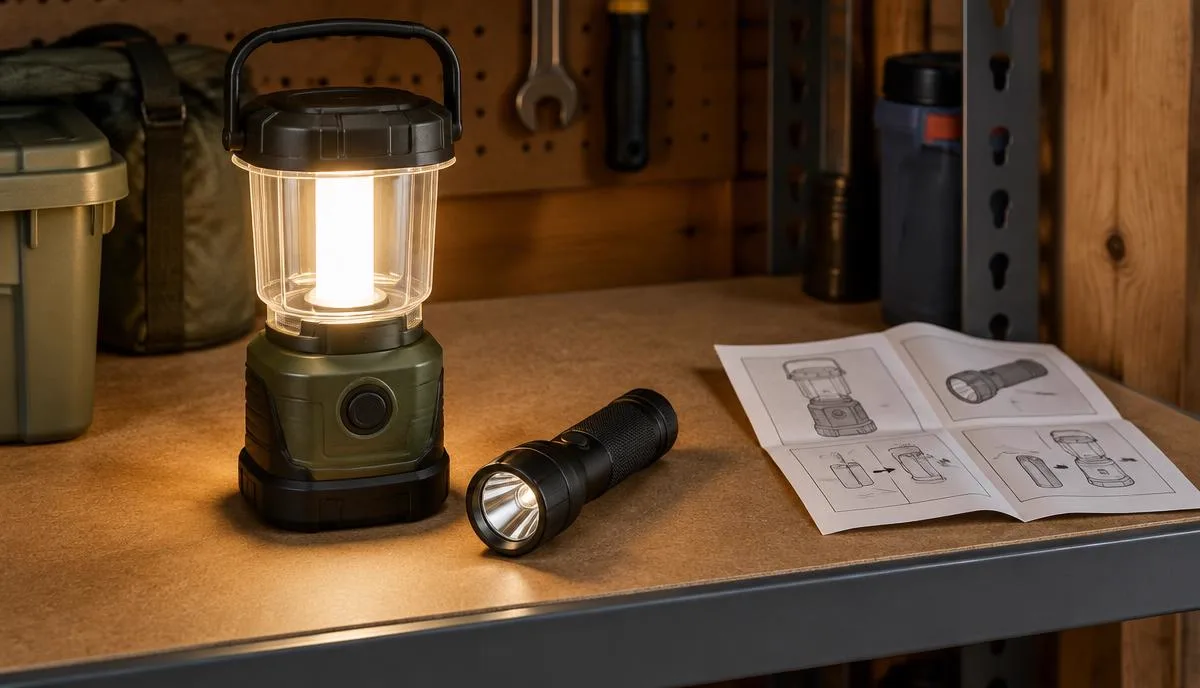
Keep a copy of your release instructions where you can reach it without electricity. Add a battery-powered light and record the opener model in your household notes. These simple preparations are more useful than memorizing a release direction that may change with a future operator.
Ask about manual operation during routine service while the door is known to be safe. Have the technician explain the release, re-engagement and any manual locking instructions for your equipment. Don't wait until a failure to discover that the only entry route or release isn't accessible.
If battery backup is relevant, compare compatible systems and their maintenance requirements. Avoid assuming an add-on works with any opener. Ask for exact model compatibility and written instructions, and remember that backup doesn't replace periodic door and safety-system checks.
Plan for household safety beyond the door. Don't run a vehicle to create light or warmth in the garage, and don't use a generator indoors. If you smell fuel, see electrical damage or encounter another emergency, follow the appropriate emergency response instead of focusing only on getting the door moving.
What else do homeowners ask about this topic?
Can I pull the red garage door cord when the door is open?
Don't release an open or unstable door; it can fall if the counterbalance is compromised. Follow the exact manual and arrange assistance if the door isn't safely closed.
Why is my garage door too heavy during a power outage?
It may have a mechanical or counterbalance problem rather than just an electrical outage. Stop lifting and have it assessed; don't add people, extra force or a prop to keep it open.
Will my opener reconnect automatically after an outage?
Some trolley systems can re-engage using their prescribed procedure, but the method varies. Follow your model's instructions and stop if it won't reconnect or operate normally.
What should you remember before taking the next step?
- Check the door’s condition and position before release.
- Use model-specific instructions, not a generic cord direction.
- Stop at heavy, crooked or unstable movement.
- Plan safe lighting, access and backup maintenance in advance.

Sources and manufacturer instructions
“Springs are under high tension.”
Get help with emergency garage door repair
Call Springz to describe the problem, request a diagnosis and confirm current service availability in Travis and Hays Counties.