
Hop Topics · 10 min read
Garage Door Pinch Hazards: Where to Put Your Hands and When to Stop
By Ted DeSimone
Updated
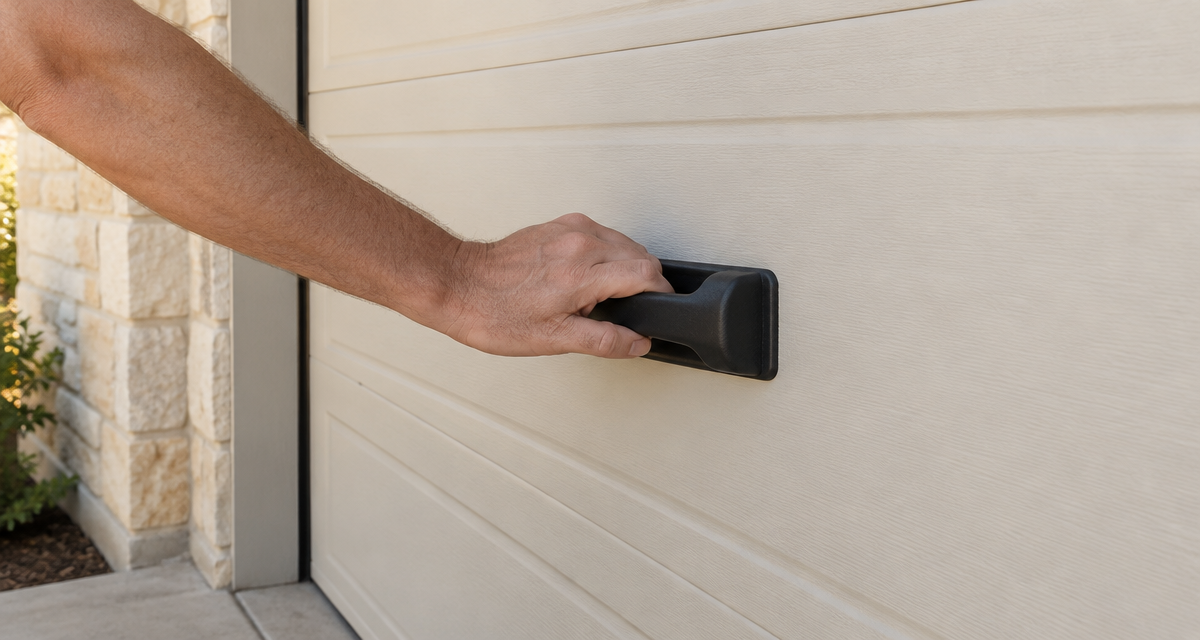
Avoiding garage door pinch hazards starts with a simple rule: use designated lifting handles or suitable gripping points, never the gaps between door sections. Keep your hands away from moving hardware, and don’t improvise if a handle is missing or damaged.
For homeowners in Austin, Travis County and Hays County, knowing where not to grab is just as important as knowing where to hold. Your door’s manual should guide you, especially when the door needs to be operated by hand.
Where should your hands go when handling a garage door?
The safest starting point is the part of the door intended for your hand, not whichever edge happens to be easiest to reach. DASMA tells homeowners to use handles or suitable gripping points when opening or closing a garage door manually. Before handling yours, identify those locations in the manufacturer’s instructions. If you aren’t sure whether a feature is a handhold, don’t assume it is one just because your fingers fit.
Never place your fingers between the door sections, including when you’re trying to pull the door down. DASMA specifically identifies this habit as a cause of finger injuries. A gap between sections is not a substitute for a missing handle. Keep that rule consistent even when you only intend to move the door a little or believe you can pull your hand away quickly enough.
It’s also sensible to avoid gripping an unapproved edge or nearby piece of hardware simply to get more leverage. A designated handle and a convenient protruding part aren’t interchangeable. Use the manual to distinguish an intended gripping point from the rest of the door assembly. If the available grip feels uncertain or requires you to put fingers into a joint, stop rather than trying to make it work.
Make hand placement a household rule rather than something each person has to figure out independently. Show anyone who may operate the door where its designated handles are, using the manual and a stationary door for reference. Explain that fingers never belong between sections. Keep children away while the door is being handled, and don’t use a moving door to demonstrate where a pinch could happen.
Does a garage door with an opener still need safe gripping points?
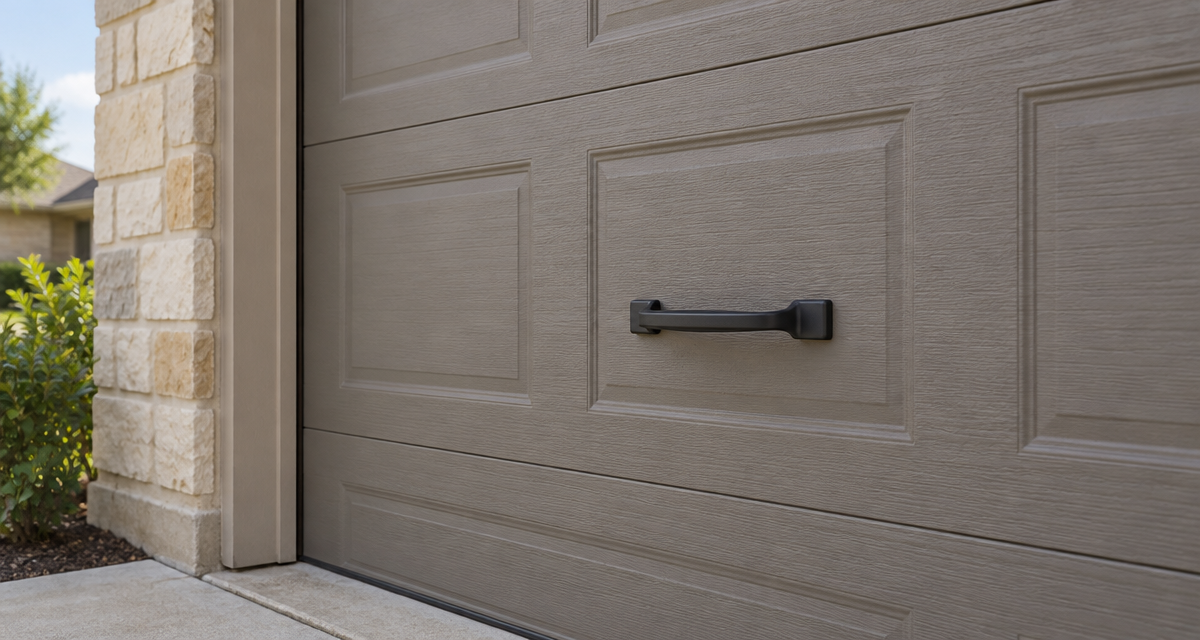
An automatic opener doesn’t make safe handholds irrelevant. DASMA notes that even a door with an opener must occasionally be operated manually. That’s why it’s worth identifying the correct gripping points before you need them. You don’t have to operate the door by hand to answer that question today. Start with the door’s instructions and look at the designated locations while the door is stationary.
DASMA’s guidance makes an important distinction about door design: under DASMA Standard 116, doors without pinch-resistant joints should have lift handles or suitable gripping points on both the inside and outside. That’s guidance about having an appropriate place to hold the door, not permission to use section gaps on other designs. The instruction to never place fingers between sections still belongs at the center of your household safety routine.
Don’t assume that every door uses the same handle arrangement or that a neighbor’s setup tells you what yours should have. DASMA emphasizes that door and opener models have their own safety instructions. Consult both manuals before attempting manual operation, and ask a professional if anything is unclear. This guide doesn’t replace the model-specific directions or provide a procedure for disconnecting an opener or testing a door’s balance.
If you can locate an exterior handle but can’t identify an interior gripping point, don’t fill the gap with an improvised choice. Check the manufacturer’s information or ask a garage door professional to identify the intended arrangement. A hinge, bracket or section edge shouldn’t become a handle merely because it’s accessible. Knowing where the proper grip is on each side helps you avoid making that decision under pressure.
Which moving parts should your hands stay away from?
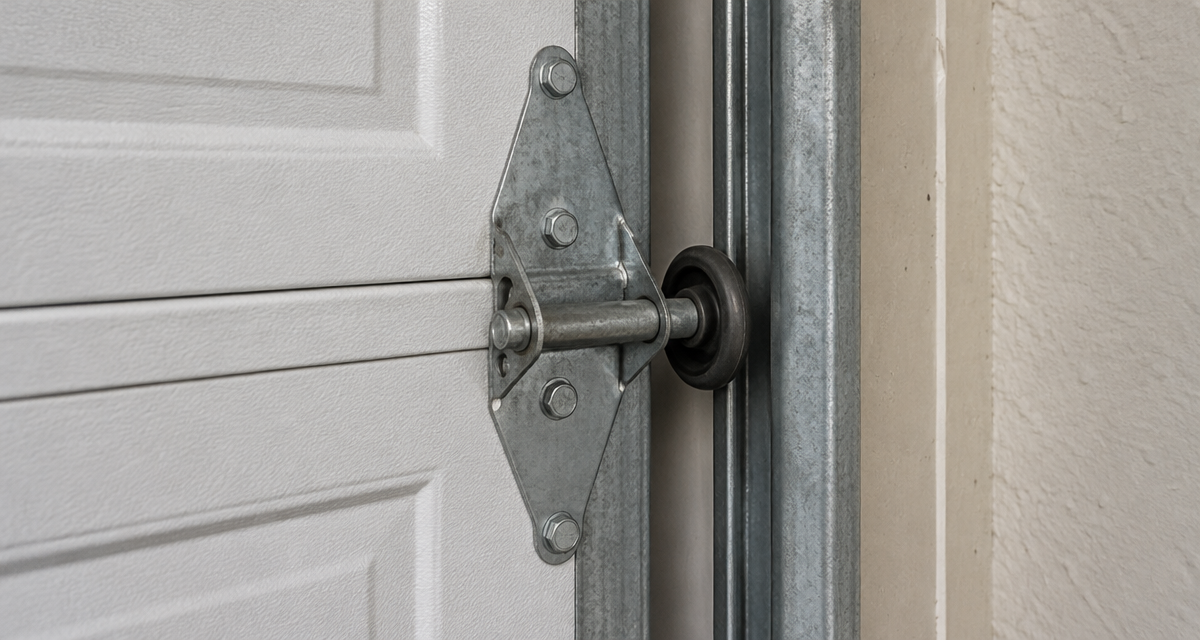
Treat the moving door assembly as a hands-off area except for the designated grip used according to the manufacturer’s manual during manual operation. Keep fingers away from hinges, rollers, tracks and other moving hardware. Don’t reach toward a part to see what it’s doing while the door travels. If you want to observe a concern, watch from a clear position without touching the door or standing in its path.
A noise or hesitation can tempt you to steady a component or guide the door with your hand. Resist that impulse. DASMA says a door that doesn’t move smoothly may present an unsafe condition, and even older systems should operate smoothly. Don’t try to solve rough movement by pushing on hardware or pulling between sections. Stop using the door and arrange professional attention rather than trying to help it along.
Some parts need an even firmer boundary because of their connection to the spring system. DASMA explains that bottom brackets are connected to the springs and are under extreme tension. They should only be adjusted or loosened by a trained door systems technician. They aren’t substitute handles or places to experiment with a wrench. We recommend reaching out to a garage door professional, since this work can be very dangerous if done incorrectly.
Cables and springs also belong outside a homeowner’s hands-on investigation. DASMA allows for visual inspection of cables and warns that frayed or worn cables can break and cause injury. Look without handling them, and don’t move closer to touch a suspicious spot. Cable replacement and spring-system repairs belong with trained professionals. We recommend professional help because working on these components can be very dangerous if done incorrectly.
When do missing or damaged handles need professional attention?
A missing handle deserves attention when it leaves you without an identified, suitable gripping point. The immediate answer isn’t to grab a section joint or nearby bracket. Leave the door alone until you’ve checked the manual and confirmed the intended handhold. If that information doesn’t resolve the problem, we recommend reaching out to a garage door professional to assess the handle arrangement before you attempt to operate the door manually.
Treat a visibly damaged or loose handle as a reason to pause rather than test how much pulling it will tolerate. As a simple precaution, don’t rely on an uncertain grip or switch to a panel gap when it feels insecure. Ask a professional to assess what needs attention. You don’t need to determine the exact cause of the damage before deciding that the handle shouldn’t be relied on.
Handle work also calls for caution when you can’t distinguish its attachments from nearby door hardware. Don’t start removing fasteners to find out what they hold, especially around the bottom brackets or cable attachments. The sources don’t provide a safe handle-installation procedure for your specific door. We recommend reaching out to a garage door professional rather than improvising, because disturbing tensioned components can be very dangerous if done incorrectly.
When arranging service, describe what you can see without manipulating anything: whether the handle is absent, visibly damaged or appears loose, and whether the concern is inside or outside. Mention any rough door movement you’ve already noticed, too. A clear photograph taken from a safe position may help explain your concern. For homeowners in Austin, Travis County and Hays County, these observations provide a useful starting point for a conversation with Springz Garage Doors.
What routine helps your household avoid finger injuries?
Build the routine around a few clear decisions: identify the intended grip, keep fingers out of section joints and leave moving hardware alone. Before anyone handles the door, make sure other people are clear and nobody is about to operate it unexpectedly. These are practical precautions, not a replacement for the manual. If the situation doesn’t allow you to follow the manufacturer’s instructions comfortably, wait and get help.
DASMA recommends monthly safety checks and maintenance, along with an annual visit from a trained door systems technician. For pinch-hazard awareness, use your routine to notice visible handle problems and review where hands belong. Follow the manufacturer’s directions for any homeowner checks, and don’t turn a visual review into a hardware adjustment. Professional service and everyday hand-placement habits address different concerns; keeping one doesn’t make the other unnecessary.
Pay attention to changes in operation rather than accepting them as normal aging. DASMA says persistent awkward movement during manual operation may indicate an out-of-balance spring system. That’s not a suggestion to disconnect the opener or perform a balance test yourself. If you’ve already noticed struggling or uneven operation, report it. We recommend reaching out to a garage door professional for spring-system concerns because repair can be very dangerous if done incorrectly.
Keep the door and opener manuals near the garage door, as DASMA advises, so the right information is easy to find. Review the hand-placement rule with anyone who may need to handle the door, especially after a handle concern or service visit. The goal is straightforward: nobody should have to invent a grip. If a safe gripping point is missing or uncertain, pause and resolve that concern before manual use.
- Locate the manufacturer’s instructions and designated gripping points.
- Keep fingers out of door-section gaps and away from moving hardware.
- Notice visible handle damage without pulling on questionable parts.
- Arrange professional attention for uncertain grips or rough operation.
What else do homeowners ask about this topic?
Can I pull the garage door down by a gap between panels?
No. DASMA says never to place fingers between door sections. Use the designated handle or suitable gripping point identified for your door instead.
Are pinch-resistant joints a reason to relax hand-placement rules?
No. Keep fingers out of section joints regardless. Follow your manufacturer’s instructions and use the designated handles or suitable gripping points for manual operation.
What if my garage door handle is missing?
Check the manual for an intended suitable gripping point. If you can’t identify one, don’t improvise with a joint, edge or bracket. Ask a garage door professional to assess the arrangement before manual use.
Should I hold a roller or hinge to help a sticking door move?
No. Keep hands away from moving hardware and stop using a struggling door. DASMA warns that rough operation may indicate an unsafe condition, so arrange a professional assessment.
What should you remember before taking the next step?
- Use designated lifting handles or suitable gripping points, never gaps between door sections.
- Keep hands away from moving hardware, and leave springs, cables and bottom brackets alone.
- Missing, loose or damaged handles warrant attention before you rely on them for manual operation.
- Keep model-specific manuals accessible and arrange professional help for rough movement or uncertain handholds.

Sources and manufacturer instructions
“Springs are under high tension.”
Get help with garage door repair
Call Springz to describe the problem, request a diagnosis and confirm current service availability in Travis and Hays Counties.