How-To Guides · 8 min read
How Do You Handle Garage Door Lubrication Safely?
By Ted DeSimone
Updated
Spraying everything on a squeaky garage door can create a mess without fixing the problem. Garage door lubrication works best when you identify the permitted maintenance points and use the product your door manufacturer recommends.
You'll learn how to prepare safely, separate door hardware from opener maintenance, and recognize noises that call for inspection instead of another coat of spray.
What should you inspect before lubricating a noisy door?
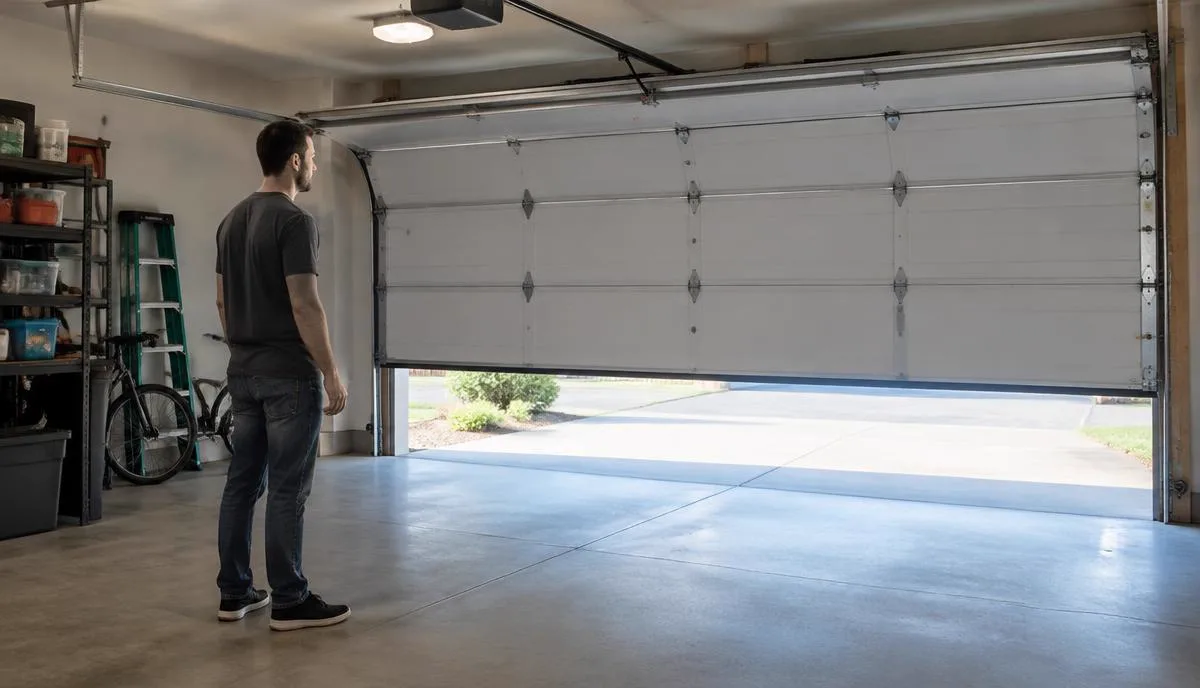
Observe ordinary operation only when there are no danger signs and the area is clear. Note where the noise happens: at startup, near one side or throughout travel. Don't keep cycling a door that's crooked, scraping heavily or showing a damaged cable to pinpoint the sound.
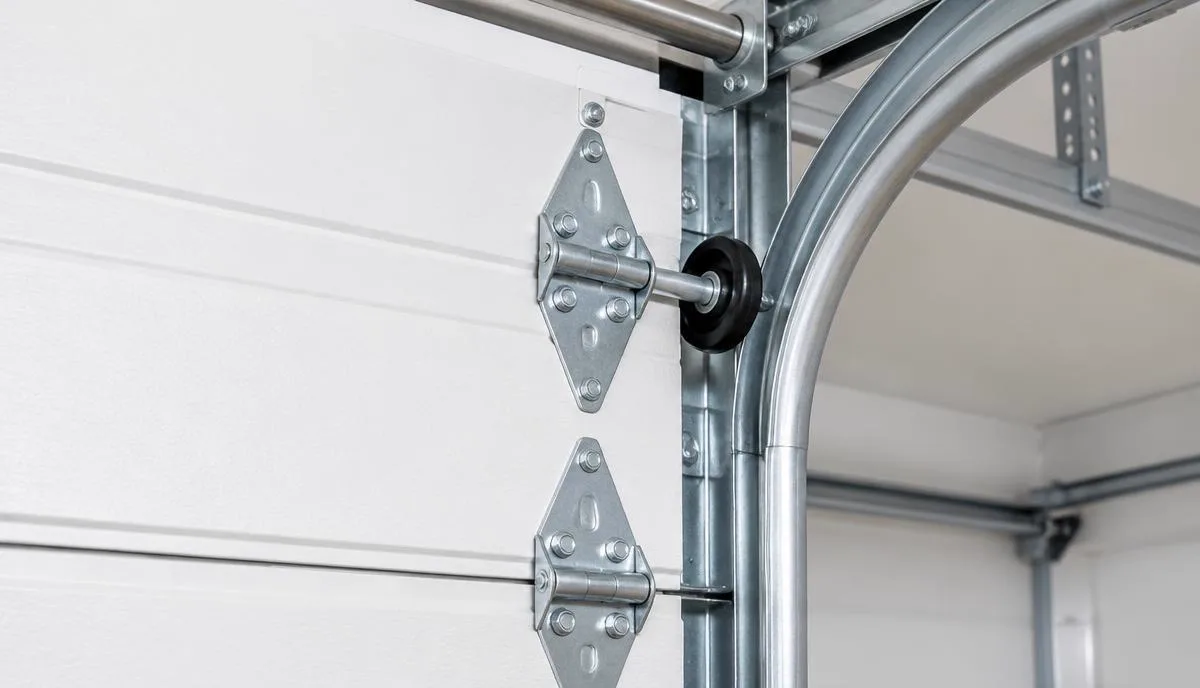
From the floor, look for visible loose or damaged hardware without tightening anything you don't understand. A cracked hinge, displaced roller or bent track needs assessment, not lubrication alone. Bottom brackets and spring-related fasteners are especially unsuitable for an owner tightening experiment.
Identify the door and opener models from accessible labels or records. A sectional steel door with bearing rollers may have different care needs from another construction, and an operator's drive system has separate instructions. Treat each manual as the reference for the part it covers.
For example, a squeak near a hinge during otherwise smooth operation can prompt a permitted lubrication check. A new grinding sound with uneven movement is different and should stop the maintenance attempt. A quieter sound after spraying doesn't prove a damaged component has become safe.
Which lubricant is right for your garage door?
Choose a product the door manufacturer permits for the specific maintenance point. Products sold as garage door lubricant can have different formulations, and a generic silicone-versus-lithium rule isn't enough for every material or component. Read both the manual and the container label before applying it.
Don't assume a penetrating fluid, household oil or heavy grease is a suitable replacement. A product that frees a stuck fastener isn't automatically appropriate for long-term door lubrication. Follow any restrictions for plastics, nylon components, painted surfaces and rubber seals.
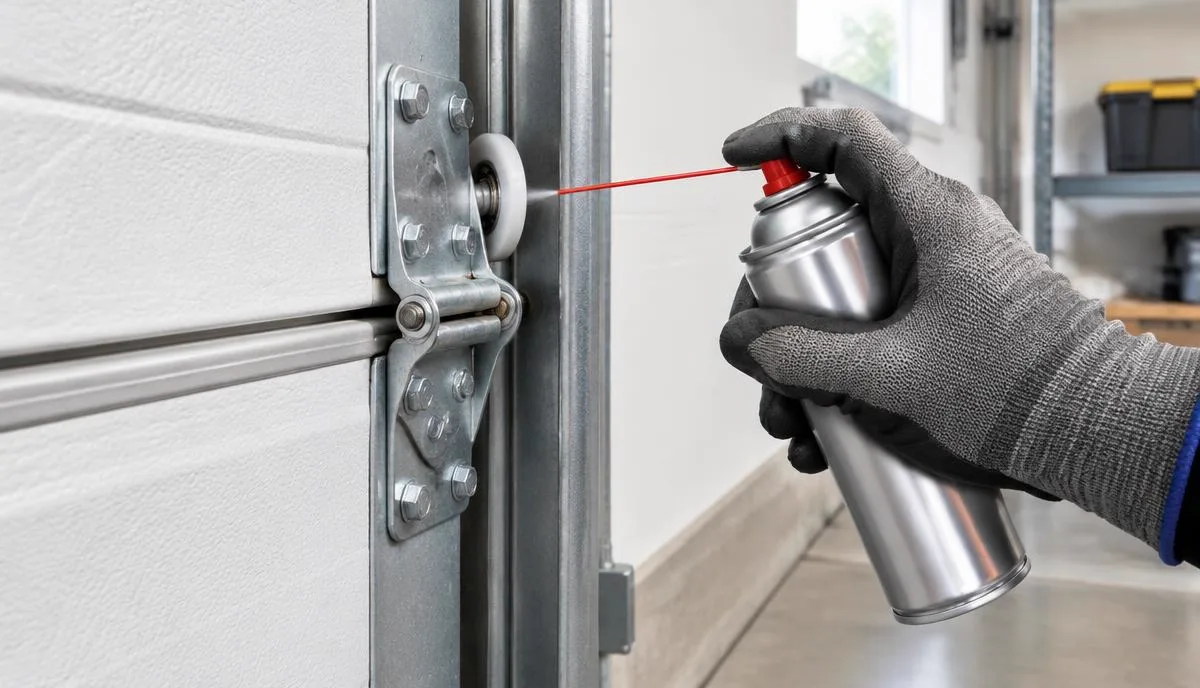
Use a directed, controlled application instead of coating a broad area. If the approved product has a straw nozzle, use it to reduce overspray while maintaining a safe position. Protect nearby finishes as instructed and keep the spray away from sensor lenses and electrical equipment.
Avoid a universal schedule detached from the installation. Your door's manual may specify an interval or conditions that warrant inspection, and the opener may have different maintenance needs. Write down the approved product and date so future care doesn't become a mixture of incompatible guesses.
- Check the door manual’s approved products.
- Read the product label and material restrictions.
- Apply only to specified maintenance points.
- Record the product and maintenance date.
How do you prepare the door and work area safely?
Put the door in the safe position specified by the maintenance instructions and prevent unexpected opener operation as directed. Many owner tasks call for a closed door and disabled power, but follow the exact procedure rather than assuming unplugging alone addresses every hazard.
Disabling the opener doesn't remove spring tension or make cables and brackets safe to adjust. Keep clear of those components and don't disconnect an open or unstable door. If the permitted work requires reaching near overhead tensioned parts, have a professional handle it.
Clear ordinary items from the work area and provide ventilation as the lubricant label requires. Keep ignition sources away if the product is flammable. Don't spray in a confined area without reviewing the safety instructions, and keep children and pets away from the maintenance supplies.
Use a cloth to remove accessible dirt as the manual permits, but don't reach between sections or into a track pinch point. Keep your fingers away from moving joints even when the operator is disabled. A preparation step should reduce exposure, not create a reason to dismantle hardware.
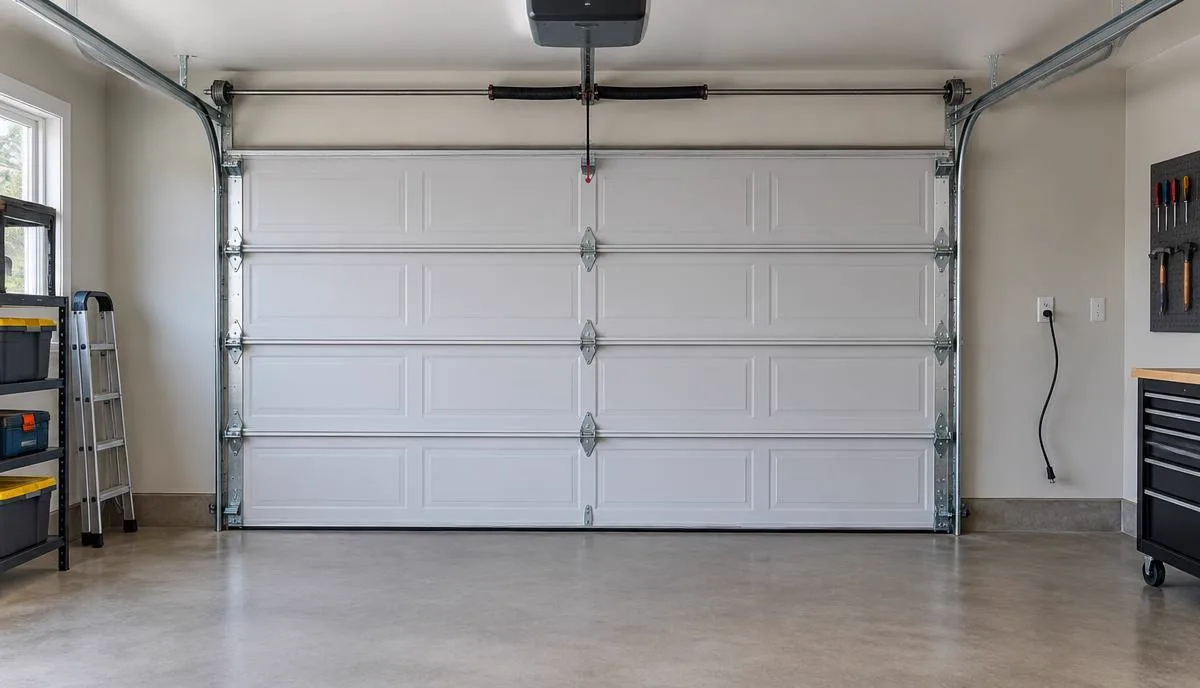
Which hinges and rollers can an owner lubricate?
Lubricate hinge pivots or roller bearings only when the manufacturer specifies the point and you can reach it safely. Roller types vary, and a sealed or non-serviceable component may not need external lubricant. Don't treat every nylon wheel or metal surface as a spray target.
Keep the running surface of the track clean according to the manual rather than greasing it by default. Lubricant there can attract debris and isn't the same as maintaining a permitted roller bearing. Don't bend track or remove a roller to make it easier to spray.
Some manufacturer guidance discusses lubrication of springs, but that doesn't authorize adjustment or close access by an untrained owner. If the task puts you near tensioned hardware or requires a ladder beside it, arrange service. Never loosen set screws or brackets as part of lubrication.
Apply only the amount directed, wipe accessible excess when instructed and avoid overspray on panels, floors and seals. For example, a drip on the garage floor creates a slip hazard without helping the hinge. More product doesn't compensate for a worn bearing or damaged attachment.
- Confirm the exact point is owner-serviceable.
- Avoid sealed components unless instructed otherwise.
- Keep tracks and adjacent surfaces free of excess.
- Leave risky access and tensioned hardware to a professional.
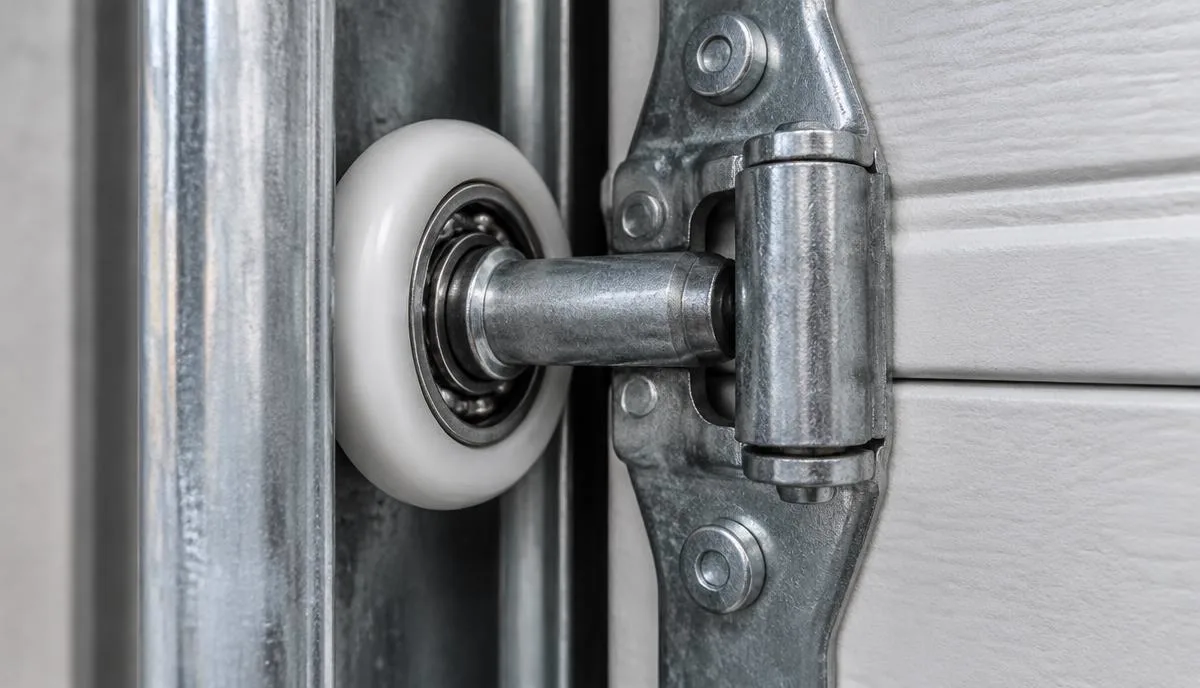
Does the opener rail need the same maintenance as the door?
No universal door-lubrication rule applies to every opener rail. Chain, belt, screw-drive and wall-mounted systems have different construction and maintenance instructions. Read the operator manual before adding lubricant to its drive, rail or housing.
A wall-mounted opener doesn't use the same trolley arrangement pictured in many rail-lubrication videos. The LiftMaster product images here illustrate that design difference, not a maintenance point. Your installed model's documentation determines what can be serviced and how.
Don't open the motor housing, spray into electrical components or lubricate a belt because it makes noise. If a drive mechanism is noisy or appears loose, report the symptom and follow the support instructions. Mechanical adjustments and lubrication aren't interchangeable tasks.
Keep sensors, wiring and controls clear of overspray while working on permitted door hardware. A lubricant film on a lens can interfere with a separate safety function. If an opener symptom remains after correct door maintenance, request a diagnosis rather than treating the operator as another surface to coat.
What should you check afterward, and when should you call?
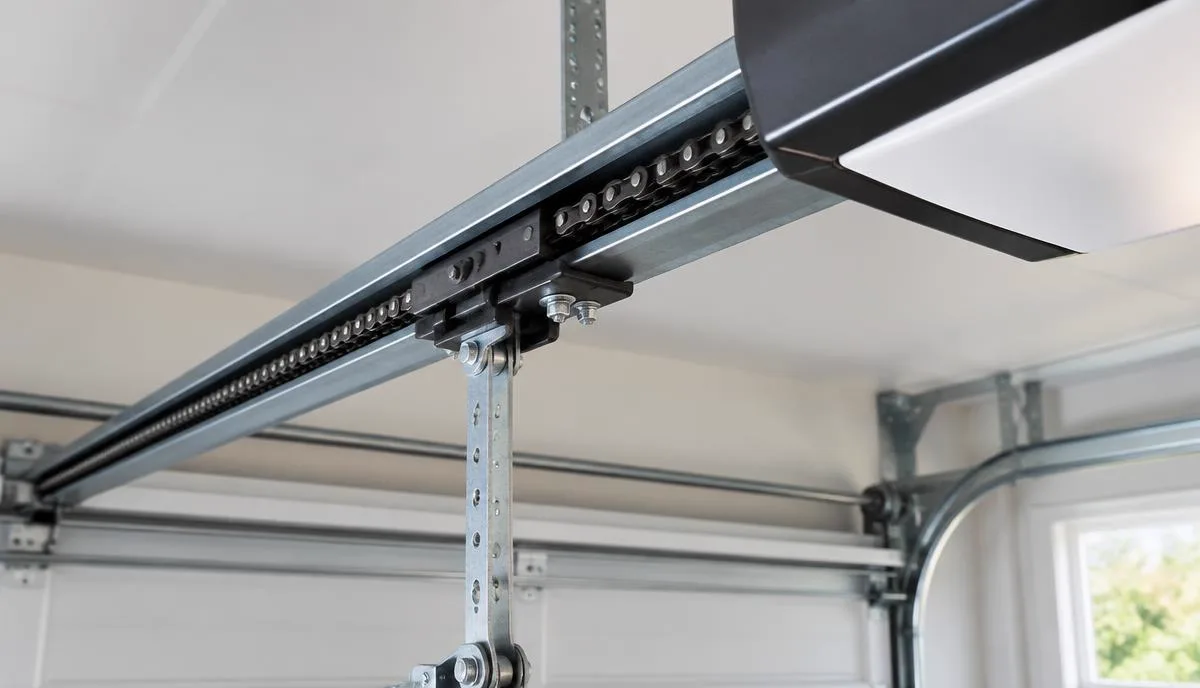
Restore power or controls only as the instructions direct and keep the opening clear for observation. Run the prescribed operation check from a safe position, watching for smooth movement rather than focusing only on noise. Stop immediately if the door binds, moves unevenly or develops a new fault.
Complete the manufacturer-required safety checks at the recommended times and after maintenance when instructed. Photoelectric beam protection and contact reversal are different checks. Don't put your body under a moving door or improvise a test object if you aren't sure of the procedure.
If the sound persists, write down where it occurs and what permitted maintenance you completed. For example, 'a scrape continues near the left track during closing' is more useful than 'needs more grease.' Have damaged or binding hardware inspected rather than increasing lubricant quantity.
Keep a maintenance log with products, dates and service findings. Ask for the next care interval based on your actual equipment and condition. If professional work is recommended, request a written scope and confirm appointment availability directly instead of assuming an article guarantees an arrival window.
- Restore operation as instructed and observe from clear space.
- Perform the prescribed safety checks.
- Stop after persistent binding or mechanical danger signs.
- Keep a record for future maintenance and service.
What else do homeowners ask about this topic?
Should I grease my garage door tracks?
Don't grease the running surfaces by default. Follow the door manufacturer's cleaning and lubrication instructions, and don't use track grease to hide binding or damaged rollers.
What should you remember before taking the next step?
- Inspect the symptom before adding lubricant.
- Use the exact manufacturer-approved product and points.
- Keep tracks, lenses and electrical parts free of overspray.
- Stop for damaged or binding hardware and keep maintenance records.

Sources and manufacturer instructions
“Springs are under high tension.”
Get help with garage door tune-up
Call Springz to describe the problem, request a diagnosis and confirm current service availability in Travis and Hays Counties.