
Hop Topics · 11 min read
Garage Door Safety: What to Tell Kids and Check Yourself
By Ted DeSimone
Updated
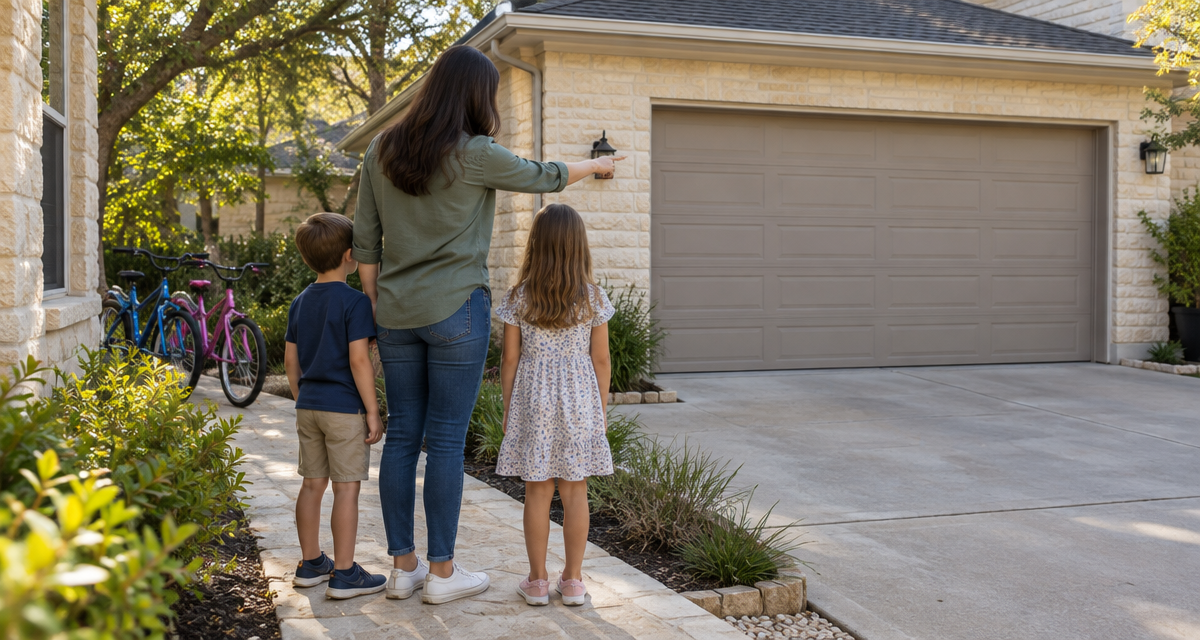
A good garage door kids safety conversation starts with three simple rules: stay clear while the door moves, keep hands off its parts, and let an adult handle the controls. Pair those rules with regular parent checks and your door’s specific safety instructions.
For families around Austin, Travis County, and Hays County, the goal is practical: help kids understand what to do, know what you can safely inspect, and leave dangerous repairs to a trained garage door technician.
What should you tell kids about the garage door?
Start with a short explanation rather than a frightening story: “This door moves, and we give it space so nobody gets hurt.” Then make the household rule specific. Children should stay away from the opening whenever the door is moving and wait for an adult’s okay before passing through. Don’t make guessing whether there’s enough room part of the routine. The safer lesson is to wait, look, and follow the adult’s direction.
Pick a waiting spot well away from the door’s path and the driveway’s vehicle activity. Show children where to stand before you operate the door, rather than calling instructions while everyone is already moving. Keep the explanation consistent: “We wait here until the door has stopped and I say it’s okay.” This is a common-sense family routine, not a substitute for the safety instructions that came with your particular door and opener.
Make the controls an adult responsibility in your household. Put portable remotes somewhere children won’t treat them as toys, and explain that pressing a button can move the door while someone else is nearby. Ask kids to get an adult when they need the garage opened or closed. If another caregiver handles pickup, outdoor play, or garage access, share the same rule so children don’t have to sort through different instructions.
Check understanding with a calm question: “What do you do if your ball rolls near the door while it’s moving?” The answer you’re looking for is to stay back and ask an adult, not rush after it. Practice the conversation with the door stationary and without operating any controls. You can also ask children to explain the waiting rule in their own words, giving you a chance to clear up confusion.
- Choose a waiting spot away from the door and vehicles.
- Explain that adults handle the controls.
- Practice asking for help instead of chasing a toy.
- Share the same rules with other caregivers.
How can you explain the hands-off rule?
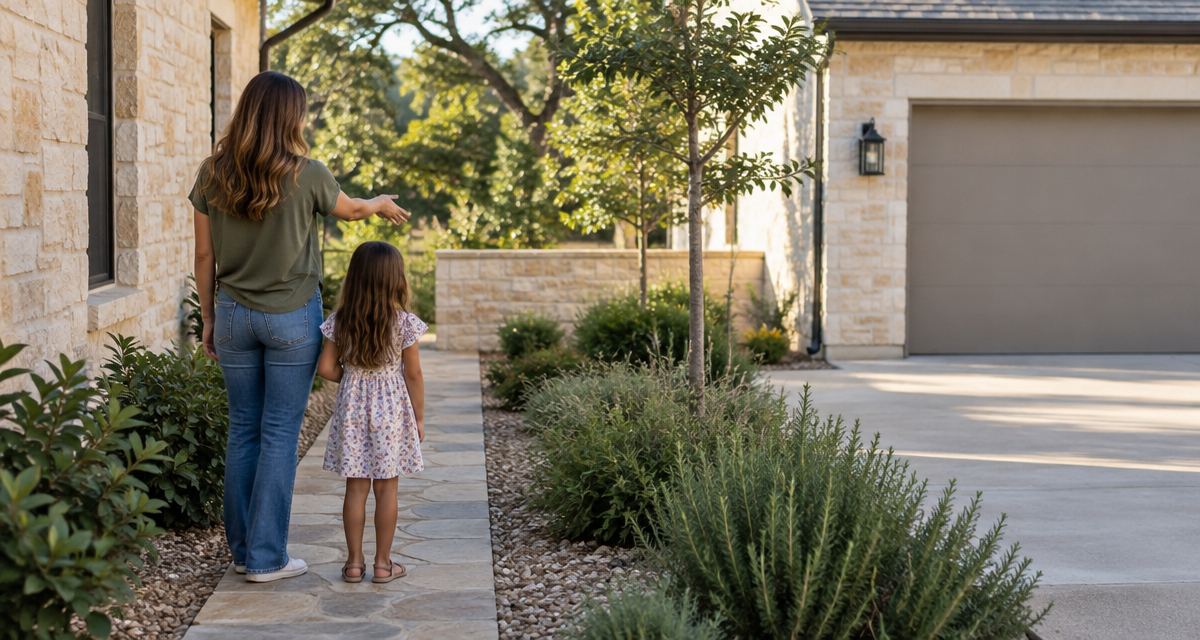
Give fingers their own part of the conversation. DASMA warns that placing fingers between garage door sections can cause injuries, so “don’t touch the moving door” isn’t the whole lesson. Explain that the seams between panels aren’t handles, even when the door appears still. Children don’t need a mechanical explanation to follow a clear boundary: keep hands away from panel gaps and ask an adult instead of trying to move the door.
Model that rule yourself. If you need to operate the door manually, DASMA says to use its handles or suitable gripping points, never the gaps between sections. Consult the manufacturer’s instructions before manual operation, and keep children away while you do it. Don’t turn a manual-operation demonstration into a task for a child. The useful lesson is that adults follow the instructions and use the intended gripping points rather than improvising.
Extend the hands-off rule to tracks, cables, springs, and the hardware near the bottom corners. You can point out these areas from a distance without inviting children to examine them closely. A simple explanation works: “These parts help the door move, and we leave them alone.” Avoid asking a child to identify a damaged part by touching it. Reporting something unusual to an adult is enough of a job for them.
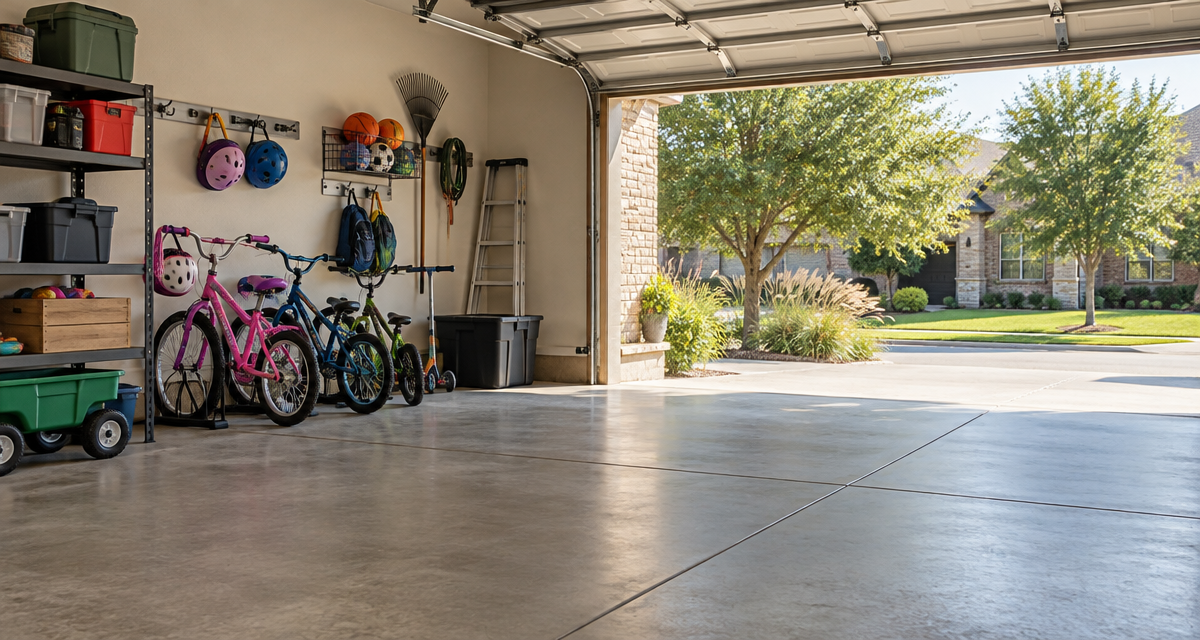
Make sure play and storage arrangements support what you’re teaching. As a practical precaution, keep favorite toys and frequently used play items away from the door’s operating area so reaching for them doesn’t invite contact with hardware. Before moving the door, an adult should check that children, pets, and belongings are clear. If something needs retrieving, stop the activity and handle it safely rather than expecting a child to squeeze around the door.
What should parents check each month?
Start with the manuals for both the garage door and the opener. DASMA’s garage door system guidance calls for monthly safety checks and maintenance, while emphasizing that each model has its own instructions. Keep those instructions accessible so you’re not relying on a remembered procedure from a different door. If you don’t have the correct manual, identify your equipment and seek its instructions before attempting a test or maintenance task.
Make a visual cable check without touching the cables or their attachments. DASMA identifies frayed or worn cables as a danger because they can break and cause injury. Look at the visible cables on both sides from a safe position, with children elsewhere and the door stationary. Don’t pull a cable to see whether it’s tight or brush your hand along it to feel for wear. Observing damage is a reason to call a technician.
Pay attention to how the door operates during ordinary adult-controlled use. DASMA says even older door systems should move smoothly, and awkward operation may indicate an unsafe condition. If the door struggles or moves unevenly, keep children clear and arrange professional attention rather than repeatedly cycling it to investigate. Don’t assume age makes rough movement acceptable, and don’t ask a family member to push or guide a struggling door while it runs.
Follow your opener manual’s directions for checking its safety features rather than borrowing a generic online procedure. Keep children and pets out of the testing area, and never use anyone’s body as a test object. If the instructions are unclear or a check doesn’t produce the stated result, stop and seek qualified help. A parent’s check should identify concerns, not become an experiment with adjustments you don’t understand or hardware you shouldn’t handle.
- Read the correct door and opener safety instructions.
- Look for visible cable wear without touching.
- Notice rough or uneven operation.
- Perform only checks you can safely follow from the manual.
- Refer damage, unclear results, or unsafe movement to a technician.
Which problems should a trained technician handle?
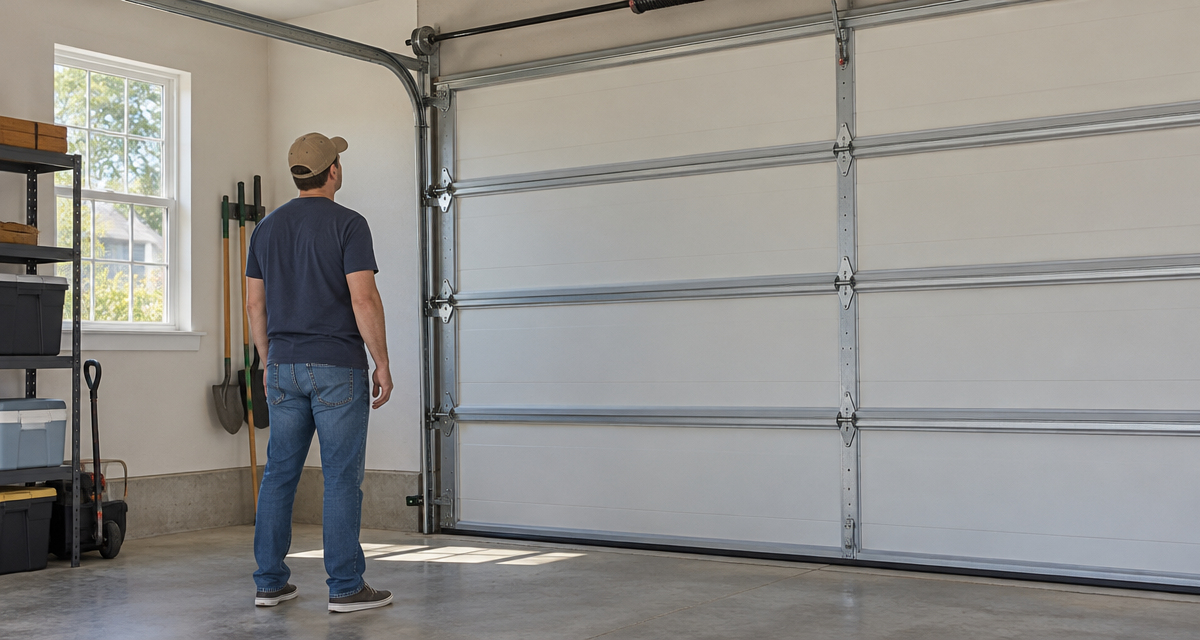
Treat spring work as professional work. DASMA describes garage door springs as among the door’s most important and dangerous parts, and notes that worn springs can break and cause injury. For an older garage door, its guidance is to have a professional inspect the springs and replace them if needed. Parents don’t need to diagnose spring condition themselves. Your role is to recognize the boundary and keep curious children away from the system.
Cables and bottom brackets belong on that same no-DIY list. The cables connect the spring system to the bottom brackets, and DASMA warns that these brackets are under extreme tension. Don’t loosen a bracket to straighten it, replace a fastener, or investigate a cable problem. Even a small-looking hardware task can involve a part connected to the springs. Describe what you can see to a trained technician without handling the components.
If your door has extension springs, DASMA says it needs safety cables running through those springs and secured at both ends. These cables help contain a broken spring. If you know your system lacks them, arrange a safety inspection. If you’re unsure what type of springs you have or whether the safety cables are present, ask a technician to check rather than climbing up or reaching around the springs to find out.
A struggling door also calls for caution, not a family repair session. DASMA notes that awkward operation that continues during manual use may involve an out-of-balance spring system, which trained professionals should repair. That doesn’t mean you should disconnect a troublesome door to diagnose it yourself. Keep kids away, explain the movement you observed, and let the technician decide how to evaluate it safely. Don’t keep operating a door that appears unsafe.
How do you make garage door safety a family habit?
Attach the reminder to the activity instead of saving it for a long safety talk. Before opening the garage for bikes or outdoor toys, ask children to go to their waiting spot and check that the opening is clear. Before closing it, account for everyone again. Keep your words calm and consistent. The point is to make waiting part of using the garage, not something children hear only after they’ve moved too close.
Include visiting children and the adults supervising them. A quick explanation before play begins is more useful than assuming guests know your household rules. Show where toys belong, where everyone waits, and who operates the door. If a child forgets, pause the activity and reset the routine without making it a dare or a test of bravery. Adults should manage the controls and the surroundings rather than relying on children to monitor one another.
Put the equipment checks on your household calendar alongside the conversations. DASMA recommends monthly checks and maintenance, plus an annual visit from a trained door systems technician. Keep professional service and household checks as separate responsibilities: a service visit doesn’t replace following your manual between visits. Likewise, a quick look from the driveway doesn’t establish that every component is in good condition. Refer concerns to a technician whenever they appear rather than waiting for the calendar.
End the conversation by making it easy for kids to speak up. Tell them to get an adult if the door looks unusual, moves strangely, or has something in its path. They don’t need to prove there’s a problem or try to fix it. For parents around Austin, Travis County, and Hays County, that’s a sensible division of responsibility: children stand back and report, adults follow the manual, and trained technicians handle dangerous components.
What else do homeowners ask about this topic?
What’s the simplest garage door safety rule for kids?
“Stand back, keep your hands off, and ask an adult.” Teach children to wait away from the opening while the door moves and get an adult before retrieving anything near it.
How often should parents check the garage door?
DASMA recommends monthly safety checks and maintenance, following the specific door and opener manuals. It also recommends an annual visit from a trained door systems technician.
Can I fix a frayed garage door cable myself?
No. DASMA says cable replacement should be performed only by a trained technician because of the dangers associated with spring tension. Don’t touch or pull a worn cable.
Should I teach my child to open the door manually?
A safer household approach is to keep manual operation an adult task. Adults should follow the manufacturer’s instructions and use handles or suitable gripping points, never the gaps between door sections.
What should you remember before taking the next step?
- Teach kids to wait away from the door, keep hands off, and ask an adult for help.
- Follow your door and opener manuals for monthly safety checks and maintenance.
- Look for cable wear and notice rough movement without touching or adjusting hardware.
- Leave springs, cables, and bottom brackets to trained technicians, and schedule annual professional service.

Sources and manufacturer instructions
“Springs are under high tension.”
Get help with garage door opener repair
Call Springz to describe the problem, request a diagnosis and confirm current service availability in Travis and Hays Counties.