
How-To Guides · 11 min read
How to Approach a Garage Door Balance Check Safely
By Ted DeSimone
Updated
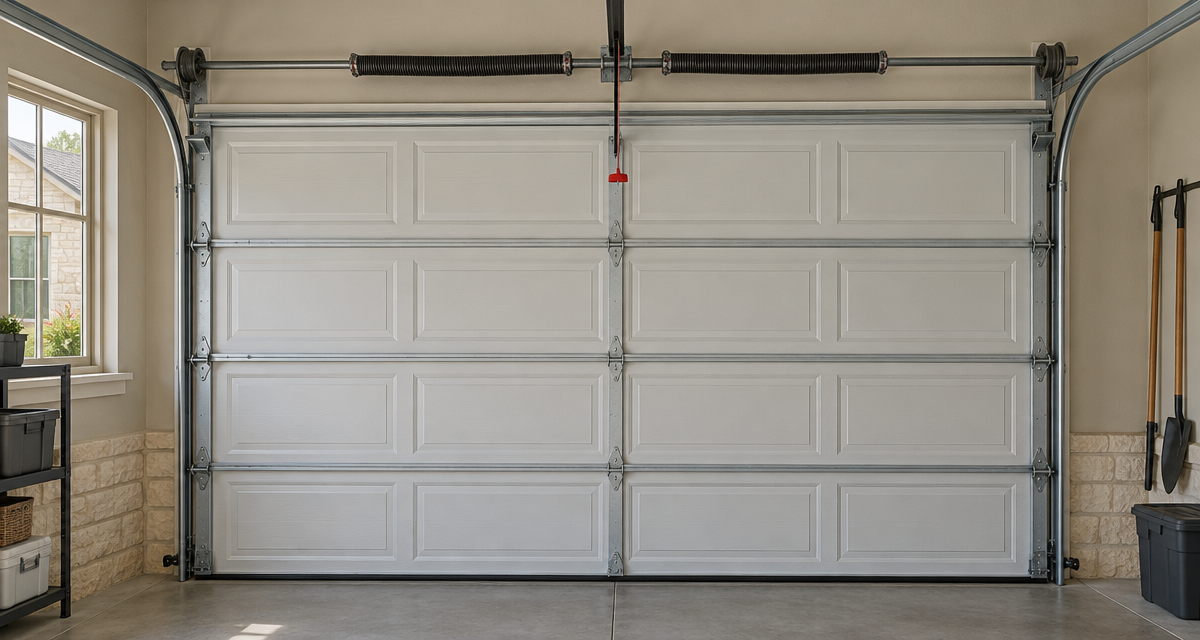
A garage door balance check starts with recognizing when your door isn’t moving smoothly, not adjusting its springs. DASMA says awkward movement that continues during manual operation may indicate an out-of-balance spring system, which should be repaired only by trained professionals.
For homeowners in Austin, Travis County and Hays County, the safest approach is to review the door and opener manuals, look for visible warning signs, and know when to stop. Here’s how to use the industry guidance without turning a safety check into a risky repair.
What is a garage door balance check looking for?
The useful starting point is smooth movement. In its garage door safety tips, DASMA says a door that doesn’t go up and down smoothly may present an unsafe condition. If that awkward operation continues when the door is manually operated, the spring system may be out of balance. That’s a warning sign to investigate professionally, not a diagnosis that tells a homeowner which part to adjust.
This distinction matters because checking and correcting are different jobs. You can review instructions, notice a change in operation and look for visible cable wear without attempting a repair. Changing the spring system is another matter. DASMA describes springs as among the most important and most dangerous parts of the door, and says spring systems should be repaired only by trained professionals. Keep your check on the observation side of that boundary.
The supplied DASMA guidance also explains why an apparent balance problem shouldn’t be ignored: an out-of-balance spring system can cause premature wear on other important door components. You don’t need to determine which component might wear next before asking for help. A sensible homeowner response is to record what you noticed and avoid repeatedly operating a struggling door just to see whether the behavior happens again.
Just as important, these safety pages aren’t a complete balance-testing procedure. They don’t specify a universal opening height, how far a door may drift or how to disconnect every opener safely. Don’t treat an informal rule as a substitute for your own instructions. DASMA explicitly directs homeowners to the manufacturer’s installation or instruction manual for safety information specific to their model of door and opener.
What should you check before trying any manual operation?
Start by finding both manuals: one for the garage door and one for the opener. DASMA emphasizes that each model has its own safety instructions and recommends keeping the manuals near the door for reference. Read the relevant instructions before doing anything that changes how the door operates. If you can’t identify your equipment or find the instructions, don’t fill in the gaps with a procedure meant for another system.
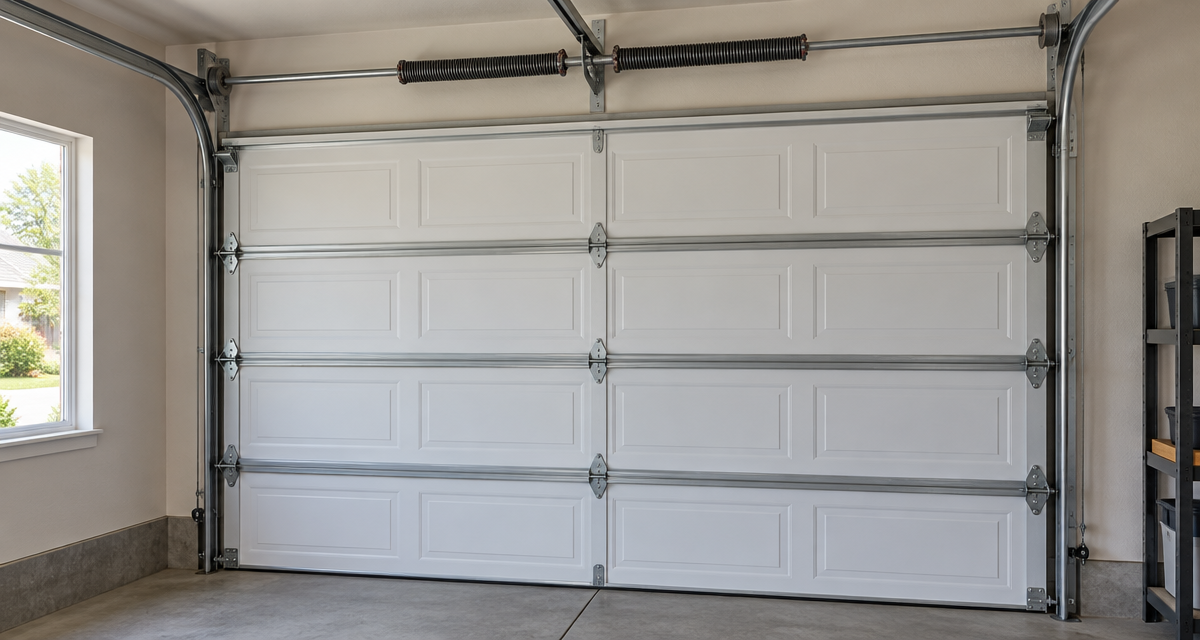
Next, look at the cables without handling them. DASMA specifically recommends visually inspecting the cables that connect the spring system to the bottom brackets on both sides of the door. Fraying or wear means those cables are in danger of breaking and causing injury. If you notice either condition, stop your homeowner check. We recommend reaching out to a garage door professional because cable replacement can be very dangerous if done incorrectly.
If your door has extension springs, there’s another point in DASMA’s guidance to consider. These systems need safety cables running through the springs and secured at each end to the wall or ceiling. DASMA says to call a local dealer for a safety inspection if extension springs lack safety cables. If you’re unsure what you’re looking at, ask a professional rather than climbing up, handling the spring or trying to install anything.
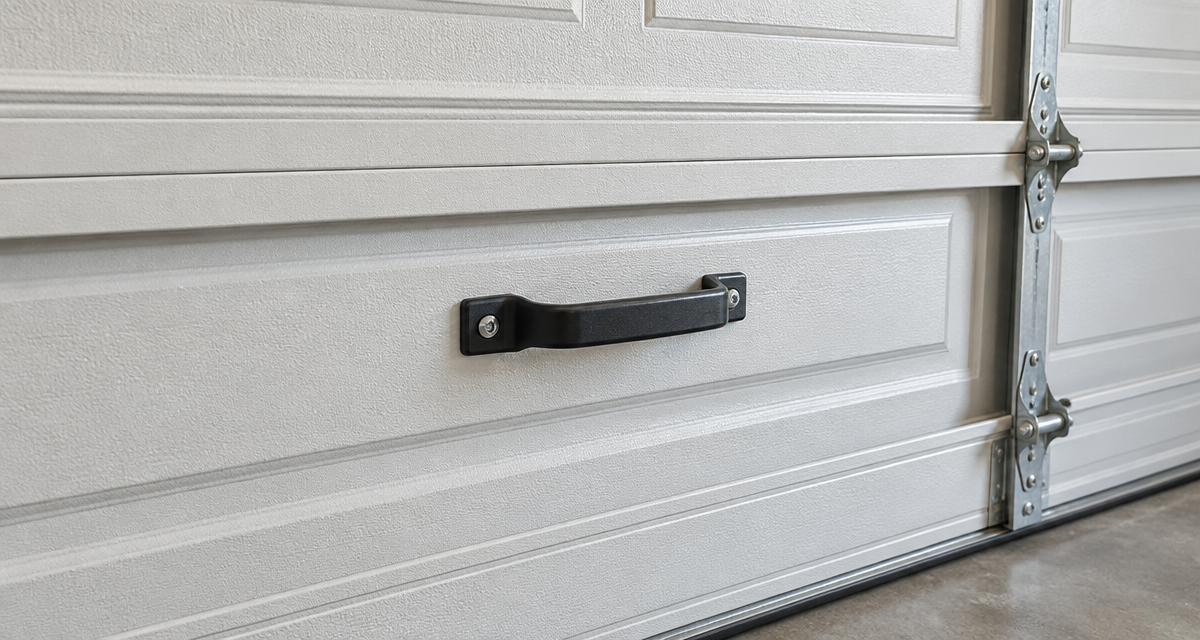
Finally, make the area suitable for a careful review. As a common-sense precaution, keep children, pets and other people away from the door while you’re checking it, and avoid distractions. Identify the door’s intended lift handles or safe gripping points without moving it. If you can’t identify an appropriate grip, don’t improvise by reaching between sections or grabbing nearby hardware. DASMA warns never to place fingers between door sections.
- Find and review the door and opener manuals.
- Look for visible cable fraying or wear without touching.
- Note any uncertainty about extension-spring safety cables.
- Identify safe gripping points and keep the area clear.
How should you approach the manual-operation part of the check?
Manual operation matters because DASMA connects persistent awkward movement during manual use with a possible spring-balance problem. However, that observation isn’t an instruction to disconnect an unfamiliar opener. The supplied safety pages don’t explain how to release every system safely. For that step, use the manufacturer’s instructions; if anything is unclear, we recommend reaching out to a garage door professional because releasing or moving the door incorrectly can be very dangerous.
If your model’s instructions permit a homeowner manual check, follow their sequence and precautions exactly. Don’t add a release step, stopping position or hands-off test from another source simply because it sounds familiar. This guide deliberately doesn’t prescribe those actions: the provided DASMA material doesn’t establish a safe universal method. When the instructions don’t answer your question, that’s a reason to pause and ask for help, not experiment with the door.
DASMA does provide a clear rule for gripping a door during manual use: use its handles or suitable safe gripping points, and never put fingers between sections. Keep that rule separate from any question about balance. A door that appears to move normally still requires safe handling. If you don’t have a clearly identified gripping point, stop rather than using a hinge, cable or bottom bracket as a substitute.
The observation to report is whether movement remains awkward during manual operation performed according to the manufacturer’s instructions. DASMA says that can indicate an out-of-balance spring system; it doesn’t say that it proves one. If the door struggles, don’t force it through additional movement to finish a checklist. Stop the check, keep others away and contact a professional rather than attempting to correct what you think is causing the problem.
Which warning signs mean you should stop?
Visible cable fraying or wear is a clear stop sign. DASMA warns that damaged cables can break and cause injury, and says replacement belongs to a trained technician because of high spring tension. Don’t tug on a cable to judge its condition or loosen its attachment to get a closer look. A visual concern is enough to report; you don’t need to confirm the damage by handling the component.
Struggling movement is another reason to stop. DASMA says even older door systems should operate smoothly, so age alone isn’t a reason to accept awkward operation as normal. If you’ve already noticed that the door doesn’t move smoothly, avoid repeating cycles just to gather more evidence. Describe what you’ve observed and let a professional determine whether the spring system or another part of the door needs attention.
Uncertainty around the springs or bottom brackets also calls for a firm boundary. DASMA explains that bottom brackets connect to the springs and are under extreme tension; only a trained door systems technician should adjust or loosen them. Don’t try tightening, loosening or repositioning these parts as a balance correction. We recommend reaching out to a garage door professional because that work can be very dangerous if done incorrectly.
Noise needs a more careful interpretation than a simple pass or fail. DASMA says springs can squeak during normal use and that squeaking doesn’t necessarily indicate a problem. That means sound alone doesn’t establish that the door is out of balance, and quiet operation doesn’t replace the other checks. If spring noise persists, DASMA recommends professional service. If noise accompanies struggling movement or visible cable damage, stop rather than treating it as only a squeak.
- Stop for visibly frayed or worn cables.
- Stop rather than forcing a struggling door.
- Leave springs and bottom brackets untouched.
- Ask for help when the safe procedure isn't clear.
What should you do after the check?
If you stopped because of a warning sign, make a brief note of what you saw or experienced. Useful details include which side has visible cable wear, whether the door struggled during ordinary use and whether awkward movement was also present during manual operation performed under the manufacturer’s instructions. Don’t recreate the problem for a better description. Report existing observations, and leave testing or diagnosis that requires further movement to the professional.
When arranging service, say that you’re concerned about smooth operation or possible balance rather than requesting a particular spring adjustment. DASMA’s wording is cautious: persistent awkward manual operation may indicate an out-of-balance spring system. Keeping your description equally cautious helps separate the symptom from the diagnosis. If you have an older garage door, DASMA also recommends having its springs inspected by a professional technician and replaced if needed.
If you didn’t notice a warning sign, don’t treat that result as a guarantee that every part is safe. DASMA says its safety tips aren’t a comprehensive list of precautions. Continue following the manufacturer’s instructions and stay alert to changes in operation. A homeowner observation is useful information, but it doesn’t replace a complete safety inspection or establish that hidden wear, spring condition and every other component have been professionally assessed.
Make this review part of a broader maintenance habit rather than a one-time repair attempt. DASMA recommends monthly safety checks and maintenance, along with an annual visit from a trained door systems technician. That isn’t a direction to perform an improvised balance test every month. Keep the manuals accessible, follow their maintenance guidance and contact a garage door professional when a warning sign or unanswered safety question interrupts your check.
What else do homeowners ask about this topic?
Should the door stay at a particular height during a balance check?
The supplied DASMA safety pages don’t specify a test height or allowable movement. Follow your model’s instructions, and ask a garage door professional if they don’t explain a safe homeowner check.
Does awkward manual movement prove the springs are out of balance?
No. DASMA says persistent awkward movement during manual operation may indicate an out-of-balance spring system. Stop rather than forcing the door, and have a professional assess it.
Can I adjust the springs myself after checking balance?
DASMA says spring systems should be repaired only by trained professionals. We recommend reaching out to a garage door professional because spring adjustment can be very dangerous if done incorrectly.
How often does DASMA recommend garage door safety checks?
DASMA recommends monthly safety checks and maintenance, plus an annual visit from a trained door systems technician. Follow your manuals for model-specific tasks; this isn’t a universal monthly balance-test procedure.
What should you remember before taking the next step?
- Awkward movement that persists during manual operation may indicate a spring-balance problem, but it isn't a confirmed diagnosis.
- Use the door and opener manuals rather than inventing a release procedure, test height or pass/fail rule.
- Stop for worn cables, struggling movement or uncertainty, and leave springs, cables and bottom brackets untouched.
- Record your observations and arrange professional assessment instead of attempting a balance correction.
Sources and manufacturer instructions
“Springs are under high tension.”
Get help with broken spring repair
Call Springz to describe the problem, request a diagnosis and confirm current service availability in Travis and Hays Counties.