Look, don't touch
What you can check safely
Collect the manuals and service history, and note failed safety tests or changes in travel without repeating unsafe tests. These are observations only; keep clear of damaged hardware.
- 1Follow the inspection and test schedule in the door and opener manuals.
- 2Look for obvious wear from floor level while the door is stationary.
- 3Keep the sensor path and floor around the opening clear.
- 4If a safety test fails or hardware looks damaged, stop using the opener and arrange service.
How we fix it
Repair details
What a comprehensive tune-up should consider
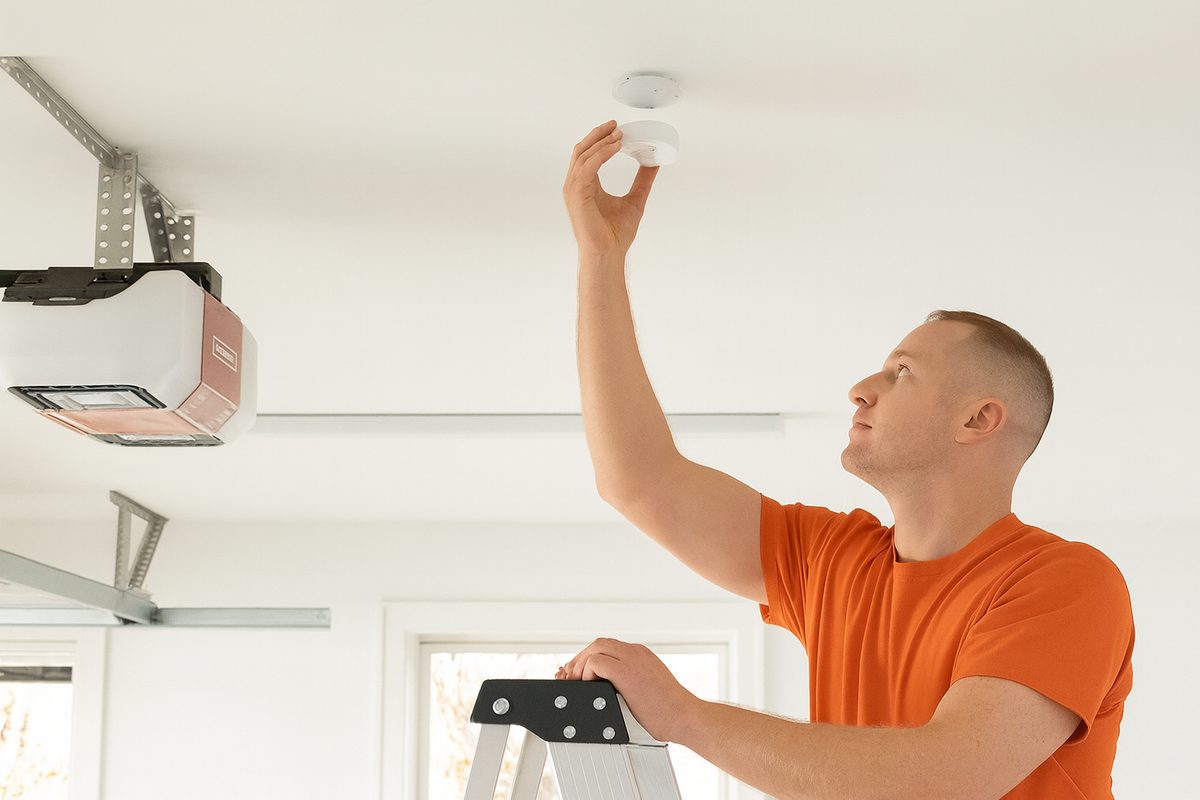
An inspection should consider springs, lifting cables, rollers, hinges, tracks, mounts, door sections, and weather seals. Suitable lubrication and permitted adjustments may be included, but damaged parts require an explicit repair recommendation.
Door balance and movement should be evaluated separately from opener performance. A motor can conceal a developing mechanical problem for a time. If the door is not moving correctly, changing opener settings is not a substitute for resolving the mechanical issue.
Safety tests belong in the maintenance routine
Photo-eye and contact-reversal functions serve different purposes and both need the checks required by the manufacturer. DASMA describes a contact-reversal test with a 2×4 placed flat on the floor. Use your actual opener manual for the complete method and test frequency.
If the opener does not pass a required test, stop use and have the issue corrected. Do not bypass sensors or experiment with force settings. Tell the technician which test failed and how the door behaved.
A practical plan between service visits
Keep manuals and a record of the installed parts and completed work. Watch for changes in sound, travel, or sealing rather than waiting until the door will not move. Check accessible seals and keep debris away from the opening.
Lubrication requirements differ by component and manufacturer. Use the specified product and locations, and avoid spraying electronic parts or coating the tracks indiscriminately. Ask for guidance tailored to the hardware actually on your door.
Be informed
What to discuss with your technician
Compare work on the existing system with any change to the opening or exterior. An older address does not establish that an older spring or opener is still installed. Ask the technician to explain how the following checks apply to your Round Rock property.
- Inspect visible wear and mounting condition.
- Evaluate door movement and counterbalance.
- Apply suitable lubrication and permitted adjustments.
- Check applicable opener safety functions and report repair needs.
What affects the cost?
Confirm what the tune-up covers and whether replacement parts are extra. If an inspection uncovers a safety problem, request a separate repair estimate. A promotional offer should not be assumed to include every worn component.
For your Round Rock quote, distinguish the repair from access, electrical or framing work. Confirm the diagnostic fee, parts, labor, any after-hours charge and whether another visit may be needed. Approve changes before additional work begins.
Before you call
Collect the manuals and service history, and note failed safety tests or changes in travel without repeating unsafe tests. Have an authorized adult available and arrange safe access without posting gate codes or remote PINs publicly.
FAQ
Common garage door tune-up questions
Safety references
General safety guidance: DASMA garage door safety and opener safety. For procedures specific to your equipment, use its manufacturer’s manual. These references do not imply an affiliation or certification.